







reviews
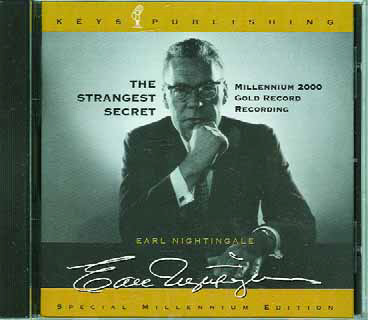
As we move through the long, hot, busy days of summer, it may well be that, like me, you have difficulty finding the time to sit down and read. This is one of the reasons I've gotten into audio books lately: I listen to them while traveling from job to job, and I find they're a great way to keep my mind stimulated when I just can't find the time to concentrate on the printed page. In that spirit of aural stimulation, I thought I'd reach back to the origins of this special medium and listen again to a classic motivational piece I'd first heard 15 years ago from legendary self-help guru Earl Nightingale. Called The Strangest Secret (issued by Nightingale-Connant Corp.), the original recording was made way back in 1956, when Nightingale recorded his thoughts to help
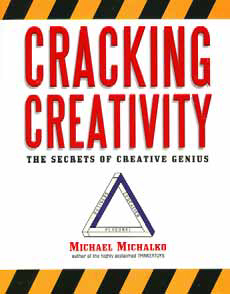
Working as a watershape designer, I'm always a little bit taken aback when people come up to me and say they're so amazed by the work I do and that they know they could never do anything so creative themselves. It's all part of a common perception that so-called "creative" work is produced only by people who were born with a particular talent. Frankly, I don't agree with that perception. As I look back over my career and review the work of others, it's clear to me that creativity in design (or anything else, for that matter) is essentially a muscle we all can develop. Sure, some people have natural abilities that give them a boost, but the essence of creativity has more to do with the way you go about pursuing it than anything else. Along those lines, I recently finished reading Cracking Creativity: The Secrets of Creative Genius by Michael Michalko (Ten Speed Press, 2001). This terrific, 300-page book tackles the nature of

An important and complex factor in any business is the daily paperwork required to function properly. A couple of years ago I decided to bring all the paperwork, forms and filing practices for our business up to legal speed, so I enrolled in a class on Mechanic's Lien laws and processes. The class was run by a law firm, and the first thing they said was that everyone is intimidated by forms and make it all too complicated. They advised us to
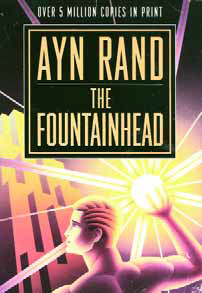
Every once in a while, I find it useful to read something purely for inspiration. Especially as the busy season heats up, I truly enjoy the thought of stepping away from the grind and getting lost in the pages of a good book. Most recently, I picked up Ayn Rand's classic, The Fountainhead (Penguin Books, 1994), and found not only a terrifically entertaining story, but one that I also see as useful on the professional front because of its many insights into issues of creativity, design and personal integrity. Let me start by saying that I'm not offering this unusual entry as an endorsement of Rand's controversial philosophy. There are plenty of ideas presented in this long, 700-plus-page book that don't align with the way I see things, and I have no intention here of commenting on Rand's "objectivism" in any way. To me, the core of the story is

Swimming pools and other watershapes make great subjects for photographers, which makes it logical that every year or two I've be able to amass a new collection of these books to review. In general, publications such as these are all about pretty projects and are aimed mainly at consumers, but I've always found them useful as sources for design ideas and, in general, as a means of seeing what other people are doing. For the most part, however, these publications are not particularly "informative": Once you get past the pictures, there's really not much else there to build knowledge or advance the craft. Such is the case with all four of the publications I'll cover here in quick, round-up fashion. All are beautifully illustrated, and some display an interesting range when it comes to

If you've yet to read any of the works of business guru Tom Peters, you're in for a real treat. A few years ago Peters wrote Re-Imagine, a book that established his reputation as a leader in the field of business philosophy and education. Last year, he released a trilogy of new books that expand on the themes and discussions that have made him both well known and hugely respected. Although published in three separate volumes, this series - Tom Peters Essentials: Leadership, Tom Peters Essentials: Talent and Tom Peters Essentials: Trends (all from DK Publishing, 2005) - is basically a single, remarkably well-written treatise loaded with

Watershaping has changed dramatically through the past several years, and we all could probably come up with a hundred different reasons why. Here's the upshot: Clients are no longer merely asking us to build pools, spas or other bodies of water. Instead, they're asking us to create complete settings that include water. And when you compare where we are now to where we were, say, seven years ago, it's as though everything is different. What the changes mean is that many of us have been or are being forced to seek out more sophisticated approaches to the design process. I recently finished a book that provides amazing insight into exactly that process: Basic Elements of Landscape Architectural Design by Norman K. Booth (Waveland Press, 1990). The book was recommended to me by fellow landscape architect and watershaper
Every once in a while, I run across an area of design theory or philosophy that is so fundamental that I'm left to wonder how I've been able to do what I do for a living without a complete understanding of it. Color theory is one such field of study. For a long time now, I've known that the factor that very often makes or breaks a project is not the price of the materials or the presence of bells and whistles, but rather how well the colors work, both with each other and in the context of the overall setting. Even simple projects with modestly priced materials can be ranked among the beautiful if the colors work. By the same token, there are extremely elaborate projects that fail to live up to their potential (or fail altogether) when color choices are off base. My sense that this was something I needed to know more about led me to
Every once in a while, I run across an area of design theory or philosophy that is so fundamental that I'm left to wonder how I've been able to do what I do for a living without a complete understanding of it. Color theory is one such field of study. For a long time now, I've known that the factor that very often makes or breaks a project is not the price of the materials or the presence of bells and whistles, but rather how well the colors work, both with each other and in the context of the overall setting. Even simple projects with modestly priced materials can be ranked among the beautiful if the colors work. By the same token, there are extremely elaborate projects that fail to live up to their potential (or fail altogether) when color choices are off base. My sense that this was something I needed to know more about led me to
It's no exaggeration to say that landscape design, whether residential or commercial, is in something of a rut these days. Nor is it saying anything new. Even in settings separated by great distance - a planned community in Plano, Texas, for example, compared to one in Toms River, N.J. - you'll find almost the exact same hardscape and planting treatments. There's just an incredible homogeneity in design these days. If you find yourself depressed by that predictability (or are stuck in those creative doldrums yourself), I strongly recommend picking up a copy of Breaking Ground: Portraits of Ten Garden Designers (Artisan, a division of Workman Publishing, 1997). Written by Page Dickey, this heavily illustrated 208-page text treats us to insightful and intimate looks at a set of extraordinarily diverse