







reviews
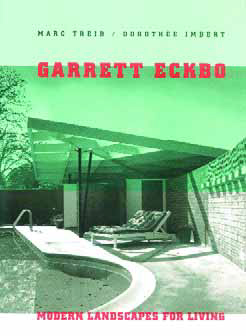
By now, we all know that pools and certain other watershape forms have been around since ancient times. It's my strong suspicion, however, that most of us who design and build backyard swimming pools today would fail a pop quiz about those who pioneered the 20th-century genre of pool design. I was among you in not knowing, for instance, about the seminal role played in this arena by a man named Garrett Eckbo - this despite the fact that he's one of the icons of landscape architecture. As a founding member of (and the "E" in) EDAW, Eckbo was responsible for some of the grandest public spaces in the United States. He was also, it seems, an innovator in residential garden and pool design who put his stamp on just about every basic pool form we use today. I picked up this knowledge from a book by Marc Treib and Dorothy Imbert called Garrett Eckbo: Modern Landscapes for Living (University of California Press, 1997). The 190-page volume covers the major career phases of a California-based designer and longtime professor who
By now, we all know that pools and certain other watershape forms have been around since ancient times. It's my strong suspicion, however, that most of us who design and build backyard swimming pools today would fail a pop quiz about those who pioneered the 20th-century genre of pool design. I was among you in not knowing, for instance, about the seminal role played in this arena by a man named Garrett Eckbo - this despite the fact that he's one of the icons of landscape architecture. As a founding member of (and the "E" in) EDAW, Eckbo was responsible for some of the grandest public spaces in the United States. He was also, it seems, an innovator in residential garden and pool design who put his stamp on just about every basic pool form we use today. I picked up this knowledge from a book by Marc Treib and Dorothy Imbert called Garrett Eckbo: Modern Landscapes for Living (University of California Press, 1997). The 190-page volume covers the major career phases of a California-based designer and longtime professor who
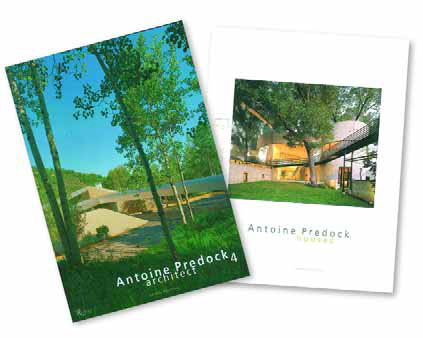
For years now, we've all heard that consideration of a site and its surrounding environment is one of the things that separates the average from the truly great projects. For my part, as I've grown as a watershape designer, I've found this simple concept carrying more and more weight in my work. With that site-driven value system somewhere in mind, I recently came across two books that provide some of the most compelling examples of this approach I've ever seen. It all started when I read a newspaper article about architect Antoine Predock, the 2006 recipient of the
For years now, we've all heard that consideration of a site and its surrounding environment is one of the things that separates the average from the truly great projects. For my part, as I've grown as a watershape designer, I've found this simple concept carrying more and more weight in my work. With that site-driven value system somewhere in mind, I recently came across two books that provide some of the most compelling examples of this approach I've ever seen. It all started when I read a newspaper article about architect Antoine Predock, the 2006 recipient of the

When it comes to design in the watershaping industry, I see all of us who creatively put pencils to paper as being in states of transition - particularly where I live in the pool/spa realm, where design has traditionally been used as a sales tool and charging for design work was largely unheard of as a service above and beyond construction. All that is changing - and for the better, I think. But with more and more of us gravitating in the direction of professional design consulting either within companies or on our own, what's to guide us as we reach toward that goal? A book I've just read may be a big help: Andrew Pressman's Curing the Fountainhead Ache: How Architects and Their Clients Communicate (Sterling Publishing Co., 2006) has led me to recognize that good design is mostly about establishing effective dialogue with clients. Indeed, he has convinced me that the way I talk to my clients - and, as important, how well I listen to what they have to say in return - has everything to do with
When it comes to design in the watershaping industry, I see all of us who creatively put pencils to paper as being in states of transition - particularly where I live in the pool/spa realm, where design has traditionally been used as a sales tool and charging for design work was largely unheard of as a service above and beyond construction. All that is changing - and for the better, I think. But with more and more of us gravitating in the direction of professional design consulting either within companies or on our own, what's to guide us as we reach toward that goal? A book I've just read may be a big help: Andrew Pressman's Curing the Fountainhead Ache: How Architects and Their Clients Communicate (Sterling Publishing Co., 2006) has led me to recognize that good design is mostly about establishing effective dialogue with clients. Indeed, he has convinced me that the way I talk to my clients - and, as important, how well I listen to what they have to say in return - has everything to do with
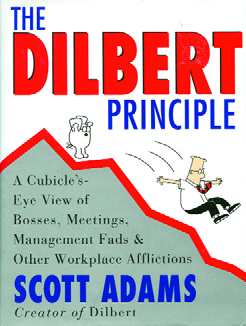
We all have our different strengths and weaknesses and know that there are certain areas in which we can all improve. In my case, I'm good at the technical side of watershaping, but I'm much less accomplished in the client-relations/"people skills" department. I've made concerted efforts through the years to seek resources that can help me grow in this area, and my latest book selection is part of that personal quest. Not long ago, I took a twelve-point quiz that's designed to test whether or not you have a good sense of humor. I've never been a big one for telling knee-slapping jokes and I'd describe my sense of humor as "dry," but I certainly like to laugh and I've always considered myself as being someone who enjoyed things on the funny side. When I took this test, however, I scored a perfect zero out of twelve, so by this assessment it seems I have no sense of humor at all. Working past this odd humiliation, I began thinking about this

It's a plain fact: In many regions of the United States these days, the vast majority of construction laborers speak Spanish. That's a big deal because, as watershapers, it is our responsibility to convey the design mission for our projects as well as all-important client wishes to these talented craftspeople - not to mention the basic, general communications that come with managing the work of individuals and small groups of people. Where I work in Texas, this is the simple reality - and I know it's true as well in California, Arizona, Florida, Nevada and many other parts of the country. As a consequence, I think it makes sense for those responsible for guiding the overall efforts of these workers to be able to communicate with them in their own language. After all, these are the folks who are installing the details we've so carefully designed and engineered. For my part, I'm trying to elevate my communications skills by

One of the greatest contrasts I've found between watershapers from the pool and spa industry and watershapers with backgrounds in landscape architecture is the way representatives of the two groups handle their portfolios. Landscape architects are taught that the way they present past work has everything to do with their ability to market their current design services. In the pool/spa industry, by contrast, designs are still rarely paid for and instead are offered as a means to winning a construction contract. In this context, portfolios tend to be far less sophisticated and generally cover examples of the company's work rather than that of an individual designer. That situation is (thank goodness) changing on several fronts, and it seems an opportune time for watershapers in general to step up in sophistication and focus on
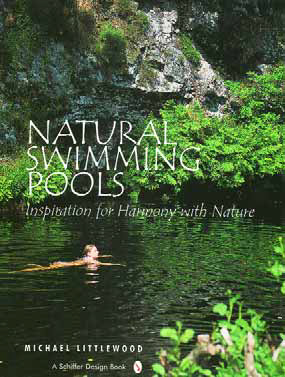
Did you know that there's a strong trend toward creating ponds that are made for swimming in Germany and Austria? That revelation came by way of a terrific book I just finished - Natural Swimming Pools: Inspiration for Harmony with Nature by Michael Littlewood (Schiffer Publishing, 2004). Littlewood is an American landscape designer who moved to Europe several years ago and has since become involved in the design and installation of naturalistic watershapes that are a distinct departure from run-of-the-mill concrete pools we encounter in the United States. Indeed, he and scores of other watershapers throughout Europe are setting up vinyl-lined ponds that lack most of what we'd recognize as pool features or equipment, but are deep enough and big enough for swimming and other forms of aquatic exercise. And the simple fact is that their European clients seem inclined to