








reviews
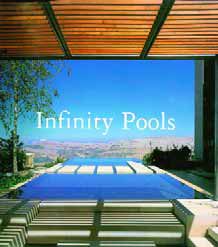
Last month, I did my usual annual roundup of books that feature custom residential swimming pools. I must confess that I deliberately withheld one such book from the usual summary treatment because it was just too good for me not to give it a full column's attention this time around. The book - Infinity Pools by Ana G. Canizares (Collins Design, 2006) - is one of the best on pools as a design genre that I've ever seen. In fact, one of the few things I don't like about it is the title, because I've always preferred the term "vanishing edge." That quibble aside, I think she's done a terrific job of presenting what has to be the most powerful, influential design look of the past 20 years. More important, she manages to do so without making these pools seem a visual cliché. As is demonstrated repeatedly

For the past few years, I’ve made a practice of offering occasional roundups of books that feature swimming pools as their star attractions. As I’ve mentioned before, there was a time when such publications simply did not exist – but now we seem to be in an era when pools are hot and a visit to a good bookstore will reveal a plethora of relevant titles covering a remarkably wide range of projects and styles. As with swimming pools themselves, of course, the books dedicated to them vary widely in quality and creativity: Some are truly wonderful, while others are of marginal value and offer little by way of useful ideas. I take all of them, however, as evidence that booksellers have noticed increasing consumer interest in highly imaginative swimming pools. I further believe that this interest has developed because so many of today’s watershapers are willing to push forcefully at the boundaries of creativity. [ ] Let’s start with
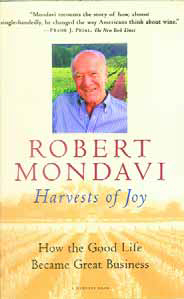
It’s amazing for me to learn that this 100th issue of WaterShapes is carrying my 80th “Book Notes” column. It’s been a wonderful and fascinating experience – and as my wife puts it, has provided a great way to rationalize my literary addiction. I remember when Eric Herman and I first discussed the idea for this column: At the time, we both wondered how long it could be sustained. After the best part of seven years, I think we’re both comfortable with the thought that it’s basically a journey without end. To mark this special occasion, I want to look back at one of the most significant of all the books I’ve ever reviewed – one that isn’t about watershaping, construction, landscape architecture or anything in any way related to our industry. That book, which I wrote about way back in February 2003, is Harvests of Joy: How the Good Life Became Great Business by Robert Mondavi (with Paul Chutkow; Harcourt Brace, 1998). I’d read it based on

For all the “importance” attached to creating works of art in outdoor environments, there’s no denying the fact that, in the majority of cases, the root of much of the appeal of watershape designs (and exterior designs in general) still has much to do with having a good time. In my own practice, for example, I’d estimate that somewhere around 85 percent of my clients are inspired by the desire to build watershapes and pool environments as sources of play for their children or grandchildren – or, as some put it, because they’re still big kids at heart and “just want to have fun.” This is why I couldn’t resist picking up

You don’t have to be a physician to know that watershapes offer profound benefits when it comes to health, fitness and wellness. Indeed, most people know that swimming and other forms of activity in water are, along with hydrotherapy, among the healthiest of all activities known to us mere mortals. Unfortunately, and for reasons that escape me, promoting the value of that connection has never spent much time on our industry’s front burner. My own curiosity about the topic recently led me to seek published resources, and I’m sad to say that my search hasn’t yielded much. It reminds me of my early days in this industry and a time long ago when I craved books that would inspire my design work: For a long time, there wasn’t much to find – but that’s all changed now. My hope is that the case with water-related health and wellness is the same and that it will soon become a
As a rule, I’ve resisted the temptation to cover books about sales in these columns. I’ve read a great many of those books through the years, and I’ve always tended to think of them as buffets where I pick up useful insights, wisdom or motivation – and ignore suggestions that don’t seem as useful. But no single book I’ve run into has proved to be so helpful that I’ve felt compelled to share it with you here. At last, however, I’ve found an exception – a wonderful book by emerging sales guru Jeffrey Gitomer called The Little Red Book of Selling (Bard Press, 2004). I picked up a copy of this compact 220-page volume two years ago at an airport bookstore (and have picked up a couple more since then), and I see why Gitomer is becoming one of the leading voices when it comes to sales. He may not have reached the same status as Zig Ziglar or Dale Carnegie (both of whom I admire greatly), but his star is
If there's one thing most designers of all types have in common, it's that we tend to possess built-in senses of personal independence. I believe that's why most of us, at some point or other in our careers, consider taking the big step of going out and starting our own practices. I haven't done that as yet, and a big part of the "why" has to do with knowing that a great many of those who do hang their own shingles wind up failing - often sooner rather than later. Yet even though I enjoy the security of working for a company rather than running one myself, I must confess that, for a long time now, the idea has intrigued me - if for no other reason than I want to know what it takes to make a go of it. That's how I came to pick up a copy of How to Start and Operate Your Own Design Firm by Albert W. Rubeling, Jr. (2nd edition, Allworth Press, 2007). This 240-page text offers a wonderfully thorough discussion of the challenges I'd always imagined, and I think it would be of use even to those who are already up and running in addition to those who are only contemplating or curious about taking the plunge. The author obviously has a
If there's one thing most designers of all types have in common, it's that we tend to possess built-in senses of personal independence. I believe that's why most of us, at some point or other in our careers, consider taking the big step of going out and starting our own practices. I haven't done that as yet, and a big part of the "why" has to do with knowing that a great many of those who do hang their own shingles wind up failing - often sooner rather than later. Yet even though I enjoy the security of working for a company rather than running one myself, I must confess that, for a long time now, the idea has intrigued me - if for no other reason than I want to know what it takes to make a go of it. That's how I came to pick up a copy of How to Start and Operate Your Own Design Firm by Albert W. Rubeling, Jr. (2nd edition, Allworth Press, 2007). This 240-page text offers a wonderfully thorough discussion of the challenges I'd always imagined, and I think it would be of use even to those who are already up and running in addition to those who are only contemplating or curious about taking the plunge. The author obviously has a
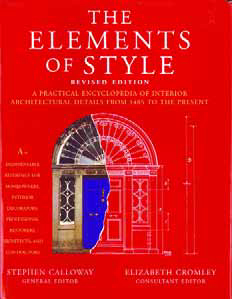
When people ask me how I approach the design process, I tell them it's always based on three things: The clients' ideas about what they want; the site's characteristics; and the architecture of the home. If I had to pick one of those factors that's been the most challenging for me to master, I'd have to say it's been gaining a firm grasp on architecture and the details that make up architectural styles. And when I've been asked where that kind of background can be gained in the form of a reference book, I've always been at something of a loss to make a recommendation. Basically, it's tough to narrow things down because architectural design is so huge a topic. Without an architect's educational background and training, I've been left to pick up what I can mostly by paying attention to what I see around me - a challenge in itself in my area, where most
When people ask me how I approach the design process, I tell them it's always based on three things: The clients' ideas about what they want; the site's characteristics; and the architecture of the home. If I had to pick one of those factors that's been the most challenging for me to master, I'd have to say it's been gaining a firm grasp on architecture and the details that make up architectural styles. And when I've been asked where that kind of background can be gained in the form of a reference book, I've always been at something of a loss to make a recommendation. Basically, it's tough to narrow things down because architectural design is so huge a topic. Without an architect's educational background and training, I've been left to pick up what I can mostly by paying attention to what I see around me - a challenge in itself in my area, where most