








ARTICLES
Advance Search
Aquatic Health
Aquatic Health, Fitness & Safety
Around the Internet
Aquatic Culture
Aquatic Technology
Artful Endeavors
Celebrity Corner
Life Aquatic
Must-See Watershapes
People with Cameras
Watershapes in the Headlines
Art/Architectural History
Book & Media Reviews
Commentaries, Interviews & Profiles
Concrete Science
Environment
Fountains
Geotechnical
Join the Dialogue
Landscape, Plants, Hardscape & Decks
Lighter Side
Ripples
Test Your Knowledge
The Aquatic Quiz
Other Waterfeatures (from birdbaths to lakes)
Outdoor Living, Fire Features, Amenities & Lighting
Plants
Ponds, Streams & Waterfalls
Pools & Spas
Professional Watershaping
Structures (Editor's Notes)
Travelogues & History
Water Chemistry
WaterShapes TV
WaterShapes World Blog
Web Links
Around the Internet
Aquatic Culture
Aquatic Technology
Artful Endeavors
Celebrity Corner
Life Aquatic
Must-See Watershapes
People with Cameras
Watershapes in the Headlines

It began as the playful vision of Bob and Kat Tudor, husband-and-wife philanthropists and founders of The Smokebrush Theatre in Colorado Springs, Colo., who decided one day to donate a unique fountain to the children of their city. Now that vision, fully realized, belongs to the citizens of this sprawling town at the foot of the Rocky Mountains in the form of a dazzling water display and a folksy character named Uncle Wilber. Multi-talented artists in their own rights, the Tudors developed the aesthetic and creative concepts but knew from the start that they would need to enlist advanced technical expertise to

Most coffee-table books on swimming pools published to date have dealt almost exclusively with the work of architects and landscape architects. The past year, however, has seen the publication of three new books about pools - each of them focusing primarily on the work of pool contractors. The result is three books that cover a broad range of styles and designs - a trio I've already found to be extremely useful as
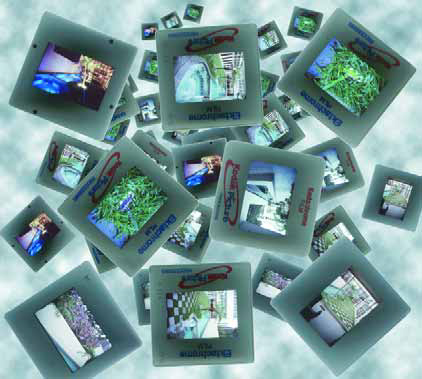
I take a lot of pictures of my work - so many, in fact, that friends and colleagues often tease me about it. Chief among those antagonists are my Genesis 3 compatriots, Brian Van Bower and Skip Phillips, who have a running joke about how I always have a slide show ready, whether it's two in the morning in my home or off in some location far removed from classrooms or offices. And it's true: Because I shoot 35-mm slides of every aspect of every one of my projects, I usually

Last month, we covered a side-yard project that fulfilled one family's dream of gaining a kitchen garden. This functional design worked well for what had basically been a small, unused space - but it's by no means the only use for such spaces. Small spaces can lend themselves to a number of different possibilities. Discussing the clients' lifestyle or wish list might uncover something they really want or can identify ideas they haven't yet considered as possible uses for the space. Case in point: I had a client who wanted to create three

Last month, I began a discussion of things that those of us in the watershaping trades can do to improve our collective profile with the public - not to mention enhance our collective self-image. Education, of course, is a huge factor. And so is the level of professional courtesy with which we treat both clients and prospects. But those two points, discussed in detail last time, have less to do with the way we approach the practicalities of our businesses than is the case with another point that bears discussion: that is, project management and how we

I understand why so many people love digital cameras: You don't have purchase or develop film, you can check your images instantly, and it's easy to upload pictures onto your computer and

The avant-garde composer John Cage once said, “Art exists to make us aware of the very life we’re living.” I’ve always loved that statement because, as someone working to create works of art, the experiences of my own life have naturally been transferred into the way I’ve chosen to express myself – and, I hope, have enabled me to succeed in bringing other people to an awareness of experiences in their own lives. For me, water is the key in these transferences: Even though I’m probably more often described as a sculptor of natural stone rather than as a watershaper, the dialogues I have with the materials I use and with those who observe the outcomes have always begun with the way I work with water. I grew up in the Midwest on the banks of the Mississippi. As a child, I lingered on the untamed shores of the creeks, streams and rivers that laced across an otherwise developed and thoroughly mechanized landscape. I would read or draw, stroll idly along a stream, or spend hours building a raft or dam. This was well before I’d begun to think about my relationship with water in any sort of artistic way, but there’s no question that those experiences remain at the heart of my passion for working within this

The process of designing a watershape or garden usually requires the designer to answer a number of questions - the vast majority of them having to do with seeing the water and the landscape. Indeed, from considerations of color and scale to managing views and ensuring visual interest within the space, much of the designer's skill is ultimately experienced by clients and visitors with their eyes. But what if your client is blind or wheelchair-bound or both? How do you design for them? What colors do you use in your planting design? Would you even care about color? How will they move through the space and what experiences will await them? What would be the most important sensory evocation - sound, fragrance or texture? These are the sorts of special questions we asked ourselves after being approached by clients who had the desire to create a sensory garden for visually impaired and physically handicapped people. The experience shed a whole new light on the power of non-visual aesthetics and prompted me to

It's truly a diamond in the rough: a huge, sparkling blue pool set in the middle of nowhere in a country that is probably best known for being the gateway between two grand oceans. For a time before I arrived on the scene, however, the enormous rectangular swimming pool at Palabra de Vida, a Christian missionary camp in Chame, Panama, was anything but shimmering. The mission operates a camp for the region's underprivileged children, who visit the facility in shifts that stretch across several months each year. There are times when
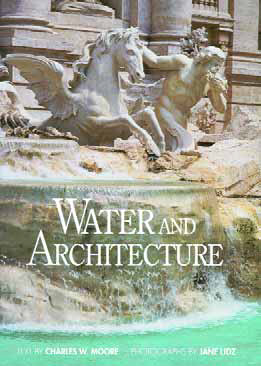
When I first picked up Water and Architecture by Charles W. Moore (published by Harry H. Abrams in 1994), I thought I'd found the perfect resource for those of us who design and build contained, controlled bodies of water. As I delved into this book's incredibly well-illustrated 224 pages, however, for a short time I worried that the text was mostly irrelevant to the working lives of watershapers. Ultimately, however, I found the text to be very helpful - even if it wasn't in the manner I had initially thought. I was disheartened initially because the text seemed so broad in its coverage of water and architecture - and so rooted in history and philosophy - as to be of little practical use. Specifically, Moore deals with subjects as grand as rivers, oceans, harbors and architectural history in very broad and almost