








ARTICLES
Advance Search
Aquatic Health
Aquatic Health, Fitness & Safety
Around the Internet
Aquatic Culture
Aquatic Technology
Artful Endeavors
Celebrity Corner
Life Aquatic
Must-See Watershapes
People with Cameras
Watershapes in the Headlines
Art/Architectural History
Book & Media Reviews
Commentaries, Interviews & Profiles
Concrete Science
Environment
Fountains
Geotechnical
Join the Dialogue
Landscape, Plants, Hardscape & Decks
Lighter Side
Ripples
Test Your Knowledge
The Aquatic Quiz
Other Waterfeatures (from birdbaths to lakes)
Outdoor Living, Fire Features, Amenities & Lighting
Plants
Ponds, Streams & Waterfalls
Pools & Spas
Professional Watershaping
Structures (Editor's Notes)
Travelogues & History
Water Chemistry
WaterShapes TV
WaterShapes World Blog
Web Links
Around the Internet
Aquatic Culture
Aquatic Technology
Artful Endeavors
Celebrity Corner
Life Aquatic
Must-See Watershapes
People with Cameras
Watershapes in the Headlines

It's a simple fact: There are real differences in the way designers and builders do things in different parts of the world. This is particularly true for swimming pools and other forms of decorative water: In some areas, for example, the focus seems to be mainly on the water and on details associated with the watershape itself. In others, the focus seems to be less on the water and more on the surrounding details, such as decks, walls or architectural features. Whichever way it goes, it's always beneficial for designers to expose themselves to the work of watershapers from around the world. The best way to do this, of course, is to
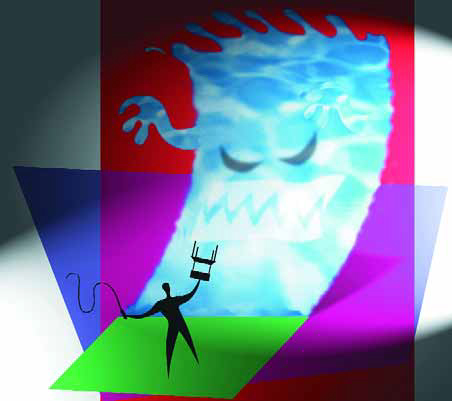
Throughout recorded history, people have tried to control the elements in every which way they can. We plant trees to block the wind, build levees to hold back rising river water and dikes to hold back the seas. We build skyscrapers that defy gravity, winds and earthquakes. For all of this ingenuity, however, we sometimes don't do a very good job. When our efforts to control the elements fail on a large scale, we witness catastrophes that
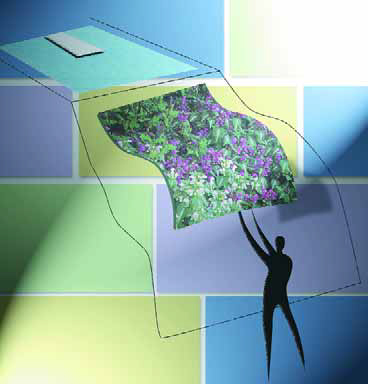
Last time, we talked about planters, terracing and a couple other techniques for stabilizing slopes and making them look great as backdrops or foregrounds for hillside or hilltop watershapes. We left for this column the important discussion of what to plant in these spaces. In making these suggestions, I'll discuss soil-binding plants and other ground covers that contribute specific desirable qualities to landscape settings. My reasoning is simple: Although sod is a great ground cover and is certainly versatile, I believe that having a broader and more decorative
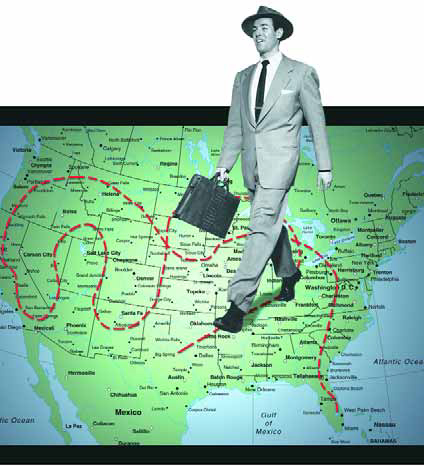
Working outside your home region is exciting stuff. It opens you to a broader and often more dynamic arena for doing business and lets you work with new sets of clients and their architects, landscape architects and designers. The projects are typically interesting and often unusual, and you can make a good dollar while reaping the personal benefits that come with travel to faraway places. On the one hand, being in demand for long-distance projects represents a measure of success in your business and shows the high degree of confidence others are willing to place in your skills. The simple fact that clients are willing to

Back in June 2000, WaterShapes publisher Jim McCloskey and I traveled to Montecito, Calif., to have a look at a project being installed by our friend Mark Holden. Just the drive up the long private road from sea level to

The way we see it, the most successful watershapes take two participants: a visionary designer who can express the clients' desires, and an accomplished builder who can turn that creative vision into reality. Sometimes, the designer and builder are one and the same person or organization. In many other instances, however, it is the collaboration of two professionals from opposite ends of a project that makes the difference between a watershape that is simply a watershape - and a watershape that is truly a

As a contractor, do you ever wish that you could avoid fussing with clients about design and could instead just get down to the business of building watershapes and getting all the details right? Do you ever think you're wasting the time you spend on design, because you know your prospects might go with another contractor despite the time you've spent drawing pretty pictures? Not every watershape contractor will answer "yes" to the first question, but I'm sure most of you have at least thought "yes" about the second one. That's because most contractors I know don't charge for design, at least not directly. As necessary, you'll hire

Skimmers are found in just about every type of watershape imaginable, including gunite, vinyl-lined, fiberglass and aboveground pools as well as in-ground and portable spas - not to mention ponds, stream and fountains. In each case, specific skimmers have been designed to serve the individual applications. For purposes of this discussion, let's keep things simple by sticking to skimmers' most familiar application - in gunite swimming pools. A KEY ROLE The main function of a pool's skimmer is removal of debris from the surface of the water. To do so, the skimmer is connected to the suction-side plumbing of the pool's pump and draws water across a weir (or a float) as a result of the vacuum created by the pump. The weir (or float) is buoyant by nature and allows only a

A watershape doesn't need to be immense to be either beautiful or monumental. Nor does it need to be outsized to serve its community as a gathering place or point of pride. Those are a couple of the lessons we learned in shaping the York Street Millennium Fountain in the heart of one of the highest profile tourist areas of Ottawa, Ontario, Canada. Using an inventive approach that balanced the needs of the neighborhood, a range of national and local government officials and the general citizenry's desire to celebrate the new millennium, the project also embraced the city's own rich history. The new fountain sits at a significant crossroads of pedestrian traffic between the Byward Market and the government district in downtown Ottawa. Indeed, the traffic island surrounding the fountain stands just blocks from Parliament Hill, the seat of Canada's national government, and was intended from the start to serve as a focal point and gathering place. Although small and comparatively simple, the project was complicated by the need to satisfy both local and national officials, which meant we had to incorporate
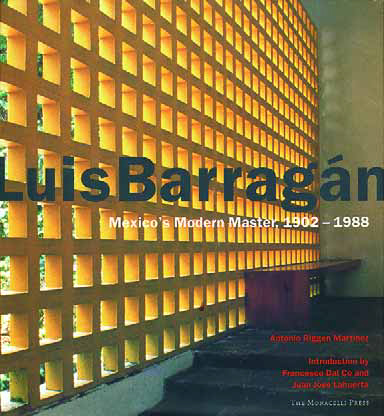
In his column for the November 2001 issue, David Tisherman mentioned a number of designers who have influenced him through the years. Even with my degree in landscape architecture, I have to concede that I was familiar with only about half the people to whom he called our attention. One of the designers I was unfamiliar with was Luis Barragan, so I picked up Luis Barragan: Mexico's Modern Master, 1902-1988 (published by Monacelli Press Inc. in 1996 and written by Antonio Riggen Martinez) to find out something about him. Barragan is now world famous, but that