








ARTICLES
Advance Search
Aquatic Health
Aquatic Health, Fitness & Safety
Around the Internet
Aquatic Culture
Aquatic Technology
Artful Endeavors
Celebrity Corner
Life Aquatic
Must-See Watershapes
People with Cameras
Watershapes in the Headlines
Art/Architectural History
Book & Media Reviews
Commentaries, Interviews & Profiles
Concrete Science
Environment
Fountains
Geotechnical
Join the Dialogue
Landscape, Plants, Hardscape & Decks
Lighter Side
Ripples
Test Your Knowledge
The Aquatic Quiz
Other Waterfeatures (from birdbaths to lakes)
Outdoor Living, Fire Features, Amenities & Lighting
Plants
Ponds, Streams & Waterfalls
Pools & Spas
Professional Watershaping
Structures (Editor's Notes)
Travelogues & History
Water Chemistry
WaterShapes TV
WaterShapes World Blog
Web Links
Around the Internet
Aquatic Culture
Aquatic Technology
Artful Endeavors
Celebrity Corner
Life Aquatic
Must-See Watershapes
People with Cameras
Watershapes in the Headlines
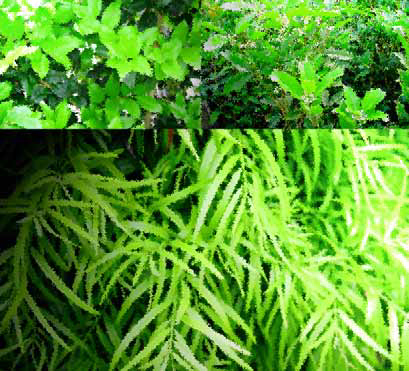
It's that time of year when our thoughts begin turning to the beautiful colors of the fall - and the subsequent bareness of winter. Whether you're in the coldest northern reaches or enjoy the relative warmth of the Sunbelt, we all are aware that fall is a transition to a time when the annuals will fade once and for all and the deciduous plants will drop their leaves. But I propose that it doesn't have to be so - or at least that we can minimize the seasonal holes in our gardens through thoughtful use of evergreen trees and shrubs. These are the most abundant of all plant types, after all, and the bones of

I've always been puzzled by people who look at money as a taboo topic. Within any form of business, of course, competitors are restricted by federal anti-trust laws from getting specific in discussions of pricing, overhead and profit margins. But it's always seemed to me that understanding those factors in broad, general terms (which are legally discussable, by the way) is at the core of the success of any business - especially in the world of contracting. The reason pricing, overhead and margins are so critical is that they reflect your core values and those of your company with respect to both money and overall business philosophy. It's my informed view that too many contractors severely

One of the most interesting things about running WaterShapes has been the opportunities I've had to get out and see projects, both in process and finished. Through the years, I've been treated to

As watershapers, we occasionally are given the opportunity to interact with modern architecture in ways that enable us to generate genuine works of art. This trail linking some of today’s most expressive architecture to the reflective and auditory potential of water has been blazed by great designers including John Lautner, Ricardo Legorreta and Luis Barragan. They and their followers have thoroughly explored the geometries, materials and spatial relationships that make up the modern architectural dialogue between structures and water – and the results have often been breathtaking. Almost without exception, their success in these designs is a matter of context and the setting, and as one who has studied their projects for many years, I now have a clearer sense of the excitement they must have felt when things came together and everything about a project was just right. For the project pictured in these pages, a hilltop setting, the contemporary architecture of the home and willing clients set the stage for what is probably

As the fields of landscape architecture and watershaping intermingle, the knowledge bases for each trade increasingly need to be shared across various design, engineering and construction disciplines. That sharing, unfortunately, has been relatively slow to develop, which means that, as a designer and builder and of custom high-end watershape and landscape projects, I am often frustrated by the lack of detail I find in plans and specifications generated on all levels of the trade. Although this deficiency flows freely from all sectors, the most frequent sources of inadequacy in watershape plans are landscape architects and designers, too many of whom offer information that is disturbingly vague and thoroughly lacking in detail. We've all seen the blue patch on the overhead plan view - a grossly inadequate delineation of a significant design component if ever there was one. Contractors presented with such documentation are left to define specific details themselves and essentially are asked to build some version of that blue patch as they

When we think about the challenge of literally "shaping" a body of water, we must start by thinking about edges. The edge is the pond's DNA or blueprint. It tells us almost everything about the pond. Without being able to observe the edge, you can't discern whether it's a formal pond, lake or a sewage-treatment facility. It might be a beautiful water feature or an eyesore. The edges form our reference in defining the whole setting and are consequently of the utmost importance. We find this defining-edge concept at work in nature's own beaches, riverbanks and lakeshores, and it is a one that extends right through the heart of watergardening and all types of watershaping, whether architectural or naturalistic (or, as I commonly classify them, formal or informal). No matter the focus or intent of our designs, we must always consider what will be happening at the water's edge. This is the part that demands the most thought, skill, care and expenditure. The subject of edges is so massive that it will be considered here and in articles to come. For purposes of this discussion, we'll limit our look to the use of edges in informal pond settings and situations in which we are attempting to create the impression that the body of water in question was originally

This is an unusual edition of "Book Notes." Yes, it involves reading a book or two, and those books have had a positive effect on my work as a watershaper, but they're well off the path of our usual discussions of publications relating to design, construction or business philosophy. Instead, it's about
Everywhere you turn these days, you see watershapers tackling projects that would have been unthinkable even a few years ago. It wasn't that long ago that simply raising a spa seemed like a big challenge, but these days vanishing edges, perimeter overflows and other ambitious details have become relatively common. And it's not just technology: Watershapers are gravitating toward great materials, colors, hardscape, plants and amenities - signs of real growth and, for the most part, a very good thing. With this broadening list of possibilities, however, have come some growing pains. The industry's like a teenager with

Please forgive me as I revisit themes from a couple of my past columns. One was written earlier this year on why we do what we do, while the other was published several years ago - back when I first began writing for WaterShapes - and was all about a subject dear to my heart: roses. Recent events in my family have given me time and the need to sort through the past, and the experience has deepened my appreciation of gardens, their emotional power and how they come to reflect our clients and ourselves. I'd like to share this process of discovery to define what I see as the essence of what we all try to do as professionals - and encourage all of you to
Value is measured and determined in a variety of ways. When it comes to pools and spas, for example, I'd say that the straight-dollar value is only one of several yardsticks and that, for many clients, it's no longer the one that tops their lists. Instead, beauty, health benefits, artistic merit, pride of ownership and emotional appeal are more important than price tag for many of them - a wonderful trend, to my way of thinking. These measures of value, of course, are highly subjective. Every client is a little bit different, and the relative value of non-monetary factors can be