








ARTICLES
Advance Search
Aquatic Health
Aquatic Health, Fitness & Safety
Around the Internet
Aquatic Culture
Aquatic Technology
Artful Endeavors
Celebrity Corner
Life Aquatic
Must-See Watershapes
People with Cameras
Watershapes in the Headlines
Art/Architectural History
Book & Media Reviews
Commentaries, Interviews & Profiles
Concrete Science
Environment
Fountains
Geotechnical
Join the Dialogue
Landscape, Plants, Hardscape & Decks
Lighter Side
Ripples
Test Your Knowledge
The Aquatic Quiz
Other Waterfeatures (from birdbaths to lakes)
Outdoor Living, Fire Features, Amenities & Lighting
Plants
Ponds, Streams & Waterfalls
Pools & Spas
Professional Watershaping
Structures (Editor's Notes)
Travelogues & History
Water Chemistry
WaterShapes TV
WaterShapes World Blog
Web Links
Around the Internet
Aquatic Culture
Aquatic Technology
Artful Endeavors
Celebrity Corner
Life Aquatic
Must-See Watershapes
People with Cameras
Watershapes in the Headlines

The famous landscape architect Thomas Church was known to proclaim, "I have no style." What he meant was, rather than impose a style that was characteristically his on a project, he preferred to let the home, site and clients guide the stylistic details of his work. I've always admired Church and other designers who are willing and able to move comfortably across the style spectrum in accordance with the situation. This is certainly how I've chosen to approach my own design work, even when I find the huge range of possibilities a bit perplexing. To be able to work in such a malleable way, of course, you need to be familiar with an array of styles and comfortable with the nuances of classifications stretching from traditional to
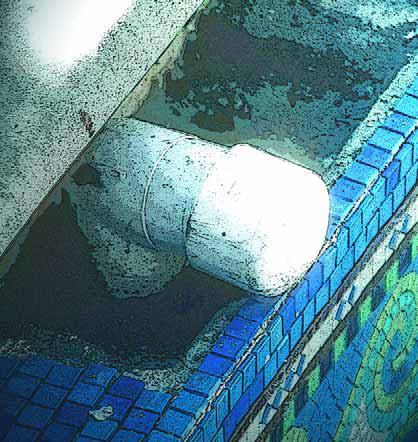
Now we come to the finishing touches - little details that make a big difference in the ultimate appearance of the renovated pool we've been watching develop here for the past several months. Through those many months, we've taken a pool that's more than 70 years old, rerouted all of its plumbing through cores cut in the old shell, added a circular spa in the shallow end, raised the floor in the deep end, reshaped the steps, added lights in a new, pool-long bench, installed all-new equipment and laid down gorgeous glass tile throughout - all without disturbing the beautiful limestone decking that surrounded the pool. As the project came to a close, we turned to a final
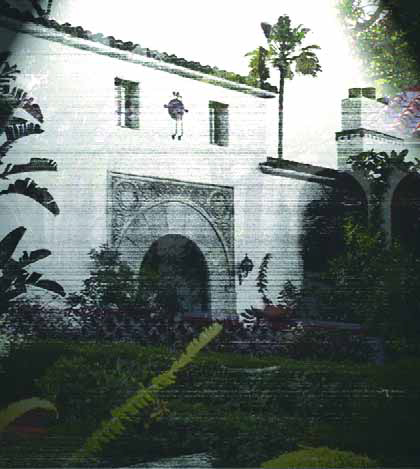
Here in America, our idea of history goes back only so far. That's particularly true in southern California, where "older" architecture is anything before about 1960 and very few structures date to a time before 1920. But it's also the case for most of the rest of the country with reference to architecture: We don't have the "ancient" structures that still set the tone and architectural vocabulary the way they do in Europe, Asia and other places. For those who prefer modern or contemporary styles, this lack of history may be irrelevant. For those who feel an affinity to older styles, however, there's a tendency to cringe every time an older house is torn down to
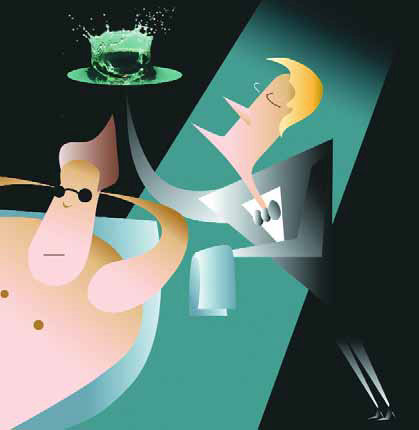
I've always loved the word "pamper." I love its meaning, I like the way it sounds and, most of all, I think it's the perfect verb for us Baby Boomers, because I know as we slide through middle age and head toward retirement, a word that means "to treat with excessive indulgence, gratify desires or coddle" will only grow in usage and importance. As I've pointed out many times, I'm a big proponent of indulging in the good life and gratifying one's needs for pleasure and enjoyment. One of the places you can go to plunge headlong into such indulgence is what some people call

For the most part, we keep things positive in the pages of WaterShapes, and for good reason: With so much inspiring and amazing work taking place every day in all corners of the watershaping trades, negative subjects seldom
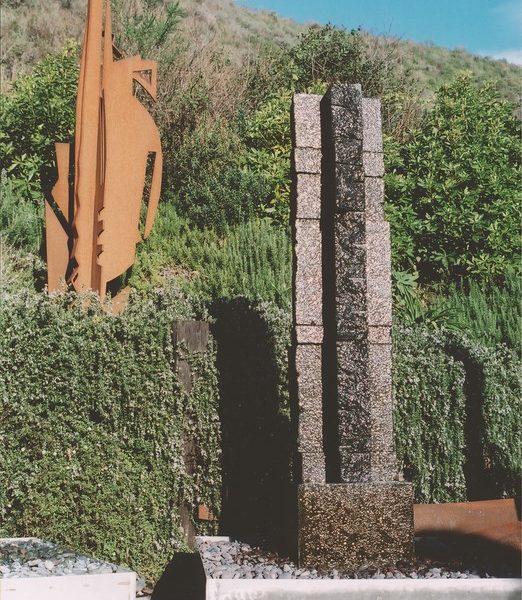
Creating granite waterfeatures is not unlike the delicacy of deep-water yacht racing: Racing big boats across the open sea requires intuitive sense in harnessing the raw powers of nature, much as do the creative insights needed to take raw monoliths from quarry walls and produce elegant expressions that reflect our primal essence. Both endeavors must gracefully balance the unbridled forces of nature. In yacht racing, wind and waves must be brought into harmony with a yacht's unique rigging and sails by its skipper and crew. With granite waterfeatures, an innate sense of harmonic balance must be struck between granite and/or water, the landscape and the human observer's ability to appreciate solemnity. In my case, these harmonies have consistently been found in asymmetry. Indeed, I've come to feel confident with the premise that people are, knowingly or not, drawn to the asymmetrical balances they see in nature. I also see both art and architecture as skillful reflections and expressions of what we have observed in nature from time immemorial. To that end, I try to create works that draw their form and spirit from the intuitive balance of asymmetry. Whether sculpting a landscape, setting stones in a rock garden or

Even compared to other spectacular facilities established by Silicon Valley's high-flying software industry, Oracle's corporate campus is truly impressive. The mirrored-glass architecture and warm, meticulously maintained grounds are only the start of the story. As you dig deeper, you find a range of employee-oriented amenities both inside and outside the buildings that make it tough to do anything but admire the audacity involved in creating such a workplace - and envy the people who work there. The management at Oracle makes no bones about it: All of the opulence is designed to attract and retain employees capable of developing cutting-edge software systems. That's why you'll see designer furniture in the offices, international cuisine in the restaurants and beautiful artwork throughout the compound. It's an amazing place, and one that has been scrupulously maintained since construction was completed in the early 1990s. The watershapes reflect the management's lofty sensibility and are an integral part of an overall scheme of plazas, rolling lawns, pathways and places to relax, meet or socialize with fellow workers. Our role since 1998 has been to

Whether a spa is concrete or portable, custom or mass produced, sound hydraulics and good plumbing are needed if the spa's jets are to give clients the hydrotherapeutic action they crave. The manufacturers of portable spas do this work for their dealers, observes hydraulics expert Steve Gutai, putting watershapers who work in concrete at a disadvantage that must be addressed if a concrete spas are to compare favorably with a client's portable options.

From the start, it's been a project that has taken its direction from the art, spirit and cultural heritage of the clients and has always been much more to me than just another opportunity to design an attractive backyard and swimming pool. I've always gravitated toward work that lets me treat spaces with a sense of spirituality and a respect for the energy and sanctity of nature that ultimately will resonate with clients beyond the purely visual and functional aspects of the design. Often, those qualities are expressed in subtle ways that I end up appreciating more than my clients, but in the case of the project seen here, there was a joy and ease to the work because the clients shared my sensibilities. As a result, the work
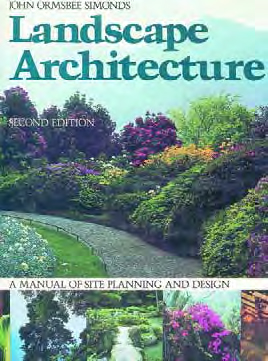
It's painfully obvious that too many mainstream watershapers are satisfied to treat each site in basically the same way. By contrast, I go to great lengths to examine each space from a variety of perspectives, and the fruits of that effort are reflected in the design work that follows. In fact, if I had to point to a single aspect of my design work that most often sets me apart from my competition, it's the detail I go into when examining a site. Certainly the best book I've ever read about site planning and analysis is the one I first encountered during my second year in college. Written by John Ormsbee Simonds, a distinguished instructor at Harvard Design School and Michigan State University, Landscape Architecture: A Manual of Site Planning and Design (McGraw Hill, 1983) is one of the most complete treatments of