







ARTICLES
Advance Search
Aquatic Health
Aquatic Health, Fitness & Safety
Around the Internet
Aquatic Culture
Aquatic Technology
Artful Endeavors
Celebrity Corner
Life Aquatic
Must-See Watershapes
People with Cameras
Watershapes in the Headlines
Art/Architectural History
Book & Media Reviews
Commentaries, Interviews & Profiles
Concrete Science
Environment
Fountains
Geotechnical
Join the Dialogue
Landscape, Plants, Hardscape & Decks
Lighter Side
Ripples
Test Your Knowledge
The Aquatic Quiz
Other Waterfeatures (from birdbaths to lakes)
Outdoor Living, Fire Features, Amenities & Lighting
Plants
Ponds, Streams & Waterfalls
Pools & Spas
Professional Watershaping
Structures (Editor's Notes)
Travelogues & History
Water Chemistry
WaterShapes TV
WaterShapes World Blog
Web Links
Around the Internet
Aquatic Culture
Aquatic Technology
Artful Endeavors
Celebrity Corner
Life Aquatic
Must-See Watershapes
People with Cameras
Watershapes in the Headlines

Watershaping advanced by leaps and bounds from 1999 through 2004 – a journey of artistry…

Watershaping advanced by leaps and bounds from 1999 through 2004 – a journey of artistry…
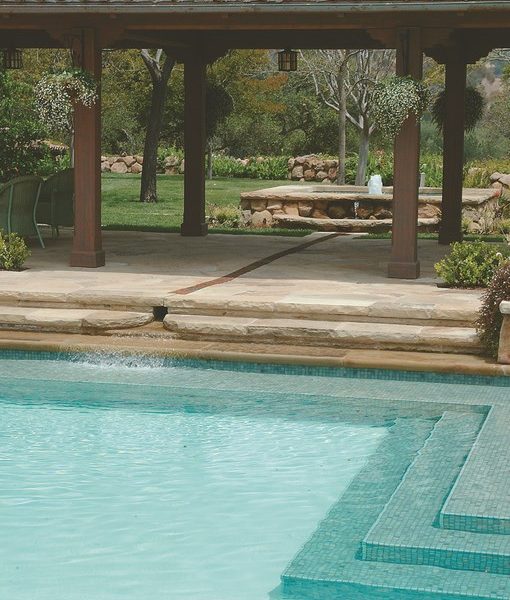
Watershaping has come a long way in the past half dozen years – a journey…
I've always been one those who finds useful parallels between business and sports. In fact, I think it's something that applies especially well in a field such as watershaping, where successful results require coordination of distinctly different activities unified by shared goals and objectives. For those reasons, High Five!: The Magic of Working Together by Ken Blanchard and Sheldon Bowles (Harper Collins, 2001) is superb fuel for watershapers - and anyone else who makes their living working in cooperation with others. I first discovered the book because of my son Trey's soccer career. He started when he was all of four years old, and I signed on as the coach. If any of you have ever watched four-year-old boys play
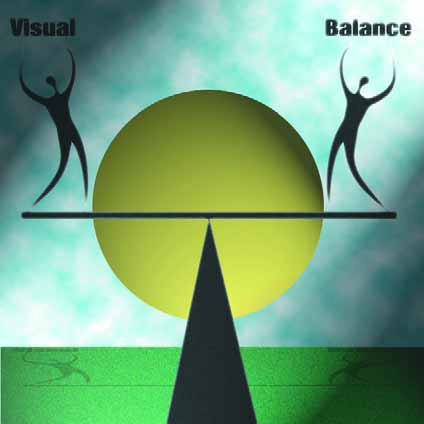
Over and over again, I've said and written that the water should not be seen as the most important element in a well-designed space. In fact, I've said it so often that it's almost become a cliché, and that's a shame, because it tends to trivialize the valid point that all elements in a given space - plants, rocks, hardscape, lighting, artwork and water - need to co-exist in visual balance to create an overall experience. This concept of visual balance should indeed be the heart and soul of all our exterior designs, but it's apparent
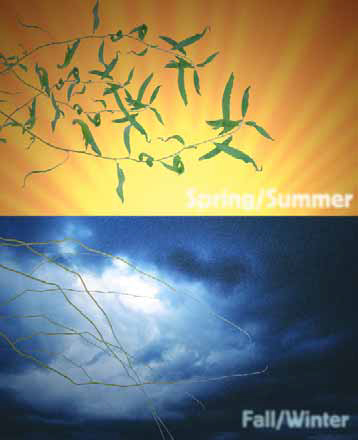
Quite often, my clients will preface our design discussions with the statement that they want to see flowers in bloom throughout the year. They just hate it, they say, when the garden looks "bare" from December to February. In my opinion, they're just not seeing the possibilities their gardens have to offer. In fact, winter is my favorite time of the year, and it's about more than the holidays, the gift giving (and receiving!) and the chilly temperatures: Mainly, it's about my love affair with winterscapes. It may be because I'm a northeasterner somewhere deep inside, but I love the fact that colder climates, with their snow and other weather inclemencies, require those with gardens to
"To succeed in business or in life, I don't think you need fancy schooling or highly technical experience. What I think you need is common sense, a commitment to hard work and the courage to go your own way."-- Robert Mondavi That statement from Robert Mondavi's autobiography truly inspires me. Since I first read those words, I've become keenly aware of how this and other things he says about his career in the wine industry apply not only to

To know where you're going, you need to have a sense of where you've been. That phrase is a bit shopworn, but it

Watershaping advanced by leaps and bounds from 1999 through 2004 – a journey of artistry…

Watershaping advanced by leaps and bounds from 1999 through 2004 – a journey of artistry…