








garden

Just as every garden should reflect the aesthetic values of its owners and accommodate their lifestyle preferences, so too every watershape should reflect the nature, purpose and "meaning" of the garden it inhabits. If it's a Victorian garden, then the watershape should be of similar style - perhaps a blend of formal and natural elements with stone or brick accents. If the theme is "wild, romantic tangle," then cascades, blossom-laden pools and rambling roses may be in order. For its part, a simple, paved court may call for a

As fall looms before us, it's timely to consider a question that should be a factor in every design we prepare: To drop or not to drop? This question is a good one to ask before you start planning and has to do with how much natural debris your clients will be willing to fish out of their watershapes once you're gone. In other words, while it's always important to decide what style of plants to put around your watershapes, it's also important to think about types - that is, evergreen vs. deciduous. I'm sure most (if not all) of you are aware of the general distinction, but here's a short

Is one person's trash really another person's treasure? That's a concept we tested on a recent Surprise Gardener episode, where we ran into a strange backyard "centerpiece" and, as the designer with final say, I had to decide whether to cover the thing up or make it stand out. The challenging objet d'art was an old truck chassis, abandoned and sunk into the yard many years before. Because of its location, it was something of a focal point. The homeowner had tried sticking an old whiskey barrel in the middle of the truck as a planter in hopes of
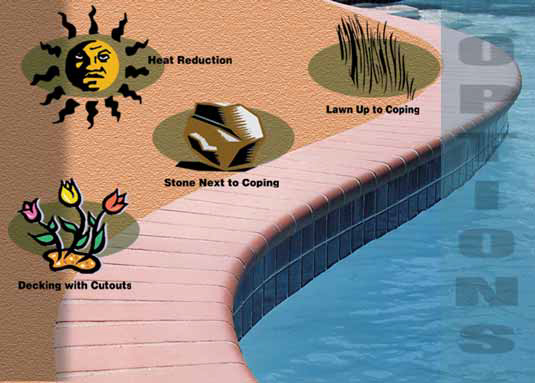
Your clients are thrilled with your pool design - with one exception. It may be set up to withstand a 9.0 earthquake, but with all that decking and concrete, it resembles a bomb shelter. Apparently while you were working with the client's desire for seismic durability in mind, you lost sight of their additional desire for soft, rolling meadows. I exaggerate here to make a point: Too many watershapers are reluctant to

By repeating something from one place in the yard to another, you tie everything together - and expand upon an idea that has already worked somewhere else in that yard. With landscaping, this doesn't always have to mean plants. When you find something that works and you like it, why not stick with it? Last month, I told you how we turned a small wasteland into an indoor oasis for one of my clients. When we were finished with the project, the clients were

I've had the pleasure over the past few years of working with a client who ultimately has become a good friend - and with whom I created a very unique garden. The process of designing the space was lengthy, but it afforded me time to truly understand my client and her wants. As we progressed, many issues arose that needed to be addressed; over time and at many points, patience was indeed a virtue. Her yard had existing structures as well as large Eucalyptus, Pittosporum and Chorisia trees and other plantings along with

Among the most complicated tasks you'll encounter in designing a watershape is determining your clients' style and how it applies to the project. How important is it to know what style they want? That's a complicated