








garden
Last month, we dug into the use of containers and accessories in garden designs and discussed ways in which they add interest, depth and dimension to almost any setting. This time, we'll get more specific and look at ways in which the same containers and accessories can be adapted to fit a particular environment and used with various design styles. To do so, let's start with long, rectangular pools (15 by 40 feet), place them in the yards of clients with different desires and see how we can blend planters into several popular styles: [ ] Contemporary: If you have a very contemporary setting with no planting beds, containers can be used to
We've spent a lot of time in these columns talking about ways of adding dimension and interest to gardens by using different planting styles and arrangements and by varying color, texture, size, quantity and other planted features of the design. As yet, however, we haven't spent any time at all on one of the easiest and potentially most interesting ways of giving a design a unique character - one that virtually forces visitors to remember your garden. It's all about containers and accessories. As simple as it seems, adding containers and other accessories - anything from simple terra cotta pots or stone benches to elaborately custom-built planter boxes or beautifully detailed garden statuary - can add marks of
Imagine your clients in this scene: It's a warm, summer evening, dinner for two on the patio is almost ready, the waterfall is on, and candlelight is reflecting on the surface of the pond. But the salad isn't quite complete, so this evening's chef steps into the yard, clips some chives from a clump near the water's edge and adds a finishing touch to the composition. Later, they pick a few plums and apricots for dessert, relaxed and about as happy as they could be in their backyard. Though the setting is delightful, it's the edible plants that complete the experience. And as was mentioned last time, with more and more people wanting
It's the little things that often make the biggest difference in creating beautiful spaces within gardens or near watershapes. A well-articulated retaining wall here, a clever treatment of a stone footpath there or the perfect placement of a stone stairway can, at various points, lend variety, balance and even a sense of antiquity to the work. In the first installment of this series of articles on classic uses of stone in gardens and watershapes, we began with an overview of stones set among plantings and used as simple structures in some of the world's most beautiful

Summer is arriving, and those 90-degree-plus days are coming with it. Your clients are thrilled to have their watershapes to cool off in, but they can't spend all their time in the water! I've discussed shade structures and shade trees before, and it's an important feature to discuss with any clients whose yard you are designing. But there's more to shade than what you do overhead, and you need to discuss what you'll be planting in those shaded areas. There are two problems here. For the most part, people don't know what to plant in the shade - nor do they

It's natural for me to wax poetic about my work. Gardening and garden designs are what I call my "magnificent obsession" - so much so that the other arts in which I have an interest and for which I even have talent will generally take a back seat. After more than 19 years as a professional landscape designer, I am still driven and excited by the challenge of creating comprehensive landscapes for my clients. I thrive on the complexity of organizing the myriad elements required to create outdoor spaces that function properly, are beautiful and harmonious to the eye - and even touch

When I meet with clients for the first time, we talk a lot about what style, design, color and other elements appeal to them. We also talk about whether they want a low-maintenance garden, or whether they want to put a lot of work into their own high-maintenance yard. Consistently, however, I find that people do not even remotely understand what I mean by "maintenance." I hear things like, "I don't need a sprinkler clock," or, more truthfully, "I don't want to spend the money on a sprinkler clock" - and I immediately
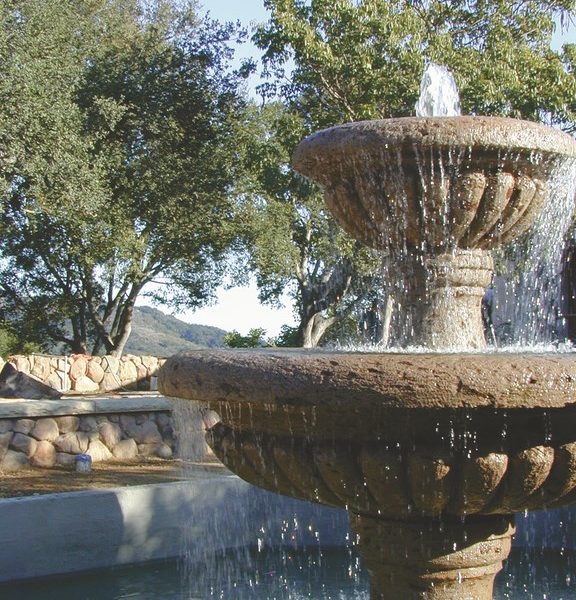
Montecito is home some of the grandest estates on the West Coast, but relatively few people know about it or where it is. A sleepy little town, it lies several miles east of Santa Barbara and some 80 miles or so northwest of Los Angeles. From the beautiful hilltop estates that dot the landscape, you can see Santa Barbara's wharf and downtown in the foreground, with sweeping vistas of the Pacific Ocean dominating the horizon. The big ranches of Montecito are dotted with hundreds of watershapes inspired by the Spanish-Colonial and Moorish architecture that surround them. Most were installed as part of the Spanish Revival movement that took hold among architects and landscape designers all over California through the first half of the 20th Century. The revivalists' octagonal and quatrefoil fountains and courtyards provide a visual link to the state's Spanish heritage. Fueled by the explosion of Hollywood's movie industry during this time, the combination of money, lots of open land and a popular architectural style resulted in creation of some of the most beautiful estates anywhere in the world - none more so than a property named Cima del Mundo, Spanish for

I feel like I'm working backward: First, I told you about a gargantuan water lily and its very specific requirements, then I offered a more general look at water lilies that will thrive in almost any pond. Now I'm going to give you some ideas and tips for designing with all types of water plants. It might have been more logical to approach things the other way around, but the important thing is that we're ready to complete the package and talk about ways of incorporating lilies and water plants of other sorts into beautiful, overall planting designs. As always, I will avoid getting too specific with recommendations. Instead, I'll stick to basic

This past summer, I had the pleasure of traveling to Europe - specifically Northern Italy and Southern France. Along the way, I was lucky enough to see the lavender fields of Provence in peak bloom and many unusual and beautiful gardens. My travels were particularly rewarding in the region around Lake Maggiore in Northern Italy, well known for having some of Europe's most beautiful gardens. We started off by visiting the islands on the lake and their villas, complete with their classic-style gardens. The climate of the area allows for growing many of the plants I'm familiar with in Southern California, but the