








garden design
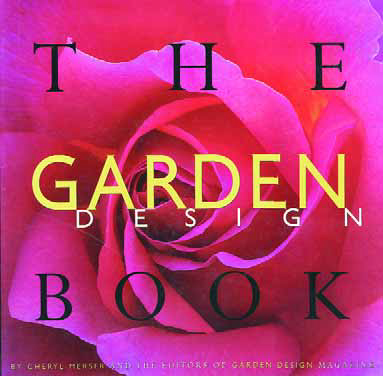
For watershapers looking to grow into broad, integrated exterior designs that extend beyond the water's edge, The Garden Design Book (compiled by Cheryl Merser and the editors of Garden Design magazine) is a great place to start. Published by Harper-Collins in 1997, the book draws on years of articles published in the magazine, a wonderful publication for both amateur and professional gardeners. Throughout the 300+ beautifully illustrated pages, Merser and company offer a huge stock of valuable information for those in quest of complete environments. Merser is not a designer, and one of the things I like most about the book is that she

When you think of palms, it's easy to conjure visions of Hawaii or some other tropical paradise. These graceful plants evoke a sense of serenity and thoughts of calm tropical breezes - and maybe even memories of a cool mai tai in your hand. Unfortunately for lots of us, palms thrive only in warmer climates. In the United States, for example, they generally do not grow north of the 33rd parallel, which stretches roughly from Northern California on the West Coast to South Carolina on the East Coast. This geographic factor is the main reason I haven't discussed palms before in this column. After three years, however, I figure I'm
Whether you choose to replicate old stone structures or borrow ideas and transplant them into contemporary designs, there is certainly a treasure trove of design concepts to be found in the masterworks of those who've gone before us. Indeed, stone has been the raw material of choice for many of the world's greatest architects, landscapers and watershapers, each of whom has relied on stone and its timelessness in fashioning works of beauty. In the first two articles in this series, we toured

More and more of my clients are interested in including edible plants in their gardens. They're into cooking, great food, fine wine and entertaining, and they appreciate the special flavors that come when they grow and harvest their own edibles. It's incredibly satisfying to walk out into one's own garden and pick fruits or vegetables or herbs. Not only do these edibles taste better than store-bought produce, but any gardener can be reasonably sure that the foods they grow are free of pesticides and other undesirable contaminants. No matter what

So you read my last article and were so excited about Amazonian Water Lilies that you'd decided to talk some clients into going for it. But alas, after measuring their yard, you recognize that you won't have enough room to accommodate the gargantuan watershape you'll need to host such an immense plant. But your clients are still hot to trot with something unusual, even after you've accepted the fact that

A good friend of mine once told me that his idea of the perfect yard was one where he could walk around naked - and none of his neighbors would be able to see him. What a concept! Unfortunately, few of us can afford a yard so large that we could not be seen by neighbors under any circumstances. So what can you do to create that perfect private environment? As we'll see here, you have a lot of choices. DISCOVERING PREFERENCES Many people go all the way in creating privacy by building structures that make them feel safe and enclosed. Others prefer a less claustrophobic approach, such as soft plantings. Either way, and particularly when you are dealing with watershapes where your clients may want to enjoy communing with nature in the buff, creating some type of barrier against neighbors' intruding eyes is essential. Your clients' preferences may

As adults, we too often forget one of the great joys of childhood - the sense of wonder and discovery we experienced when we first saw the ocean or flew in an airplane and the world opened and unfolded before our very eyes. As designers, I believe we similarly forget about the excitement that comes with discovery. Too often, we lay out beautiful lines and incorporate interesting and unusual plant and hardscape material for everyone to see all at once. The work may be beautiful, but it leaves little or nothing to the imagination and offers no surprises. I can't help thinking how much more our landscapes, public and private, would be savored if they were to be explored and discovered bit by bit. This is especially true for spaces containing watershapes, which by themselves lend interest and drama to almost any space: The magic of water can (and I believe should) be exploited by concealing it at first and then revealing it in a way that gives the viewer a brief moment of visual revelation. To see what I mean with respect to watershapes and waterscapes, let's explore an approach that makes seeing everything immediately an impossibility. Instead, this approach offers glimpses that tantalize and intrigue - and can be seen in the work of thoughtful garden designers who've manipulated sights and sounds around the

When we think of water, much of the time we think of a tropical scene - Hawaii, the Caribbean or some other exotic island somewhere - a place we'd all like to go. Why not create that "somewhere else" in your clients' backyards? They'll thank you for all the money you'll save them on that cruise that probably would have been less than perfect anyway. And this tropical scene will be one they can enjoy not only this week, but for as long as they want. Imagine palm trees swaying in the wind, the sweet smell of

The gardening impulse of the Japanese is truly ancient. In times before recorded history, sacred outdoor spaces around Shinto shrines and Buddhist temples were arranged according to this design vision. And through more than 1,000 years of recorded history, gardens have been created and refined by priests, warriors and emperors alike in spaces both public and private. The style isn't original in the strictest sense: In many ways, the gardens of Japan find their sources in Chinese gardening styles and landscape painting. But the Japanese developed and refined their borrowings to fit their own national taste for subtle naturalism and elegant rusticity. The result is an amazingly coherent and distinctive landscaping style that now can be experienced at hundreds of public gardens in Japan. The nice thing today is that you don't have to live in Tokyo to appreciate Japanese gardens - or to incorprate their principles into your designs. In fact, garden designers around the world now use the obvious elements of Japanese gardens - the stone lanterns, gravel and clipped azaleas - in naturalistic and asymmetrical settings of all shapes and sizes. In some cases, the total look of the garden is Japanese; in others, its principles are used to

Let's say your clients have spent all their loose change on your watershape and can't afford to hire a landscape designer or architect. They don't even want to meet that wonderful person you've been telling them about. So why not suggest a few plants that will really spiff up their new backyard Niagara Falls? If you're brave enough to try, I'll help you here and in a couple of future columns. Let's start by talking about