








construction
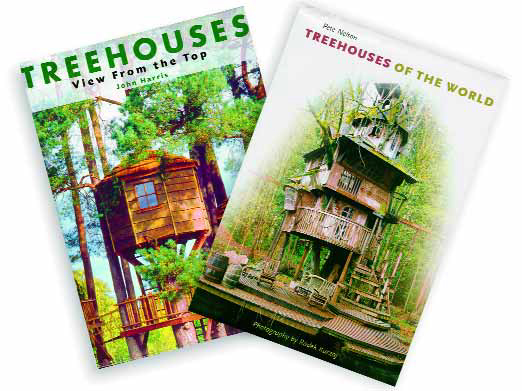
When we think about tree houses, most of us we probably think of the ramshackle platforms built by kids and suspended precariously up in backyard oaks or sycamores. (Those of us who are a bit older might also think about the amazing makeshift domicile in the movie "Swiss Family Robinson" or the wonderful "ride" of the same name at Disneyland.) Not long ago, however, my daughter guided me to a trio of publications that cover tree houses from an entirely different perspective. In reading them, I was enlightened to the fact that, first of all, tree houses

Our firm has always focused on the creation of watershapes and landscapes for championship-level golf courses. It is work on an enormous scale in beautifully conceived settings, and the clients are extraordinarily demanding. On occasion, our work has reached beyond the links and into the grounds and homes that surround them. That makes sense, because the lion's share of our work on fairways, tees and greens runs parallel to development of adjacent luxury homes. This means that we often expend considerable energy in considering the views from future home sites and the ways our watershapes and landscapes visually interact with what are often
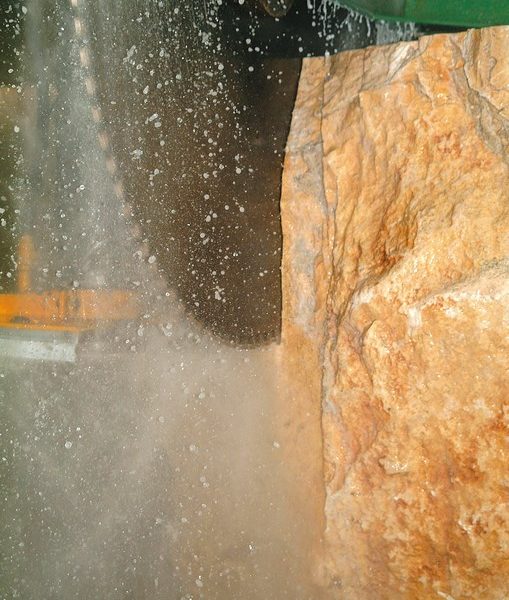
Natural stone is certainly the most time-honored of all building materials. From the pyramids of Egypt to the temples and civic buildings of ancient Greece and Rome; from the palaces and villas of the Renaissance to the most contemporary structures of our modern era, we see a material forged within the earth for millions of years that has been painstakingly quarried and shaped into myriad forms both functional and decorative. Even with the advent of cementitious components and a range of other manufactured substitutes, stone remains the material of choice in a great many applications. In fact, the range of natural stone materials available to designers and builders expands almost daily in response to the specific demands of watershapers and other designers and contractors - and there's no end in sight. Our company, tr stone, is a U.S. distribution facility owned and operated by one of the world's largest stone producers, Tureks, based in Afyon, Turkey. The best thing about the marketplace from the perspective of designers and builders is that high-quality stone is now available from a wide range of domestic and foreign sources in a number of distinctive

During a lifetime of driving up and down the part of Sunset Boulevard where it finally meets the Pacific Ocean, I'd often noticed the sign pointing to "Lake Shrine" but had never taken the time to stop and have a look. I suppose the "shrine" part of it made me think it was the exclusive preserve of adherents or members of the Self-Realization Fellowship - an organization I knew nothing about other than that their facility was in one of Los Angeles' most beautiful locations. I finally overcame my hesitation about visiting the Lake Shrine a couple years ago, when a friend told me it was a place where people of all faiths and religions were welcome to stroll, meditate and enjoy the tranquility of the setting. Curiosity overcame skepticism and I finally visited the place. What I found at the Lake Shrine was a serene, calm, meditative oasis of lush, beautiful gardens surrounding a lake. To this day many years later, the minute I drive through the entrance gate, I'm always swept up by sensations of serenity and peace - and have since
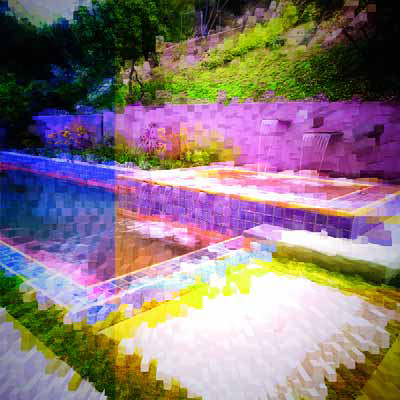
Few things are as important to the aesthetic impression made by swimming pools, spas and other watershapes as the colors you select to use in it and around them. Take tile as an example. Whether it's just a waterline detail, a complete interior finish or some elaborate mosaic pattern, it serves to draw the eye into a design. If the color and material selections work, the scene can become extraordinarily elegant and beautiful. If they don't, you can have a major eyesore on your hands. The amazing thing to me is how few watershapers ever really consider the importance

As watershapers, we occasionally are given the opportunity to interact with modern architecture in ways that enable us to generate genuine works of art. This trail linking some of today’s most expressive architecture to the reflective and auditory potential of water has been blazed by great designers including John Lautner, Ricardo Legorreta and Luis Barragan. They and their followers have thoroughly explored the geometries, materials and spatial relationships that make up the modern architectural dialogue between structures and water – and the results have often been breathtaking. Almost without exception, their success in these designs is a matter of context and the setting, and as one who has studied their projects for many years, I now have a clearer sense of the excitement they must have felt when things came together and everything about a project was just right. For the project pictured in these pages, a hilltop setting, the contemporary architecture of the home and willing clients set the stage for what is probably

When we think about the challenge of literally "shaping" a body of water, we must start by thinking about edges. The edge is the pond's DNA or blueprint. It tells us almost everything about the pond. Without being able to observe the edge, you can't discern whether it's a formal pond, lake or a sewage-treatment facility. It might be a beautiful water feature or an eyesore. The edges form our reference in defining the whole setting and are consequently of the utmost importance. We find this defining-edge concept at work in nature's own beaches, riverbanks and lakeshores, and it is a one that extends right through the heart of watergardening and all types of watershaping, whether architectural or naturalistic (or, as I commonly classify them, formal or informal). No matter the focus or intent of our designs, we must always consider what will be happening at the water's edge. This is the part that demands the most thought, skill, care and expenditure. The subject of edges is so massive that it will be considered here and in articles to come. For purposes of this discussion, we'll limit our look to the use of edges in informal pond settings and situations in which we are attempting to create the impression that the body of water in question was originally

Successful residential exterior design is akin to a precisely choreographed dance. One sequence of steps defines the relationships among hardscape, water and plants. Other sequences distinguish light and shadow, color and texture, open views and intimate spaces. If the choreographer has done a good job, we don't see the individual steps so much as we enjoy the overall experience of motion. The key to making these multifarious steps work together? It's all about balance. Transferring these principles to backyard design, there's a similar need for

It's a point I'll probably make to the end of my days: There is no substitute for travel and exploration of the historic world to learn about design. In my "Details" column in the June 2005 issue of WaterShapes, for example, I discussed my recent trip to Turkey and made the point that the ruins and intact structures we examined while there were full of specific details that I and other watershapers use in our work - whether or not we recognize that what we're doing actually derives from ancient original works. Showing what I mean in the clearest possible terms is what this pictorial article is all about. As you will see, I've included

When it comes to the old buildings that people most want to preserve, the good-looking ones always top the list. These structures are cherished because they make strong aesthetic statements and are often associated with a given period of history, a particular architect or a specific design movement. As an architect working to create public and institutional aquatic complexes, I try to think of my designs in those enduring terms. In other words, I want to develop watershapes that make strong aesthetic statements and therefore have a chance to be cherished and therefore stand a better chance of being preserved, well used and enjoyed for generations to come. I do so because a facility that is both functional and beautiful will, I think, inevitably be of greater value to its community than one that is simply functional. Ugly buildings do the exact same job as beautiful ones in sheltering human activities, but which are more likely to generate excitement, enjoyment and value for the long haul? The answer, I think, is obvious. As a result, I see aquatic facilities as places that should be