








book review

By now, we all know that pools and certain other watershape forms have been around since ancient times. It’s my strong suspicion, however, that most of us who design and build backyard swimming pools today would fail a pop quiz about

Most watershapers know that the work we do requires knowledge across a wide range of disciplines -- a cluster of skills that includes, among others, geology, materials science, structural engineering, construction techniques, hydraulics, architecture, art history, color

It only makes sense that designers should promote themselves in ways that reflect their abilities.When we look at the materials many watershapers use to market their services, however, it's obvious that everything from

It’s been important to me for two reasons: First, I’m convinced (as others in this magazine have argued) that the watershaping industry is doing both itself and its clients a disservice by not promoting the remarkable healthfulness of aquatic activity. I think this is a deficit we desperately need to address — and also that this effort must begin on a solid base of knowledge and fact. Second, as I progress through my forties, I’m finding that running is becoming more and more difficult because
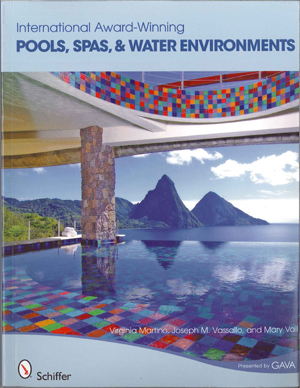
One of the questions I always ask prospective clients is, “Why are you investing in a pool and not a recreational vehicle, boat or vacation home?” Obviously, I’m not interested in having them rethink the decision to purchase a watershape; rather, I’m trying to draw them more deeply into their commitment, identify what’s important to them and use the information as part of my sales effort and, later, the design process. Although my clients will express themselves in different ways, their desires almost invariably boil down to wanting a place for family to gather and have fun, to share good times with friends and to enjoy measures of luxury and beauty. In essence, almost all of them want to take the wastelands that are most backyards and turn them into private resorts. I thought about how I approach these issues a lot after
For a long time now, I've been dismayed by what I see when certain of my fellow watershapers attempt to incorporate "natural" elements into their pool designs. The ubiquitous piles of rocks and the odd grottos slapped onto the ends of freeform pools are so common I can only conclude that

I do much of my work in the residential market, and it’s increasingly common for my clients to have relatively small yards for which they want something both unique and special. In those settings (and in larger ones as well, but often not as critically), I’ve found that it’s the small touches that make the most difference. Frequently, it’s these simple decorative elements that transform designs into