








book review

When times are tough, I sometimes find it useful to think about the things in life that I’m able to control while giving less thought to those I can’t. The plain fact is, no matter how troubling the news is or how tough the economy makes our working lives, nothing can ruin our positive attitude if we don’t let it. In other words and no matter what, we are always in charge of how we greet the world. That’s a point I’ve had confirmed by re-reading The Greatest Salesman in the World by Og Mandino (Frederick Fell Publishing, 1964). To my mind, there are few books that truly warrant the label “classic,” and this is one of those masterpieces. I regard it among the most inspiring and life-altering books I’ve ever read – and I’m apparently not alone: It has

I’ve spent some time in the past couple months looking for a good book about trust. I ran into some stinkers along the way, with many of them impressing me with how boring and preachy they could be. But I never had that kind of reaction to The Little Teal Book of Trust by Jeffrey Gitomer (Pearson Education, 2008): I’m a big fan of his (you may recall that I wrote about his Little Red Book of Selling in March 2008) and have always liked the way he manages to

I recently began work on a design for clients who live in a historic home just south of Rochester, N.Y. They've asked me to incorporate a pool, entertainment areas, a fireplace and a combined pool house/garage into the available space and make certain it all complements the architecture of the home and its only current outbuilding - a 150-year-old storage shed. Sitting at my drafting table, I was thinking how easy this one would be, conceptually at least. All I needed was there, from the home's architecture and an existing (and much beloved) 100-year-old pergola to the old shed, so the main challenge would come in drawing the details rather than in deciding what to do. Usually, of course, it's the other way around and
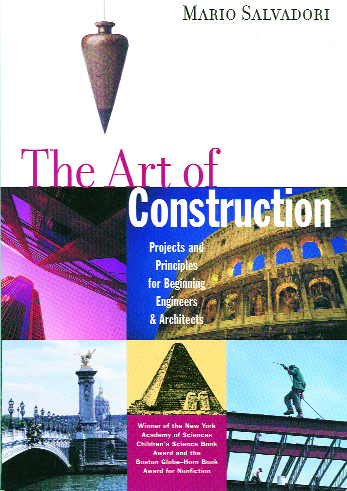
Most watershapers know that the work we do requires knowledge across a wide range of disciplines - a cluster of skills that includes, among others, geology, materials science, structural engineering, construction techniques, hydraulics, architecture, art history, color theory, drafting and more. As jacks of all trades, we don't really need to be "expert" on all of these fronts, but without a working knowledge of the technical and aesthetic disciplines involved in creating quality work, it's difficult to ensure the success of any given project. There's no question that some of us are better at certain disciplines than others, and it's up to us to recognize our strengths and weaknesses and fill in the gaps of our understanding as best we can. When it comes to structural engineering, for example, few of us qualify as bona fide engineers: That takes years of schooling and rigorous licensing processes. But almost all of us work with precise structural designs that are specific to the vessels and associated structures we design and/or build. In other words, we may not be engineers, but we sure as heck need to
Most watershapers know that the work we do requires knowledge across a wide range of disciplines - a cluster of skills that includes, among others, geology, materials science, structural engineering, construction techniques, hydraulics, architecture, art history, color theory, drafting and more. As jacks of all trades, we don't really need to be "expert" on all of these fronts, but without a working knowledge of the technical and aesthetic disciplines involved in creating quality work, it's difficult to ensure the success of any given project. There's no question that some of us are better at certain disciplines than others, and it's up to us to recognize our strengths and weaknesses and fill in the gaps of our understanding as best we can. When it comes to structural engineering, for example, few of us qualify as bona fide engineers: That takes years of schooling and rigorous licensing processes. But almost all of us work with precise structural designs that are specific to the vessels and associated structures we design and/or build. In other words, we may not be engineers, but we sure as heck need to

For centuries, the Mediterranean gardens of Italy, France, Greece and Spain have put sun-thriving plants on beautiful display in dry environments. The Greek isles flourish with wildflowers whose colors become more vivid against the bleached background, while Spanish gardens combine the fragrant blossoms of citrus trees and the fragile pink blooms of Almond trees with open, arid landscapes. Italian and French gardens present more formal atmospheres, incorporating boxed and trimmed trees with trellises and pergolas draped with vines. Each area has its distinct style, but the main elements of these gardens are the same, with the hot sun being the primary common factor. As is revealed, however, in Designing and Creating a Mediterranean Garden by the English artist Freda Cox, it is possible to cultivate

Just as nature inspires art, I believe that art can inspire landscape professionals to "paint" themes and moods into gardens. Claude Monet's work is a striking example of this unconventional relationship between art and landscaping, a connection explored fabulously in Monet the Gardener (Universe Publishing, 2002), a collaboration between Sydney Eddison, who writes and lectures on gardens; and Robert Gordon, a leading authority on French Impressionism. Together, they delve into Monet's obsession with his famous garden at Giverny, describing his fixation on flowers and the struggles he had in creating his lily pond. Included are letters from Monet, members of his family, journalists and writers from the late 1800s, all of them chronicling the artist's choices among



The Home Front