








Pools & Spas

William Rowley & Scott Mackey It's one of those places you really have to see to believe. Part indoor waterpark and part competition facility, the Sierra Vista Aquatic Center is owned by the town of Sierra Vista, Ariz., a desert community of approximately 35,000 retirees and military families located near the sprawling Fort Huachuca army base. That's about 50 miles south of Tucson - and about as remote as a town can get. Known locally as "The Cove," the aquatic facility represents the town's commitment to its citizens' quality of life and a nod to the potential recreational water has to transform a community. From start to finish, the project took about four years and cost about $6.7 million, all paid for by the city. Designed by Tucson architect Scott Rumel, the basic facility was built by Lloyd Construction under the management of construction supervisor Leon Davis. Tucson pool builder Mark Ragel of Patio Pools set up the various watershapes, while our firm, Rowley International Inc. of Palos Verdes Estates, Calif., took care of the aquatic design and engineering. The facility opened in
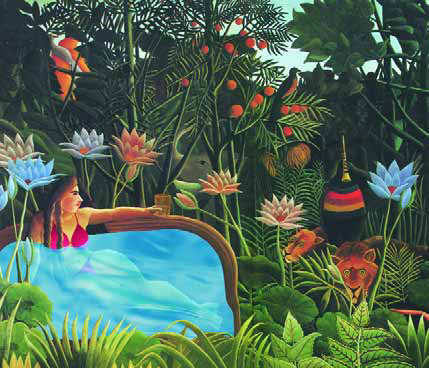
What makes for a great natural-style watershape? That's a huge question - one which a great many people have devoted their careers to exploring and for which almost every one of us will have a slightly different answer. As you will see here, my own response to the question starts with even more questions about the site, my clients and the surrounding structures and vegetation - questions I ask myself as I approach each individual design assignment and decide how far

It should be a given, but it isn't: Despite the fact that proper pump installation is critical to ensuring the reliable and efficient functioning of any watershape's circulation system, too often installers will take shortcuts that compromise performance and shorten a pump's life. In this article, hydraulic expert Steve Gutai opens a new series on proper hydraulics with a concise look at what it takes to get the installation done the right way.

One of the things I like most about working with water is that it makes statements that don't require much verbal explanation. In fact, I like to think that the projects I build speak volumes about my clients' desire for something creative and interesting. They also speak to the point that most of my clients grant me the freedom to give my very best effort, both aesthetically and technically, without many constraints. Not all the work I do is so modern in style or approach as the project pictured in these pages, but this one illustrates a principle that's become a
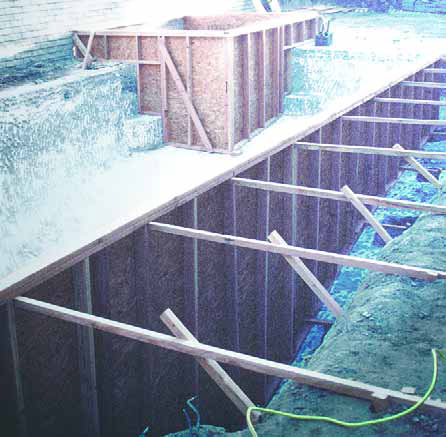
Last time, I mentioned initial meetings and discussions having to do with a retrofit project in Pacific Palisades, Calif. I call it a "retrofit" because we're using a portion of an existing pool shell as part of the new one, but in truth this is really a ground-up reworking of the entire environment. This project displays the influence that architects Ricardo Legoretta and Luis Barragan have had on my thinking about shapes, colors and spatial relationships. As soon as I saw this place, in fact, the work of both came to mind because of the strong colors and materials and the expressive
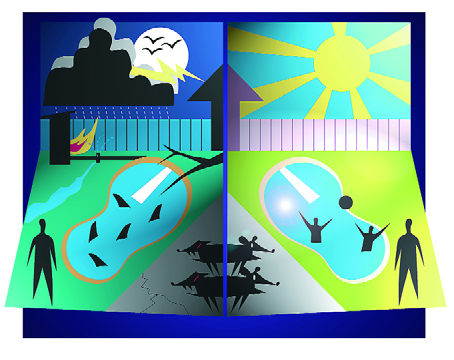
Is it honest to say that too few of the swimming pools you find in America's backyards are what one could call well built - and that even fewer of them are well designed? I think so, because so many of the pools I see run like junk and look like junk, and it's way too easy to find installations that lack any apparent relationship to their settings, their homes' architecture, the landscaping or any recognized

A grand California estate deserves a grand pool, and Cima del Mundo is certainly no exception. The new pool is part of a project that involves the complete renovation of a classic estate in the hills of Montecito, a prosperous enclave just south of Santa Barbara, Calif. In keeping with the overall theme of the project, which was described in detail in "The Crest of the World" (WaterShapes, January/February 2001, page 32), the pool has been outfitted with thoroughly

For many people in the watershaping trades, client relationships begin with selling and never really advance beyond that stage. For me, however, it's not about selling per se; instead, it's about creating a sense of collaboration and building a foundation of mutual trust and understanding. In fact, the work I do in establishing these creative relationships with my clients may well be the most important "detail" of all. In a sense, watershaping isn't a job to me. It's my passion, which explains why I'm so obsessed with
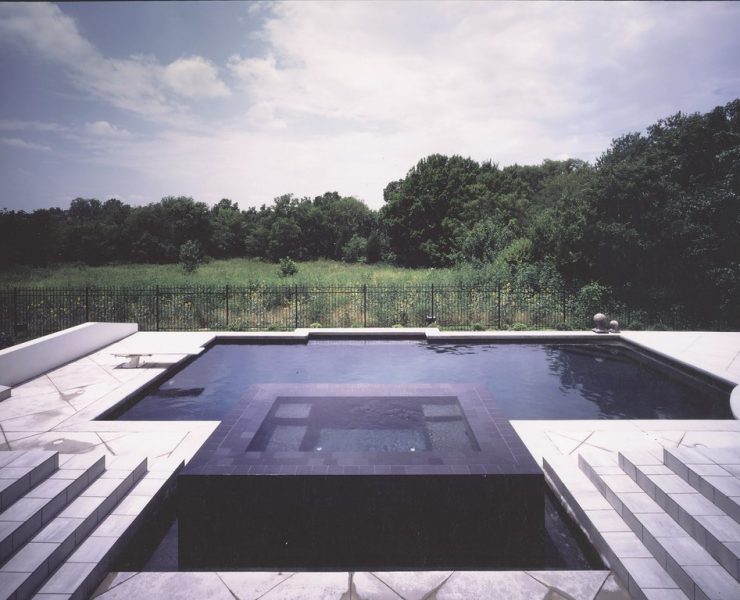
Increasing numbers of our clients are asking for more from their watershapes - so many, in fact, that we're seeing an unprecedented blurring of the lines between swimming pools, spas and the full range of decorative waterfeatures. This demand is particularly strong in one area: In addition to projects that are functional, our clients want them to be visually compelling as well. This need has inspired designers at our firm (and elsewhere) to new levels of creativity. In certain instances, we at Leisure Living Pools in Frisco, Texas, have answered the call with spa designs that

I'm always looking for projects where I'm brought in to design the entire exterior environment, complete with hardscape, planting plans and watershapes. Working this way gives me a straight shot at integrating all of these major elements into cohesive designs that fit the setting. But I believe in collaboration, too, and in giving interested clients an opportunity to participate in the process. I listen carefully to what they say, factor in their budgets and then start working toward a suitable design. This integrated approach often requires intensive and extensive interaction with homeowners. Through it all, I'm flexible - but I'm also confident in my abilities, experience and expertise and generally end up installing something that closely matches my sense of the way things should be. When it works, everything goes smoothly. In the case of the project pictured in these pages, however, the process has been much more involved and is, 18 months into it, still ongoing in