








heritage

I have a confession to make: I've never really been much interested in art. That may seem surprising coming from someone who has a degree in landscape architecture and has dedicated a career to design. Fact is, I was never exposed to different types of art or to art history in any serious way: My high school didn't offer it, my family wasn't big on it and my landscape-architecture curriculum didn't require it. This never really bothered me, and the fact that nobody seemed to care
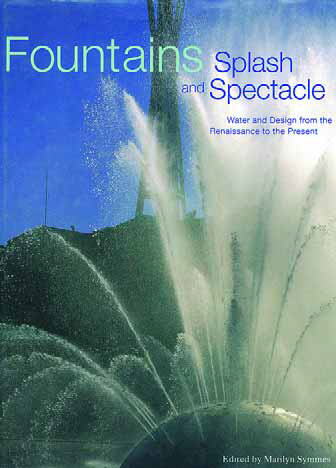
For anyone designing decorative water, Fountains: Splash and Spectacle is a wonderful and useful resource. This wonderfully illustrated anthology of essays on classic fountains (edited by Marilyn Symmes and published in 1998 by Rizzoli International Publishing, New York) deftly encompasses the range of fountain designs from antiquity to modern day. From the modest Alhambra in Spain to Chicago's dramatic Buckingham Memorial, Symmes and the book's contributors weave together scores of detailed examples illustrated with beautiful photos and, in many cases, supported by sets of plans, drawings and diagrams used in creating some of the world's most beautiful and historic watershapes. Rather than approach fountains in a purely chronological or geographic context, the book is organized into eight chapters covering

Throughout recorded history, great societies have built monuments to celebrate their victories, commemorate their tragedies and express their guiding ideals. Through creation of these great works of art or
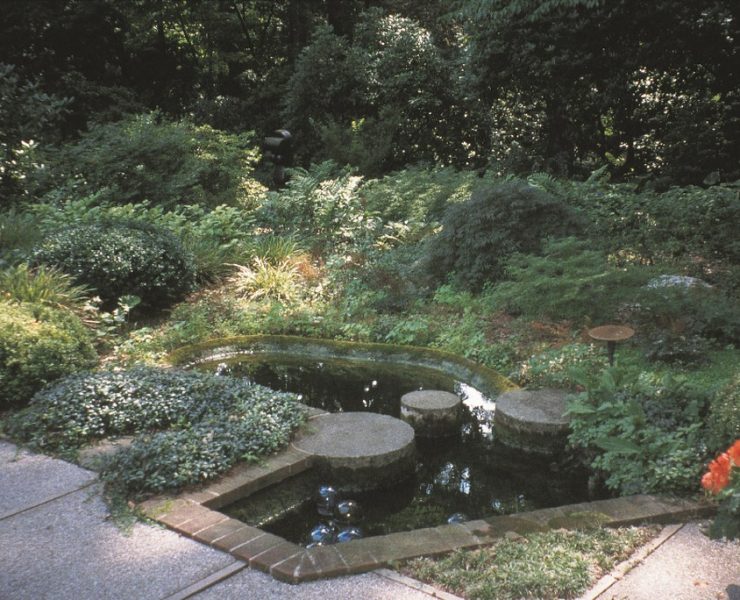
Whether you choose to replicate old stone structures or borrow ideas and transplant them into contemporary designs, there is certainly a treasure trove of design concepts to be found in the masterworks of those who've gone before us. Indeed, stone has been the raw material of choice for many of the world's greatest architects, landscapers and watershapers, each of whom has relied on stone and its timelessness in fashioning works of beauty. In the first two articles in this series, we toured
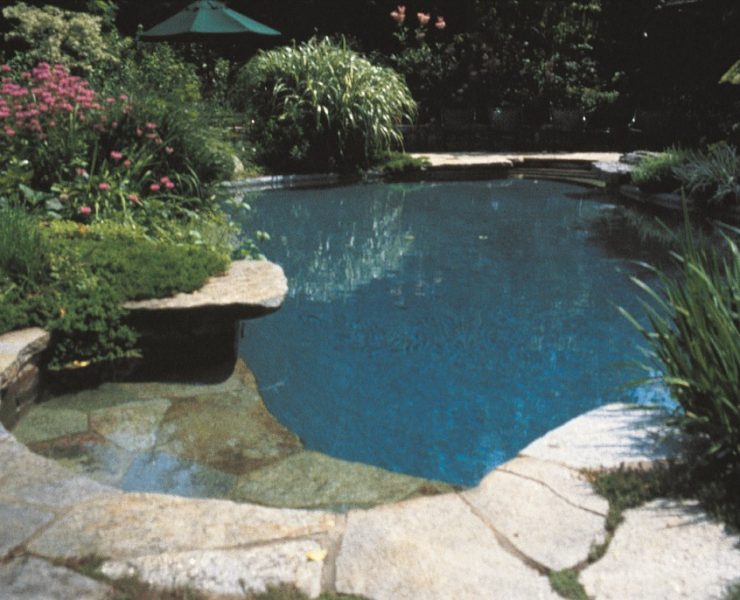
It's the little things that often make the biggest difference in creating beautiful spaces within gardens or near watershapes. A well-articulated retaining wall here, a clever treatment of a stone footpath there or the perfect placement of a stone stairway can, at various points, lend variety, balance and even a sense of antiquity to the work. In the first installment of this series of articles on classic uses of stone in gardens and watershapes, we began with an overview of stones set among plantings and used as simple structures in some of the world's most beautiful

The ancient Celts transported huge slabs of stone over long distances to create religious circles at Stonehenge and Avebury. The Romans used stone to build their aqueducts. From the pyramids of Egypt to the Acropolis in Athens, from the Great Wall of China to the great castles of Europe, stone has been the raw material of choice for our greatest and most enduring structures. Through the ages, stone has been a well-used material because it is both durable and readily available. It's hard to find a town in Europe without walls constructed of local stone, and all you need do is drive through

Ever since the hydraulic principles of ancient Persia were 'rediscovered' by Europeans during the Renaissance, the sky has literally been the limit for watershape designers. At the 17th-century Dutch Palace of Het Loo, for example, fountain jets that trace their developmental history at least as far back as 8th-century Persia make an emphatic statement about the power of those who commissioned them. We all marvel, and rightly so, at the waterfeatures of Renaissance Italy, the pools of Versailles in France, the fountains of the

As designers and builders, we might feel with every new project that we have created the most profoundly original setting in the world. In most cases, however, our most likely achievement has to do with adapting an architectural concept developed long ago, putting a modern twist on it and calling it our own. For me, in fact, the more I learn about the history of watershaping, the more I feel connected to ancient watershapers and recognize that we haven't created anything really "new" in a long time. We all know clients, for instance, who want their backyards or public spaces to look like Spanish or Italian villas, French or English formal gardens, or maybe peaceful