








heritage

It's 1889. You're at the World's Fair in Paris, what the locals call l'Exposition Universelle du 1889, and you've joined them in marking the 100th anniversary of the French Revolution. The world is changing: Paris is at the center of those transitions and you want to see for yourself what's going on. You know that the fair has attracted exhibitors from around the world, but you're drawn to France because

A brief, late-spring visit to San Francisco gave me the opportunity to be just a tourist there for the first time in many years. Judy and I stayed at a place near Golden Gate Park and spent a long, full day in its huge expanse, moving from one great and wonderful attraction to another. The fact that the Park's museums

As I see it, watershaping is ultimately about its emotional effects: As designers and builders, it’s our job to bring a variety of technical and aesthetic elements together to create spaces and structures that leave our clients with enduring feelings of vitality, relaxation, comfort and luxury. In my case, the quest to realize this emotional component actually drives the process. As I strive to generate spaces that have real meaning for my clients, I’m always putting my heart into the work and am fully aware that what I do is an extension of who I am. Indeed, I’ve never been shy about letting my designs reflect my passion for art, architecture, history, color, form and even poetry. By working on this level, I find that I’m able to carry my clients along and make them as excited, inspired and engrossed by the process as I am. It’s an unabashedly romantic approach, but it can be infectious – and clearly satisfies everyone who gets involved. Of course, there is plenty of perspiration that goes along with the inspiration. For all of my enthusiasm, I spend a tremendous amount of time designing these spaces and selecting elements that will populate them, from the largest waterfeature to the smallest plant. I also closely manage the construction process, never relinquishing control because with each and every project, I’m expressing
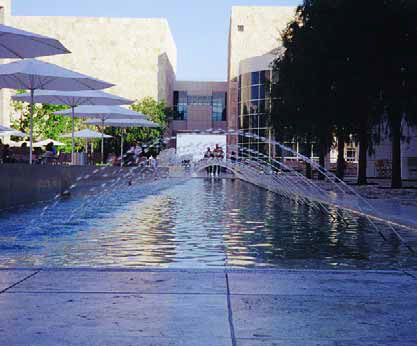
What’s the use of knowing about history? For many of us, the answer to that question seems so obvious that it comes as a shock to find out just how many people in the watershaping and landscape fields don’t grasp the all-encompassing significance of our collective past – but it shouldn’t. Using my own career as an example – and even though I now spend a considerable amount of my time teaching professionals and university students all about art and architectural history – I confess that I waltzed through more than a few early years as an aspiring landscape architect and watershaper in blissful ignorance of
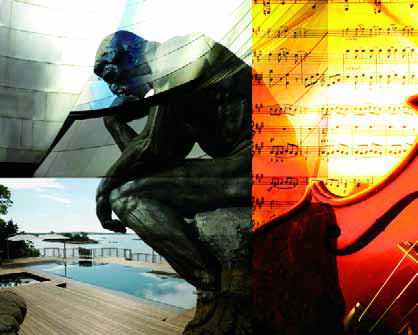
Many great artists are best known for working in identifiable genres, styles or modes or with specific materials, themes or some other defining detail. From Picasso’s cubist abstractions to Mozart’s cascading melodies or Rodin’s bronzes to Frank Gehry’s sweeping architectural forms, geniuses of all stripes are in one way or another known for qualities that are distinctly theirs. The same holds true for many watershapers, especially those working at the top of the field. While many of us (myself included) cross the lines that divide distinctive modes, styles and genres, even the most free-spirited among us can be

It's a point I'll probably make to the end of my days: There is no substitute for travel and exploration of the historic world to learn about design. In my "Details" column in the June 2005 issue of WaterShapes, for example, I discussed my recent trip to Turkey and made the point that the ruins and intact structures we examined while there were full of specific details that I and other watershapers use in our work - whether or not we recognize that what we're doing actually derives from ancient original works. Showing what I mean in the clearest possible terms is what this pictorial article is all about. As you will see, I've included

Watershaping is one of the few art forms possessed of the ability to bridge the gaps between the very old and the very new. From the classic looks of Roman baths and the reflecting pools of ancient Islam to

Have you ever wondered why watershapes are at the heart of so many venerable courtyards and plazas? In a modern context, we might start answering that question by thinking about the natural human fascination and connection with water and then conclude that, like us, those who built the public spaces of ancient Mesopotamia or Athens or Rome simply liked being in the presence of water for emotional and spiritual reasons. But the truth behind the prominent role of water in these spaces isn't as romantic as all that. Indeed, there's

Since the dawn of civilization, it has stood as the single most enduring of all artistic media: From representations of mythological characters and historic events to applications as purely architectural forms and fixtures, carved stone has been with us every step of the way. As modern observers, we treasure this heritage in the pyramids of Egypt and Mesoamerica. We see it in the Parthenon in Athens, in the Roman Colosseum and in India's Taj Mahal - every one of them among humankind's finest uses of carved stone in the creation of monuments and public buildings. As watershapers in particular, we stand in awe before the Trevi Fountain in Rome, the glorious waterworks of the Villa d'Este and the fountains of Versailles, three of history's most prominent examples of carved stone's use in conjunction with water. But you don't need to