








garden
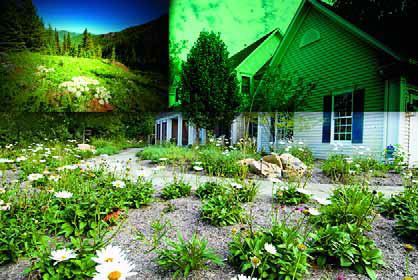
My part of New York hasn’t been hit too hard so far, but it seems these days as though much of the United States is in the throes of a sustained and (in places) severe drought. Even where I am, we’re in what the meteorologists are calling a “moderate” dry spell. This turn of events has made me determined to design landscapes requiring as little water as possible – one consequence being that I now do all I can to avoid using large expanses of

Working on estate-sized residential projects is like assembling huge jigsaw puzzles in which all sorts of disparate pieces must ultimately fit together. While many of the individual parts have their own character and entail particular design and construction challenges, they're all part of a big picture you need to hold firmly in mind through every project phase. At GCS of Woodbridge, Calif., we pride ourselves on operating on a grand scale and on delivering the whole package, from landscape, hardscape, irrigation, control, communications, lighting and sound systems to watershapes of all sizes and types. Keeping all those elements sorted out within a single operation means we need to
Working on estate-sized residential projects is like assembling huge jigsaw puzzles in which all sorts of disparate pieces must ultimately fit together. While many of the individual parts have their own character and entail particular design and construction challenges, they're all part of a big picture you need to hold firmly in mind through every project phase. At GCS of Woodbridge, Calif., we pride ourselves on operating on a grand scale and on delivering the whole package, from landscape, hardscape, irrigation, control, communications, lighting and sound systems to watershapes of all sizes and types. Keeping all those elements sorted out within a single operation means we need to

It's a plain fact: Few designers weigh maintenance as heavily as other elements of a design when creating gardens for their clients. Most will routinely ask whether the client wants a low-maintenance environment or one that requires a little more work and may yield a greater abundance of flowers or other desirable features, but the consideration typically ends there. And this is so despite the fact that by leaving maintenance out at the design level, landshapers often doom themselves to

It was an unusual time to be thinking about work, but there I was on a late-August morning, and Peak's Island off the coast of Maine was in glorious summer form. Small enough to walk around in an hour or so, the island is filled with delightful, charming summer cottages - not a "McMansion" in sight. In the early light, my thoughts had been silenced as I savored the beauty of the coastal wetlands and meadows filled with wildflowers, grasses and sedge. I was totally absorbed by the
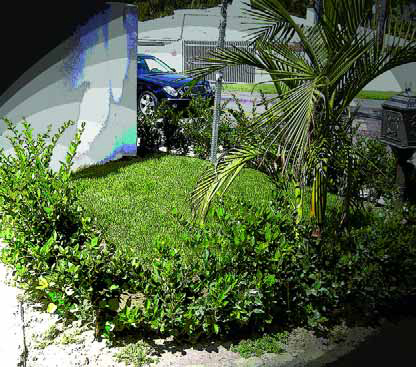
I'm not a big believer in conformity, strict rules and absolutes, but sometimes in my travels I'll come across something that, well, is just wrong. These aren't matters of taste, style, or visual appeal: What I see is just plain wrong! Whether we classify ourselves as watershapers or landscape professionals, we collaborate with our clients to create spaces that appeal to them both visually and emotionally - environments that fit sets of needs and wants they have conveyed to us. Generally, we will find that there are certain colors that appeal to them, design styles they prefer, budgets they can afford, physical limitations to the site and codes by which they must abide. For all that, it's our professional responsibility to guide them within those parameters to a design that

With greater force than ever before, water conservation is back on the minds of governments, landscape professionals and property owners these days - and for good reason: The combination of growing demand and recurring periods of drought has sensitized people in many parts of the country to the fact that water isn't an infinite resource. Even this new magazine is part of the dialogue: In the September/October 2006 issue of LandShapes, James Minnich defined the need for landshapers to become more

Integrated pest management - or IPM, as it has become widely known -- is a concept that emerged about 20 years ago when landscape professionals and others involved in the management of plants and the land began incorporating its techniques into their landscape installation and management projects. Unfortunately, however, the concept of pest management is all too often seen as the exclusive province of those engaged in landscape maintenance: As a rule, designers and design/build contractors rarely pay more than lip service to pests in general and give even less attention to considering them as part of an integrated approach. At the risk of being labeled a "tree hugger," I believe it's time for everyone involved in the various landscape professions to embrace IPM. The simple truth is that, as landshapers, we need to pick up on the lessons of our collective experience. As the saying goes, those who fail to learn from history are doomed to repeat it - as we have, over and
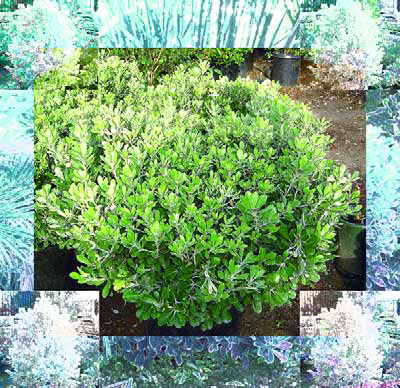
In looking back over several recent projects, I noticed that I've been using one particular genus of plants more frequently than just about any other. Its name probably evokes thoughts of petri dishes and bacterial colonies for most of us, but this plant genus - Pittosporum - has truly held an extremely valuable position in most of my plant palettes in recent years and is one of the most useful of all plant types I use. I find myself pointing them out every time I take clients to a nursery to view and select plants, and it seems I'm always trying to find ways to fit one or more of its many varieties into my planting plans. I treasure them for their great variety in

Done properly, planting design is much like painting: It involves setting frames, backgrounds, screens and stages in a garden, thus creating a living scene with the plants as features of the composition. Just as a painter adds layers of colors to a canvas to create a work of art, the garden designer combines plants for visual delight. But the garden designer has an advantage in that scent, texture, motion and even taste can be experienced in gardens in ways that can only be suggested by a painting. (As a former painter, I can attest to this point and credit my artistic adventures in