







engineering
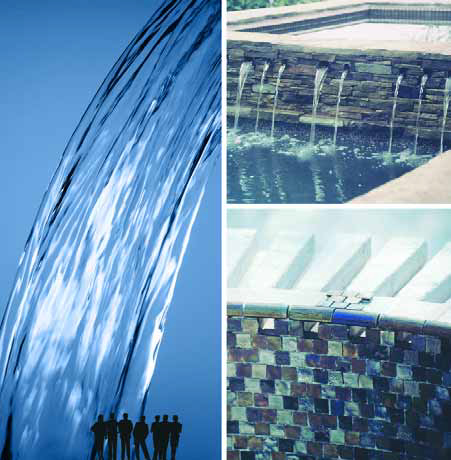
One of the skills of a good designer is the ability to recognize those situations in which less is more. The detail pictured in these pages, for example, shows how the choice to go with a small volume of moving water (as opposed to a torrent) can add immeasurably to a composition's visual strength. Using this understated approach helps the designer or builder avoid what has become one of the biggest clichés of modern pool design - that is, the outsized waterfall spilling over a single weir from a raised spa into an adjacent swimming pool. My desire to get away from that monotonous

The Getty Center is a true multi-media experience: imposing architecture, lots of people, incredible materials of construction, amazing views, diverse spaces, rich and varied sounds - and it's mostly all a bonus, because none of this has much to do with the Los Angeles center's core functions as museum and research institution. Designed by architect Richard Meier, the 750-acre campus is dominated by outsized structures wrapped in travertine, glass and enameled aluminum. It's all a bit cold (maybe time will soften the sharper edges and

Lately I've been finding myself in what seems like a fairly unique position: On the one hand, I work as a design consultant for architects and as a designer for high-end customers; on the other, I work as a builder executing the designs that customers and their architects choose. In this dual capacity, I've been able to gather a tremendous amount of input from construction clients and transfer it in one form or another as a consultant. I also have had the opportunity of seeing how decisions made in the design process play out during the construction process. Seeing both sides has led me to certain conclusions, chief among them

Throughout recorded history, great societies have built monuments to celebrate their victories, commemorate their tragedies and express their guiding ideals. Through creation of these great works of art or

It's one of the most famous buildings in the world, but few people know that Frank Lloyd Wright designed Fallingwater in a matter of hours. In 1935, when Wright first received the commission to design and build a vacation home for Pittsburgh retail tycoon Edgar J. Kaufman and his family in Mill Run, Pa., he didn't get to the project right away. After several months of preliminary discussions and delays, Kaufman decided to force the issue, telephoning the architect and saying that he was going to visit Wright's studio to see what had been done. It was at that point Wright decided he'd better design the house. He had a weekend. The construction process was no more direct, but it took longer. Work began in 1936 and was completed by 1939 in a series of costly fits and starts. The project was originally set to cost in the neighborhood of $40,000, but the final tally rose to nearly ten times that amount - not inconsiderable in post-Depression America. The result of the dramatic (and, at times, traumatic) process of design and construction is nothing less than one of the greatest achievements in American architecture, a work so compelling that it never stops
It's one of the most famous buildings in the world, but few people know that Frank Lloyd Wright designed Fallingwater in a matter of hours. In 1935, when Wright first received the commission to design and build a vacation home for Pittsburgh retail tycoon Edgar J. Kaufman and his family in Mill Run, Pa., he didn't get to the project right away. After several months of preliminary discussions and delays, Kaufman decided to force the issue, telephoning the architect and saying that he was going to visit Wright's studio to see what had been done. It was at that point Wright decided he'd better design the house. He had a weekend. The construction process was no more direct, but it took longer. Work began in 1936 and was completed by 1939 in a series of costly fits and starts. The project was originally set to cost in the neighborhood of $40,000, but the final tally rose to nearly ten times that amount - not inconsiderable in post-Depression America. The result of the dramatic (and, at times, traumatic) process of design and construction is nothing less than one of the greatest achievements in American architecture, a work so compelling that it never stops

From the start, this project was meant to be something truly special - a monument symbolizing the ambition of an entire community as well as a fun gathering place for citizens of Cathedral City, Calif., a growing community located in the desert near Palm Springs. "The Fountain of Life," as the project is titled, features a central structure of three highly decorated stone bowls set atop columns rising into the desert sky. Water tumbles, sprays and cascades from these bowls and other jets on the center structure, spilling onto a soft surface surrounding the fountain. All around this vertical structure are sculpted animal figures - a whimsical counterbalance that lends a light touch to the composition and opens the whole setting to children at play. I've been building stone fountains for 18 years, and I've never come across anything even close to this project with respect to either size or sheer creativity. Making it all happen took an unusually high degree of collaboration on the part of the city, the artist, the architects and a variety of
From the start, this project was meant to be something truly special - a monument symbolizing the ambition of an entire community as well as a fun gathering place for citizens of Cathedral City, Calif., a growing community located in the desert near Palm Springs. "The Fountain of Life," as the project is titled, features a central structure of three highly decorated stone bowls set atop columns rising into the desert sky. Water tumbles, sprays and cascades from these bowls and other jets on the center structure, spilling onto a soft surface surrounding the fountain. All around this vertical structure are sculpted animal figures - a whimsical counterbalance that lends a light touch to the composition and opens the whole setting to children at play. I've been building stone fountains for 18 years, and I've never come across anything even close to this project with respect to either size or sheer creativity. Making it all happen took an unusually high degree of collaboration on the part of the city, the artist, the architects and a variety of
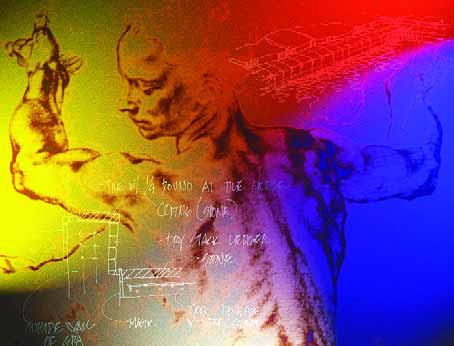
This project is all about making connections - connections between the inside of a home and the outdoors; between surrounding wide-open spaces and an intimate backyard; between the colors of the hillsides and the materials used in crafting the watershape; between the clients' desire for recreation and their passion for beauty; and between the beauty of nature and the modern, sculptural lines of the design. If you've followed my "Details" column in WaterShapes in recent months, you've seen many of the components that have been incorporated into this particular
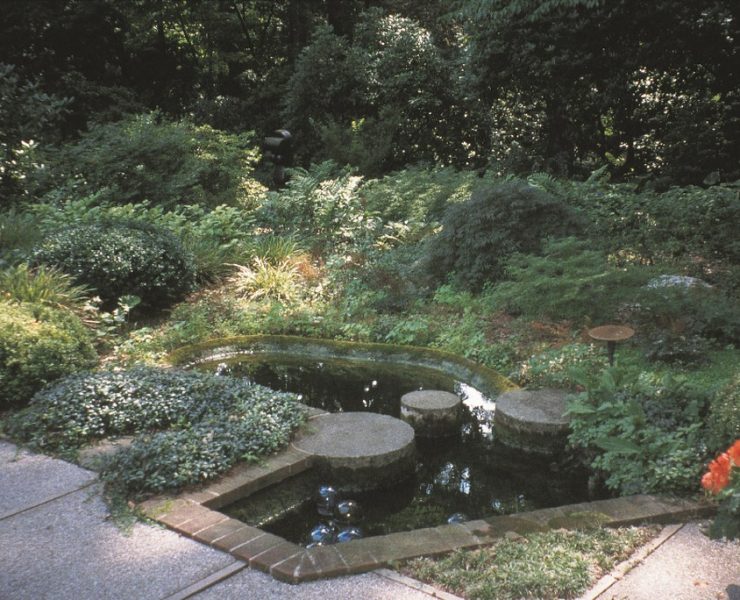
Whether you choose to replicate old stone structures or borrow ideas and transplant them into contemporary designs, there is certainly a treasure trove of design concepts to be found in the masterworks of those who've gone before us. Indeed, stone has been the raw material of choice for many of the world's greatest architects, landscapers and watershapers, each of whom has relied on stone and its timelessness in fashioning works of beauty. In the first two articles in this series, we toured