








engineering
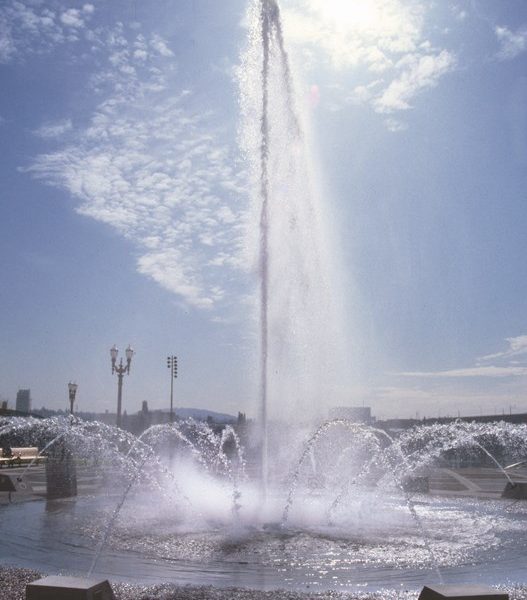
People don't usually have trouble with boundaries and will honor requests to "Keep Out," for example, or leave certain doors to "Employees Only." But there are also cases where we generally take issue with limitations on behavior whether stated or implied, and I can think of no better instance in which this takes place than with water in public spaces. Despite designers' best efforts over the years to make it clear where bathers are welcome and where they are not, the public has steadily defied boundaries by trespassing into waters that were never directly designed for human interaction. In fact, you might say that formal, decorative fountains are a forbidden fruit from which many of us have taken the occasional bite. During the past two decades, watershape designers have looked very specifically at the irresistible urge we have to touch water in an effort to shape all-new boundaries between public nuisance and design nuance. Along the way, we've learned which elements offer a deliberate, positive signal - a real "permission to play" - and are now wielding this power of interactivity to create and define a broad range of

William Rowley & Scott Mackey It's one of those places you really have to see to believe. Part indoor waterpark and part competition facility, the Sierra Vista Aquatic Center is owned by the town of Sierra Vista, Ariz., a desert community of approximately 35,000 retirees and military families located near the sprawling Fort Huachuca army base. That's about 50 miles south of Tucson - and about as remote as a town can get. Known locally as "The Cove," the aquatic facility represents the town's commitment to its citizens' quality of life and a nod to the potential recreational water has to transform a community. From start to finish, the project took about four years and cost about $6.7 million, all paid for by the city. Designed by Tucson architect Scott Rumel, the basic facility was built by Lloyd Construction under the management of construction supervisor Leon Davis. Tucson pool builder Mark Ragel of Patio Pools set up the various watershapes, while our firm, Rowley International Inc. of Palos Verdes Estates, Calif., took care of the aquatic design and engineering. The facility opened in
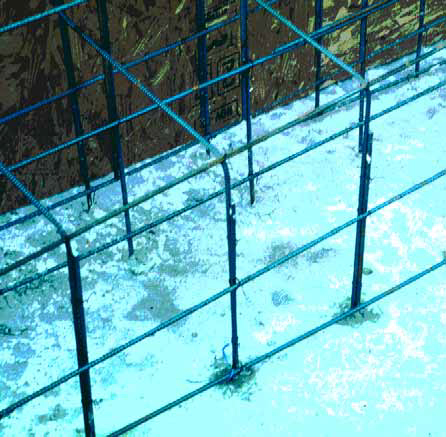
Of all the things I've learned in my work as a watershape designer and builder, one particular point stands out: When it comes to ensuring quality results and a project's success, there's absolutely no substitute for good supervision! I say this knowing that most job sites run by people in the pool industry are inadequately supervised if they're supervised at all. Yet experience shows, time and time again, that while complete, professional plans are part of success and that great subcontractors are essential, constant oversight is the absolute

Cascades and waterfalls are different from most other types of watershapes. In ponds, for example, the quiet reflective surface of the water serves to accentuate elements within the water, such as the plants, fish and rock materials, while reflecting the features surrounding it. That same reflectivity is a hallmark of pools as well. Our purpose in setting up cascades and waterfalls is, by contrast, to highlight the water itself, and specifically the beauty of water in motion. As it flows over and around rocks and descends through natural weirs and cascades, the water itself creates interest, excitement and soothing sounds. There's also a greater sense of variety when you make the water move. Within relatively small spaces, we set water up to rush and meander, cascade and roll, tumble and trickle - all by way of conjuring impressions of a natural stream moving down a grade. Using moving water in this way - in mimicry of nature - is a true watershaping specialty, and volumes could be written about what it takes to make these scenes believable. For now, however, let's focus on setting up headwaters - a feature we at Xstream Ponds in Cashiers, N.C., have come to see as the key to

It should be a given, but it isn't: Despite the fact that proper pump installation is critical to ensuring the reliable and efficient functioning of any watershape's circulation system, too often installers will take shortcuts that compromise performance and shorten a pump's life. In this article, hydraulic expert Steve Gutai opens a new series on proper hydraulics with a concise look at what it takes to get the installation done the right way.
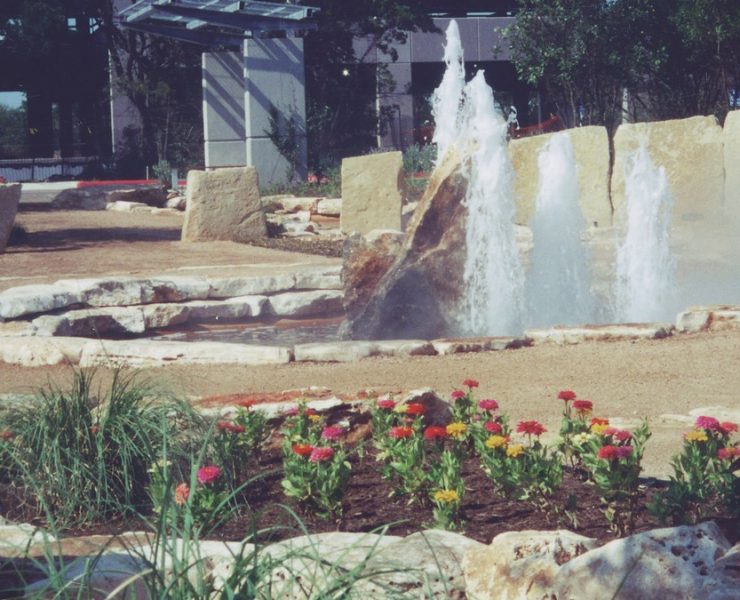
Perhaps the hardest thing for a watershaper to accomplish is to take a set of someone else's drawings, plans, sections and elevations, roll them all around together and come up with an accurate, three-dimensional, living interpretation of an architect's vision. The project shown here is a prime example of what's involved in this process. Designed by senior landscape architect Patrick Smith of the Austin, Texas, firm of Richardson Verdoorn, the plans called for three separate streams ranging in length from 50 to 80 feet (with each dropping 36 inches over various weirs) - all converging on a rocky

One of the things I like most about working with water is that it makes statements that don't require much verbal explanation. In fact, I like to think that the projects I build speak volumes about my clients' desire for something creative and interesting. They also speak to the point that most of my clients grant me the freedom to give my very best effort, both aesthetically and technically, without many constraints. Not all the work I do is so modern in style or approach as the project pictured in these pages, but this one illustrates a principle that's become a
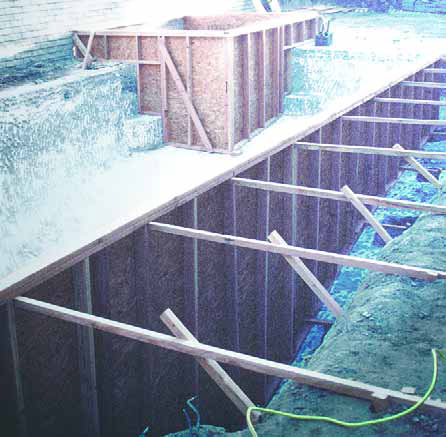
Last time, I mentioned initial meetings and discussions having to do with a retrofit project in Pacific Palisades, Calif. I call it a "retrofit" because we're using a portion of an existing pool shell as part of the new one, but in truth this is really a ground-up reworking of the entire environment. This project displays the influence that architects Ricardo Legoretta and Luis Barragan have had on my thinking about shapes, colors and spatial relationships. As soon as I saw this place, in fact, the work of both came to mind because of the strong colors and materials and the expressive
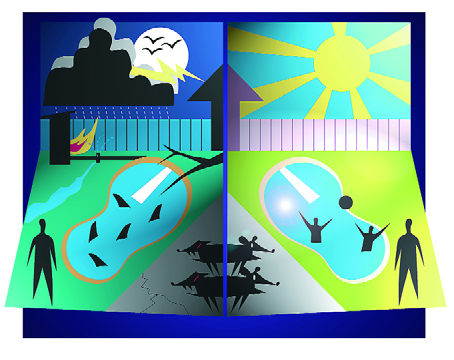
Is it honest to say that too few of the swimming pools you find in America's backyards are what one could call well built - and that even fewer of them are well designed? I think so, because so many of the pools I see run like junk and look like junk, and it's way too easy to find installations that lack any apparent relationship to their settings, their homes' architecture, the landscaping or any recognized

There's a natural tendency to think of artists as dreamy, distracted types devoid of any aptitude for or interest in things technical. When you study just about any art form in depth, however, you soon realize that