







design education

Despite decades of being derided as an industry that has been unable to change for the better, Mark Holden argues that some segments of the pool industry have, in fact, dramatically improved in recent years. Moving to higher professional ground, he says, requires elevating practices across a range of important fronts.
...

All great watershape projects begin with a design that suits the client’s desires, needs and budgets, while at the same time harmonizing with the surrounding landscape and architecture. Watershape University is focusing on the power of design with three essential courses at this year’s, International Pool | Spa | Patio and Deck Expo.
...

As part of its Wolfpack Webinar Wednesdays live online series, Watershape University has presented three installments of Design 1921: Designers Den Series, hosted by Mike Nantz. The idea is to pull back the curtain on the design process through the eyes of some of the industry’s leading designers as a source of insight, advice and inspiration.
...

The discipline of landscape architecture is based on a single process, says Mike Farley, that can be applied to a variety of design types. Here's how you can pick up this systematic approach without having to go to college.

Back in our June 24 edition, we ran a provocative feature by Texas designer/builder and Watershape University instructor, Mike Nantz. As the title "Charging for Design" suggested, Nantz used the space to make a case for pool designers requiring a fee for their design work, rather than using it purely as a sales tool. It's a subject that has been tossed around for a long time and always seems to touch nerves, especially among

Charging a fee for design work is one of the foundations of true professionalism across multiple disciplines. That's why Michael W. Nantz won't give away his watershape ideas, partly because it's a solid revenue stream, but also because it builds up a base of pride and self-esteem.

Through the years, a number of key themes have almost effortlessly woven their ways into columns and features published in WaterShapes. Some of these include the value of design education, the significance of familiarity with art history, the importance of materials selections and the virtues of sound hydraulic design, to name just a few. Another theme that stands among the most common of all our overarching concepts has to do with
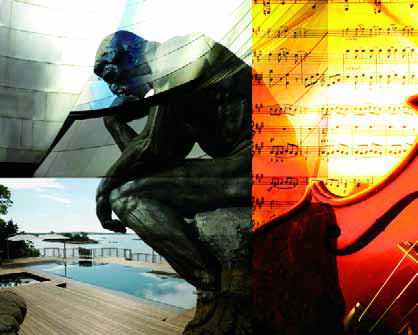
Many great artists are best known for working in identifiable genres, styles or modes or with specific materials, themes or some other defining detail. From Picasso’s cubist abstractions to Mozart’s cascading melodies or Rodin’s bronzes to Frank Gehry’s sweeping architectural forms, geniuses of all stripes are in one way or another known for qualities that are distinctly theirs. The same holds true for many watershapers, especially those working at the top of the field. While many of us (myself included) cross the lines that divide distinctive modes, styles and genres, even the most free-spirited among us can be