







construction

In most projects, great work requires the watershaper's personal understanding of who the clients really are, deep down. That doesn't mean we have to become our clients' best friends or marry into their families. Rather, creating watershapes at the highest level involves a different kind of relationship, one in which a shared vocabulary and common vision develop through discussions of water, stone, art, plants and the orchestration and staging of experiences that will occur in given spaces. Take the project covered here as an example: The scope of the work, an unlimited budget and a mandate for the highest possible levels of quality were enough on their own to force us to explore the limits of our skills and creativity. More important from our perspective, however, is that we
In last month's "Detail," I discussed the beginning stages of a new project that has my partner Kevin Fleming and me pretty excited. At this point, the pool's been shot and we're moving along at a good pace. I'll pick up that project again in upcoming issues, but I've brought it up briefly here to launch into a discussion about something in our industry that mystifies me almost on a daily basis. So far, the work we've done on the oceanfront renovation project has been focused on a relatively narrow band of design considerations having to do with the watershape and its associated structures. This focus is

Contractors of all types are notorious for setting impossible-to-keep schedules, thereby disappointing clients and damaging their own credibility in the process. Sometimes, however, situations arise that require landshapers to shrink their established installation timetables, a necessity that will turn up the heat on even the most accomplished of contractors. For the project profiled in these pages, my clients had something come up that (from their perspective, anyway) necessitated completion of the project much earlier than anyone thought: They were expecting a baby and insisted that our delivery date should happen before theirs. The challenge we faced with the new timetable - just five months rather than the planned eight - was huge: It required truly constant interaction and communication with the clients and sub-contractors as well as intensive coordinating and expediting of a mind-boggling number of simultaneous processes - enough to drive us all crazy from time to time, but ultimately a

Think about what happens when rainwater falls on an impervious surface in a big outdoor parking lot studded by the occasional tree: The water dampens the surface, which instantly becomes saturated. Only a minute percentage of water that penetrates the trees' canopies to reach their curb-bound planters becomes available to the trees' roots. The rest almost immediately starts flowing to drain grates or perimeter drainage details and is lost to a stormwater-collection system. The trees are helped only marginally by the life-giving rain, and the water

Working in constrained spaces is entirely different from tackling projects that unfold in pastures where the only boundary might be a distant mountain or an ocean view. Indeed, in small areas that may be defined by fencing or walls or adjacent structures, the constrained field of view offers substantial aesthetic challenges to the designer in that every detail, each focal point, all material and color selections and every visual transition will be seen, basically forever, at very close range. When you're working small spaces, in other words, there's literally not much room for error. In this smaller context, each and every decision watershapers and clients make will subsequently be in direct view, and it's likely that each detail will take on special significance for the clients, positive or negative, as they live with the watershape over time. And on many occasions, what we're asked to start with as designers leaves much to be desired, including spaces already vexed by sensations of confinement, closeness or downright claustrophobia. To illustrate what I mean, let's take a look at two projects I recently completed in smallish yards for clients who wanted to

When you ask people about transparent building materials, most people immediately think of glass. Glass is certainly stronger than most people realize, but it has never been an ideal structural material because of its weight, brittleness and structural limitations. With our acrylic products, by contrast, architects and other designers have found a material with which they can create substantial transparent structures that are much lighter and more versatile than those made with glass – and with a structural strength more than double that of concrete. R-Cast acrylic (as we call it) is indeed an amazing material: Its uses span from the obvious pools, fountains or aquariums to awesome signage and seemingly impossible structures and lighting (to mention a few possibilities). Its combination of optical clarity with safety, strength, flexibility and UV resistance has allowed an increasing numbers of designers across a range of disciplines to embrace the material as never before. There are several firms that provide acrylic materials to the construction marketplace, with

When we first began collaborating on projects with top-flight architects, landscape architects and landscape designers several years ago, for the most part our role in terms of design was fairly limited: We'd receive requests for bids and proposals based on plans of varying detail, and our role was that of faithful installers of the design. On occasions, of course, we'd also refer our own prospective clients to those same designers, who would generate plans that we would in turn estimate and very often install. We still work that way, but as we've built our ties to these accomplished artists, we've become aware that our role in their projects has been growing, even to the point where we are now being asked in many situations to offer our own design ideas. We're also seeing that, when on-site decisions must be made, these designers are

Elevating the way we do things in this industry means addressing our gaps in knowledge on several levels. First, excellence means understanding the aesthetic side of watershaping - design traditions, art history and the nature of visual appeal. Second (and right in step) is the need to know how to build various types of systems properly. As an industry, in other words, we need to know how to avoid mistakes. In February, Genesis 3 staged a construction school in Orlando - and what follows isn't a commercial; rather it's a point of departure for a discussion long overdue in our industry. What struck me is that

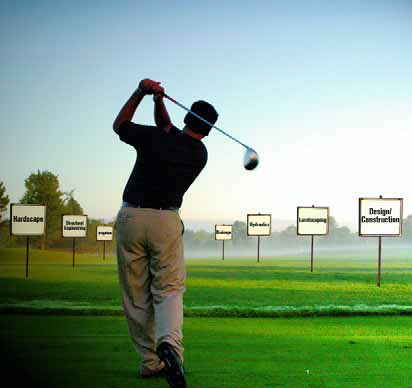
I want to clear up a misconception: Although the programs my colleagues and I stage through Genesis 3 are easily associated with the "high end" and the work of several people associated with our programs may be said to exist at the cutting edge of watershape design, it is simply untrue that we are promoting construction standards that somehow go above and beyond what the rank-and-file industry should be practicing. When we talk about watershape "design" and "construction," it's important to understand that although those two things go hand in hand, they are completely separate considerations. Design is what makes pools and spas either ordinary or extraordinary and is about materials selection, shape, color, elevations, lighting, water effects and location in a setting - basically a whole range of

'I want the house to look as though it is floating on water." That was what architect Victor Canas told me when I was called out to visit this site on the northwestern coast of Costa Rica. It was a brilliant idea, certainly one that befitted the spectacular mountaintop setting and its breathtaking 360-degree views of rugged coastline, forest greenery and assorted perspectives to horizons in all directions. I had the advantage in this case of