







construction

There’s no denying the difficulty of building a high-quality inground pool, but the welcome fact is that the earth can conceal a range of little imperfections, from small leaks to minor structural defects. When you build a pool or some other watershape above grade as an integral component of a multi-story building, however, everything you do is magnified because the work is always exposed. Essentially, you lose the margin for error that might be possible with an inground installation. This past spring, work was completed on two high-rise watershapes our firm engineered as part of L.A. Live, a multi-purpose, entertainment-oriented complex situated near the Staples Center and the Los Angeles Convention Center in downtown Los Angeles. The pool/spa combinations were placed on the fourth and twenty-sixth floors, and although they have simple rectangular forms, they represent the absolute

Among the most gratifying of all projects are those in which designers are able to forge links between different areas of a property, creating an unfolding, choreographed experience that generates notes of anticipation along with reassuring sensations of comfort and familiarity. In our work at Root Design Company (Austin, Texas), we’ve found that water is a powerful tool in defining those sorts of connections within a property, whether it is used in bold ways, as with fountains or swimming pools, or as subtler secondary or tertiary elements, including runnels or small waterspouts. In the project depicted here, we used multiple watershapes within architectural spaces that organize those settings and bring motion and continuity to the overall space. It all ties together visually, with each path leading to intriguing destinations that serve as rewarding visual experiences for anyone who visits. As we see it, the key ingredient in this project was our client, who understood

Despite our fondest desires, it’s quite inevitable that most of the things we humans design and build are impermanent and will change. That’s particularly true of the greenery we place in and around our gardens and watershapes, simply because plants grow and gradually alter the settings they surround or inhabit. There’s a measure of melancholy in this evolution: As designers and installers of these spaces, we’re left to recognize that in most cases we will never see them at their best and most beautiful. Yet that’s as it should be, because any living work of art will continue to develop and improve long after it is technically “completed” by our hands. There’s also great joy in creating naturalistic watershapes and garden spaces, because I see the art of finishing as an exercise in setting the table for the future. In fact, I see this as being remarkably empowering: By participating in

For professionals who tirelessly commit themselves to excellence in all aspects of their work, challenging projects are the butter on the bread. At Drakeley Swimming Pool Co. of Bethlehem, Conn., we truly enjoy jobs with higher-than-usual degrees of difficulty because they generally involve us with clients who have strong ideas about what they want, force us to develop solutions to unique and interesting problems and see us perform on a level that invariably makes us proud. As we see it, these jobs are the reward we get for years of focusing on doing our absolute best. True, these projects can be tough, but we’ve found that by sticking to our “quality without compromise” philosophy, we’ve managed to thrive through tough times and have always earned our share of interesting commissions. It’s proof of the old adage that good things follow hard work, even in a soft economy. That was certainly

Every time I open a landscape trade magazine, I’m bombarded by ads from just about every paver manufacturer on the planet. From the newest faux-stone concrete pavers and ADA-compliant bricks to granite, flagstone, mica and other slab species, we have more choices than ever before for our projects. Some professionals approach this wealth of possibilities and play it safe – not caring so much about what’s the latest and greatest but focusing instead on what’s most familiar and time-tested and being interested in little more than providing clients with surfaces that can safely be walked on. Fortunately, however, there are lots of us who take a different view, putting care and thought into the materials we select for our walkways, patios and terraces and working closely with our clients to make certain the resulting surfaces meet their needs. In other words, there’s
"A smart man learns from his own mistakes, a wise man learns from the mistakes of others." If you follow that Latin proverb, then you might conclude that the watershaping industry is populated by a fair number of smart people and a few wise ones. There are others out there, however, who
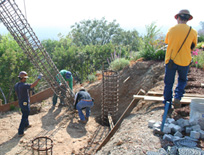
Through the past several years, I've witnessed a debate among people in the watershaping industry about whether every construction project should require soils and geology reports as part of every design and engineering process. Most of my colleagues who work in the custom, quality-oriented end of the business will
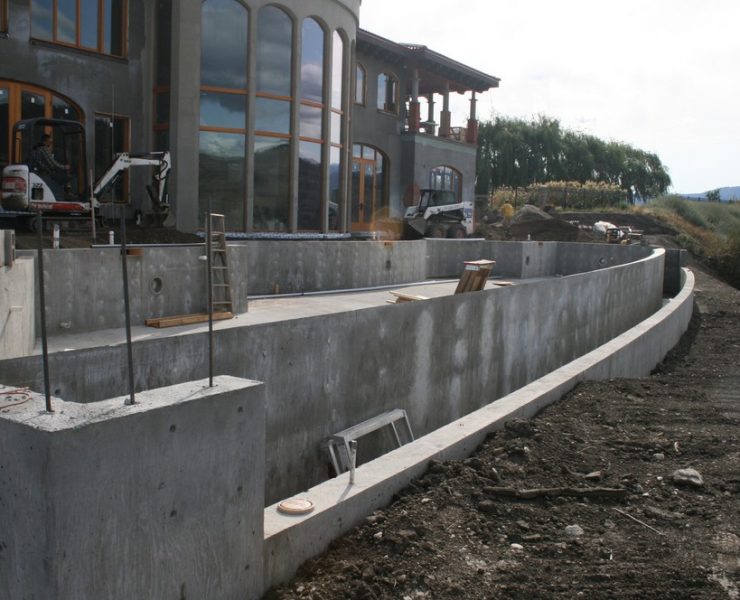
One of the great things about watershaping is how the work can lead you to unexpected places where you sometimes encounter vastly different ways of doing things. In the past few years, for instance, my design work has led me to design a number of projects in the great open spaces of western Canada – many of which have been built by Gene Brown of Valley Pools in Kelowna, British Columbia. Working with this true professional has taught me a great deal about the precision and power that comes in using poured-in-place concrete as a medium and, as a result, has greatly influenced my thinking about how watershapers everywhere should strive to elevate their own standards of construction. My northward migration began with small steps. In fact, I started off with Valley Pools simply as a consultant for hydraulic and mechanical issues, exchanging plans with Brown and helping him ensure the functionality of some of the more complex systems he found himself doing. At first, I did little more than flesh out the plans mechanically, but I couldn’t help noticing that he was finding some interesting projects – and also observed that he was one of those watershapers who had completely dedicated himself to excellence in all facets of the work. Our usual exchanges were set aside, however, when one day he sent me a set of plans that had been produced by an architect in collaboration with

Last month, we began our discussion of a large pond, stream and waterfall system for a historic upper Midwest estate found on the forested shore of a scenic lake. As related there, the project was to include three major ponds and a series of complex waterfall structures connected by streams rising close to the top of the gently sloping property. To sum up, the space we were working with measured approximately 300 feet wide and 800 feet long – a large section of a 35-acre estate marked by scores of mature trees that largely governed the watershapes’ configurations. Moreover, as there were no natural rock formations or outcroppings on site, we faced the need to

With watershapes, sometimes the most straightforward forms work out best. That was definitely the case with this project, a swimming pool I designed and built for a beach club near my home in Guanacaste, Costa Rica. The club is part of an overall resort property known as Reserva Conchal, an utterly spectacular spread covering 2,500 acres on scenic Playa Conchal on our country’s north Pacific coast. I first became involved with the resort’s owners about ten years ago, when they were completing their first phase and I helped them solve some problems with a pool that had been built by another firm. Since then, as the owners’ master plan has gradually unfolded, I’ve worked with them on a number of pools in various spots around the huge property, including watershapes for various condominiums and other facilities. My involvement with their newly constructed club has been, by far, the most