








engineering

For many of us in the watershaping business, the design and creation of fountains and water displays follows a predictable set of functional patterns. Given the traditional tools of the trade and our repertoire of nozzles and spray apparatus, for example, we tend to fashion effects and shapes from the ground up, literally throwing water in the air in a more or less uncontrolled manner. From a design standpoint, the problem with this tradition is that it eats up space like nobody's business: The pools needed to catch free-falling flows of any noteworthy height need to be large enough to capture water subject to the effects of splash, wind drift and overspray. The higher the spray, the larger must be the footprint of the pool to contain it adequately. As a rule, these pools need to have diameters of twice the height of the spray - by any measure a significant contribution of expensive commercial real estate to the creative effort at a time when property owners are motivated to make every available square foot an income producer. As an alternative in this space race, watershapers have found dry-deck or curbless fountains to be a great way to
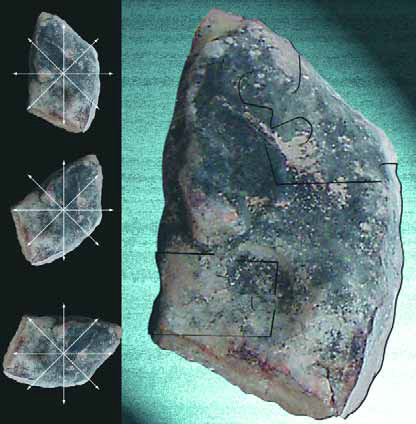
To me, setting natural stone has always seemed something like assembling a very large jigsaw puzzle: All the pieces have to fit together, and there's definitely a right way and a wrong way to make it happen. I start the process systematically by laying stones out in an adequately large area and then just looking at them. As I go, I visualize how each will work as part of the overall composition and identify stones with either convex or concave contours that might fit together in some visual way. I'm constantly asking myself, "If I put this stone here and this other one right next to it, how will it work? Should I pick another stone and use a different combination?" Nature helps me in coming up with the answers, because

Water and cement-based materials interact in so many ways and on so many levels that it's tough to sort everything out. From initial issues of hydration and curing to a range of longer-term, maintenance-related concerns, says chemistry expert Jeff Freeman, cementitious products in submerged environments react so distinctly to water's presence that it is indeed essential for watershapers to consider what's up when putting them together.
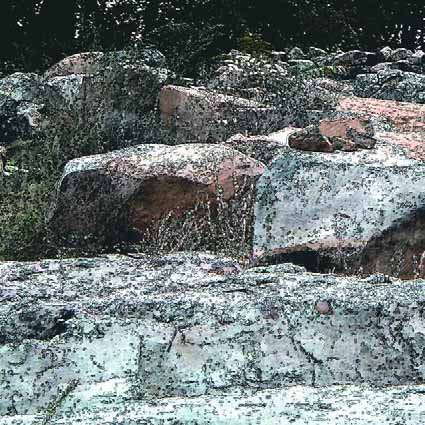
After a long, mostly weather-related break, it's finally time to return to the rolling hills near Hanover, Pa., and the huge, multi-phase watershaping project I began discussing in the fall of 2003. When we last visited the project in February 2004 (page 22), the primary gunite structures were in place; we are now proceeding with the meticulous work that will give the project its visual appeal. Even in unfinished condition, the pool complex is pretty impressive: a big, free-form vessel with a variety of features including an island spa, an enormous associated waterfeature, bridges and a range of bells and whistles I'll discuss in upcoming columns as the project draws to a close. As previously discussed, one of the defining design elements on this project is the extensive use of natural boulders and large expanses of stone decking. Even without the weather delays, these project phases alone have turned into

Watershaping advanced by leaps and bounds from 1999 through 2004 – a journey of artistry…

Watershaping advanced by leaps and bounds from 1999 through 2004 – a journey of artistry…

Watershaping advanced by leaps and bounds from 1999 through 2004 – a journey of artistry…

Watershaping advanced by leaps and bounds from 1999 through 2004 – a journey of artistry…

Watershaping advanced by leaps and bounds from 1999 through 2004 – a journey of artistry…

Watershaping advanced by leaps and bounds from 1999 through 2004 – a journey of artistry…