








design inspiration

Specializing in naturalistic watershapes obviously requires an appreciation of nature, says Atlanta-based pond/stream specialist Robert Vaughn, but doing a good job of emulating what happens in and around natural bodies of water also calls for a refined set of design and installation skills – especially when the goal is to create watershapes that appear right at home amid rolling topographies and densely wooded landscapes. The Atlanta area is a great place to be a watershaper these days. The natural landscape is beautiful with its undulating terrain and dense tree canopy, and there are plenty of affluent, upscale neighborhoods in which skills may be applied in support of clients who have the wherewithal to demand something special. That combination of attributes adds up to great opportunities for companies like mine – Earthwerx of Carterville, Ga. – that focus on crafting nature-inspired paradises in substantial backyards. Indeed, this is a market in which prospective clients are passionate about enjoying their homes and their surroundings instead of engaging in the hassles and perceived risks of travel. In addition, where property values and home equities in other markets have taken a hit in the past year, the

Swimming pools and other watershapes make great subjects for photographers, which makes it logical that every year or two I've be able to amass a new collection of these books to review. In general, publications such as these are all about pretty projects and are aimed mainly at consumers, but I've always found them useful as sources for design ideas and, in general, as a means of seeing what other people are doing. For the most part, however, these publications are not particularly "informative": Once you get past the pictures, there's really not much else there to build knowledge or advance the craft. Such is the case with all four of the publications I'll cover here in quick, round-up fashion. All are beautifully illustrated, and some display an interesting range when it comes to

The people who once inhabited modern-day Mexico's Yucatan peninsula were remarkably sophisticated. Their civilization was based on a deep-rooted knowledge of astronomy, mathematics, hydraulics and engineering. They quarried stone and moved it hundreds of miles on rollers, using this raw material and incorporating it into highly refined buildings, temples, roads and monumental works of art that rival those of the better-known cultures of ancient Europe, Africa and Asia. In 2001, I traveled extensively in the Yucatan to experience the region's culture and view masterworks from many centuries past. What I found was a sense of form, line and pattern in the ruins of
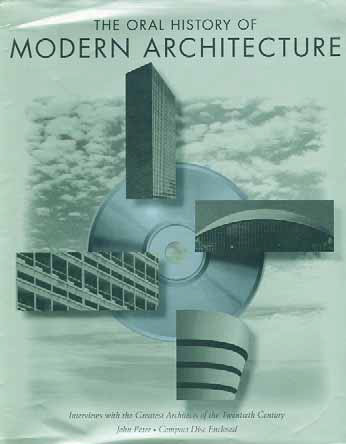
If you feel the same need I do to explore the vast and inspiring reaches of 20th-century structural forms, The Oral History of Modern Architecture by John Peter is a wonderful and enduring resource. Published in 1994 by Harry N. Abrams (New York), this text features more than 100 interviews with modern architects, including in-depth discussions conducted by the author with a group he defines as the "Top Ten" masters of modern architecture. The interviews were conducted in the stretch from 1953 to 1989, and several audio excerpts are provided on a CD that comes as a companion to the printed transcripts. And it's quite a roster of luminaries, including

Many years have passed since I first saw pictures of China, but my desire to travel to the Giant of the Orient has never waned. In recent years, in fact, that interest grew ever stronger as I watched all the new information emerging from China as it has slowly opened itself to the Western world. I’ve been particularly fascinated by documentaries on the Yangtze River and The Great Dam that China is building to manage its floodwaters. This past spring, I visited China to see its amazing gardens with my own eyes and travel down the Yangtze through the fabled Three Gorges and the Lesser Three Gorges. I went seeking inspiration and came back with more than my quota of thoughts on the mysteriousness and tantalizing vagueness with which


A Master at Work