








design inspiration

As I see it, watershaping is ultimately about its emotional effects: As designers and builders, it’s our job to bring a variety of technical and aesthetic elements together to create spaces and structures that leave our clients with enduring feelings of vitality, relaxation, comfort and luxury. In my case, the quest to realize this emotional component actually drives the process. As I strive to generate spaces that have real meaning for my clients, I’m always putting my heart into the work and am fully aware that what I do is an extension of who I am. Indeed, I’ve never been shy about letting my designs reflect my passion for art, architecture, history, color, form and even poetry. By working on this level, I find that I’m able to carry my clients along and make them as excited, inspired and engrossed by the process as I am. It’s an unabashedly romantic approach, but it can be infectious – and clearly satisfies everyone who gets involved. Of course, there is plenty of perspiration that goes along with the inspiration. For all of my enthusiasm, I spend a tremendous amount of time designing these spaces and selecting elements that will populate them, from the largest waterfeature to the smallest plant. I also closely manage the construction process, never relinquishing control because with each and every project, I’m expressing

Decorative-concrete artist Tommy T. Cook has built a reputation for being able to create almost anything from concrete using an array of highly refined and boldly artful processes. In this feature, he demonstrates a portion of that skill by describing how he uses the gargantuan Gunnera plant to craft watershapes in which replicas of the plant’s outsized leaves serve as uniquely natural fountain basins and spillways. Ask anyone who’s tried and it’s almost certain you’ll hear that replicating nature isn’t easy. That hasn’t stopped artists throughout history from trying, however, or from making natural forms an influential source of artistic imagination and ambition. The great thing about using nature for inspiration is that it’s all around us and all we need to do to draw on it is open our eyes, make good choices and decide how what we see can be used in our creative endeavors. In my case, I’d worked in decorative concrete for a long time before nature crawled under my skin. It began when
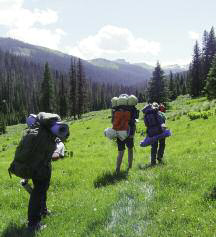
Whenever I work with clients who want to make an artistic statement with their watershape or landscape designs, I commonly start by asking, “What’s your inspiration?” That simple question cuts right to the heart of the matter: It prompts them to discuss their memories, preferences, influences and tastes while also encouraging them to think in artistic and even emotional terms about what they want. This gets them excited about the process – and gives me some much-needed

When Chicago Botanic Garden opened its gates in 1972, those on hand faced the same situation as those who come today: They will never see nor experience the garden alike on any two occasions. For decades, we have personally and carefully watched this remarkable property grow. Along the way, we’ve have shared some of the most profound experiences we’ve ever had in our lives: Both the water elements and the gardens constantly conspire (in the literal sense of the word), breathing as one to create spaces of remarkable beauty, tranquility and diversity. It is truly our slice of heaven on earth. For years now, we have visited the Garden almost every week to refuel our bodies and refresh our minds. We’ll generally start with a light lunch at the Garden Café, sometimes in the company of a client or with work materials we enjoy discussing in this stimulating environment. Part of the joy we experience comes from

One of the most common things I hear from my clients is that they’ve been inspired by experiences they’ve had at vacation resorts and want to recapture those good times in their own backyards. I’ve heard this often enough that I keep an eye out for volumes on resort design as I wander through bookstores and hunt for material online. It’s a narrow subject, of course, so I don’t run across too many relevant titles. That’s why I was immediately pleased to find Paradise by Design by Bill Bensley (Periplus Edition, 2008). My pleasure quickly turned to delight: The book is certainly about designing resorts – but it

By now, the thought that watershape and landscape designers need to study nature if they want to replicate it in their projects is basically a cliché. Truly, if you want to mimic nature successfully, you must first know it intimately. What many miss in all this, I believe, is a deeper level of “knowing” that goes well beyond simply observing nature as a source of techniques and ideas. Frankly, I think that as designers and as human beings, we are much better off when we also learn how to become nature – by which I mean letting the sights, sounds and smells draw us physically into the place. In doing so, we engage in experiences so profound that the mere mentioning of that place will set us off with memories we will share enthusiastically – or can use as parts of our latest projects. No matter how often I visit natural places, I’m always amazed at the

There’s no substitute for working closely with clients. I typically spend many hours conversing with them, discussing everything from their travels and artistic interests to the specifics of the project at hand. It’s the only way I know of to ensure that I’m following the best path in developing a design to meet their needs. That approach was taken to something of an extreme in the project pictured here: Not only did I devise the outdoor spaces, including a large swimming pool and a host of other exterior features, but I also was extensively involved in building the house itself. It was an exciting process for me, one that yielded positive outcomes and that, to this day, is still one of my favorites. Interestingly, however, my association with these wonderful clients actually began a couple years before this project commenced – an encounter that resulted in no work for me at all and also

My dictionary defines a rill as a small stream cut by erosion. In the practice of watershaping, however, that colorful little word has been stretched to cover manufactured channels in which we artfully move water from one place to another. These often-subtle effects have a history dating at least to the 5th Century BC, when Persian kings demonstrated their power over nature by using rills to bring water – a symbol of fertility as well as a practical means of cooling architectural spaces – from rivers and aqueducts to their palaces. These early rills were observed and adopted by Muslim designers and engineers who rose to eminence in the Middle East more than a millennium later and were carried along as Islamic influence spread through India, North Africa and, eventually, Spain, where signature elements of Moorish architecture are still seen today in the famous

I first became an admirer of Roberto Burle Marx while I was a student in landscape architecture at the University of Florida: His remarkable work, which combined a special brand of modernism with the lush potential of Brazilian settings, was incredibly powerful and the major formative influence on my own professional career. I'd learned how to draw in school and had acquired the technical skills it took to be a landscape architect, but it was seeing how Burle Marx approached his landscapes and paintings - not to mention the way he lived his life - that gave me the spark I needed to define my own approach. My personal relationship with him began soon after I graduated in 1981. I'd read an article in the Miami Herald about Burle Marx turning 70 and began writing to him in hopes he'd invite me to visit his home in Brazil. A couple of months later, I received a call from my friend Lester Pancoast, a well-known Miami architect. Burle Marx was in town and was staying as his houseguest, Pancoast explained, suggesting that since Burle Marx had a free evening I might want to take him to dinner. My future wife and I spent a nice evening with Burle Marx, who was reserved but very polite and seemed all the while to be sizing us up. After dinner, we went to Pancoast's home, where Burle Marx showed us


Reviewing a Decade of ‘Book Notes’