








construction
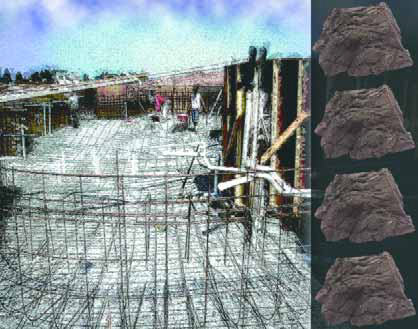
Back in November, I described the background of a project on a sprawling estate in the hills near Hanover, Pa. - a spectacular setting for an enormous swimming pool, an island spa, a cascading waterfeature and big expanses of rockwork and stone decking. As was mentioned, our first task was to remove a brand-new system of retaining walls that had been built adjacent to the planned location for the swimming pool. We did so because the wall's large footings reached into a space needed to support a cascade that will appear to tumble into the pool. To ensure
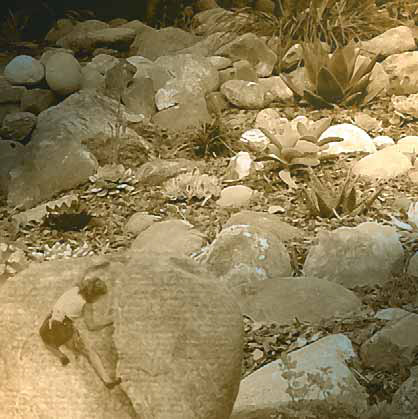
If I were to ask the average watershaper to name the most versatile element in any landscape, he or she would probably reply by talking about water or plants or some other equally prominent component. If you asked me the same question, however, I'd almost always say rocks. Some of you might be thinking I have a few too many of them rolling around loose in my head, but there's a good explanation for my response. First, rocks come in an infinite number of forms, shapes, compositions, colors, textures and sizes. Second, they can be used to sit on, walk on, retain hillsides or create small mounds. Third, they add dimension to designs and contribute in countless other ways to the

Long a fixture in San Francisco's Golden Gate Park, the Conservatory of Flowers is one of the most photographed structures in a city famous for picturesque beauty. At 125 years old, the facility is the oldest surviving public conservatory in the western hemisphere. Originally built in 1878 and then rebuilt after a devastating fire in 1883, it's also an architectural and engineering treasure - an extremely rare example of a prefabricated Victorian-era structure that had withstood the test of time. In 1995, however, a severe storm caused extensive damage and led city building officials to deem it unsafe for public use. Despite that decision, a dedicated group of paid staff and volunteers doggedly maintained and managed the site and its plants in a gallant effort to stave off further degradation, all with the hope that someday the Conservatory would be restored. They bit off no small challenge, as many of the facility's "botanical residents" are difficult and expensive to maintain - including a 100-year-old Philodendron with five-foot tall leaves that fills much of the space beneath the Conservatory's towering central glass dome. The ongoing campaign to save

Since the dawn of civilization, it has stood as the single most enduring of all artistic media: From representations of mythological characters and historic events to applications as purely architectural forms and fixtures, carved stone has been with us every step of the way. As modern observers, we treasure this heritage in the pyramids of Egypt and Mesoamerica. We see it in the Parthenon in Athens, in the Roman Colosseum and in India's Taj Mahal - every one of them among humankind's finest uses of carved stone in the creation of monuments and public buildings. As watershapers in particular, we stand in awe before the Trevi Fountain in Rome, the glorious waterworks of the Villa d'Este and the fountains of Versailles, three of history's most prominent examples of carved stone's use in conjunction with water. But you don't need to

It's striking and even awe-inspiring to observe the ways in which water can shape a desert. Probably the most spectacular example of this phenomenon to be found anywhere on the planet - and unquestionably the most prominent hydrological feature of Arizona's landscape - is the winding course the Colorado River takes through the Grand Canyon it created. The terrain surrounding Pointe South Mountain Resort in Phoenix is another special creation that draws much of its character and interest from the presence of
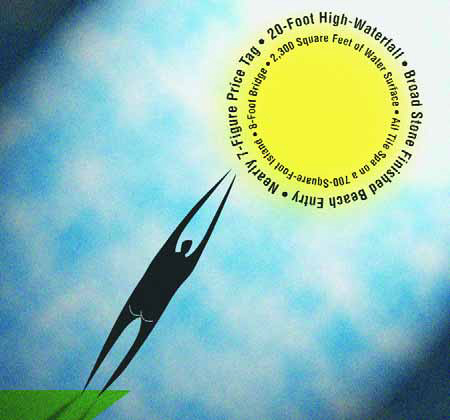
The renovation project I've been discussing for the past couple of issues will be on hold for a few weeks as we await the arrival of a shipment of custom tile from Italy. We'll pick up with that project once work resumes. In the meantime, let's begin coverage of what would have been the next project for "Details" - discussions that will carry us through a good part of the year to come. Everything about this Pennsylvania watershape has been impressive, right from the start. Simply put, it's one of the biggest and most elaborate projects I've ever tackled. As designed, the watershape will
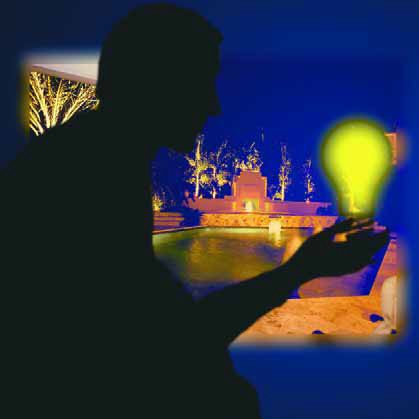
When we think about how the environments we create are used, the first image that probably comes to mind is one of people enjoying themselves in or near the water on a beautiful, warm afternoon. That's natural - and a vision that's a big part of the watershape experience we set up for our clients - but it ignores the other half of the day when our clients are left to themselves with our work. The fact is that watershape owners are mostly working people who spend their days away from home earning their daily bread. So despite the fact that we build these things

'The way a team plays as a whole determines its success. You may have the greatest bunch of individual stars in the world, but if they don't play together, the club won't be worth a dime.' -- Babe Ruth How many watershaping projects are

This project is an example of what can happen when you work under ideal conditions. Set in an affluent enclave in Paradise Valley, Ariz., on a spectacular five-acre estate, the home is a model of Old West styling, with the exposed wooden supports and smooth plaster exterior you'd expect to see in a house built in the Arizona Territory in the 19th Century. It's also graced with all the comforts of a modern estate home. The homeowners are repeat clients of mine - and good friends as well. They've owned other properties in the area, and I've had the pleasure of working with them on three other watershaping projects in addition to the one shown here - perhaps our finest collaboration so far. They love art of all sorts, and when it comes to a home's exteriors and especially to its water elements, they view the work as pure creative expression. Typically, their tastes run to the modern, which meant this home was something of a departure for them. It came with beautiful grounds, a winding driveway, gorgeous trees, a man-made brook and pond, all sorts of beautiful views - spacious, yet secluded, an oasis in the midst of crusty, arid, mountainous terrain. The place also had a small, courtyard pool. Typical of work done 20 or 30 years ago, it was something the clients knew they wanted to

It's right up there for longevity in the history of building materials with marble and concrete: The use of glass tile, in fact, dates to the Roman Empire and traces its path through widespread use in Byzantine art in the eastern Mediterranean before finding its way back to a primary role in the art and architecture of Renaissance Italy. From ancient times forward, glass tile has always been associated with beautiful and enduring works of art. Now enhanced by some modern-day manufacturing practices that serve to bring out its incredible gem-like features, the material still holds faith with all those centuries of tradition while reaching