








art history

It might be something of a cliché, but it's often said that there's great wisdom in being willing and able to learn the lessons of history. In that spirit, I recently took advantage of an opportunity to sit in on a class in the

The history of residential architecture took a real turn toward mass production with the emergence of the modern suburb early in the 20th Century. Especially in the years after World War II, middleclass families increasingly left urban congestion behind and headed for open outlying areas where developers were hard at work in preparation for their arrival. Some developers put distinct stylistic stamps on the neighborhoods and communities they were building. Among the most popular and recognizable of these styles was the Spanish Colonial Revival - a look that has special prominence on the West Coast but that has surfaced throughout the United States and in places as far flung as Europe and China. This style is so popular and has been used so much in so many variations that it is, these days, tough to nail down exactly what is or is not true to early Spanish Colonial motifs and ideas. That's not surprising, because this malleable style itself represents a cobbling together of ideas borrowed from Roman, Islamic and even Native American cultures. Those deep roots, coupled with a scattering of design focus that has blurred borders and distinctions and any sense of stylistic purity, makes it tough for 21st-century watershapers and other designers to
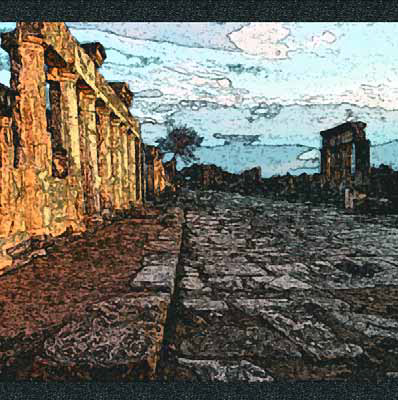
It's a truism that almost all contemporary works of art are derivative: The ideas have already been expressed in one way or another at some point in history, and all we can succeed in doing is to apply those enduring forms as creatively as we can. We can't invent the wheel, but we can redraw it, embellish it, place it in context and, in our own ways, improve upon it through the choices we make in using it. To be effective in that sort of downstream effort as watershapers, it is essential that we understand the nature and origins of the basic building blocks of aquatic design. For years, people have asked me where I get my ideas - pools raised out of the ground, the small spillways, the drain details, the modular deck treatments, the color usage and the use of reflection, to name just a few. "Through my design education" is the short answer, of course, but I can get more specific if we

For more than two full years, this project was my personal and professional obsession. It all started in 1993, when my client, a wealthy recording-industry magnate, called on me to design the landscape for a property he'd just acquired in Bel Air, one of the most exclusive neighborhoods in Los Angeles. The Spanish Colonial-style home had been built in the 1920s and was in a sad state of disrepair. By the time I arrived, it had been gutted to the studs, and very nearly all of the hardscape and plantings around the house had been torn out as well. What he was offering me was a tantalizingly blank canvas in a most spectacular setting. In the two years that followed, not only would we

The people who once inhabited modern-day Mexico's Yucatan peninsula were remarkably sophisticated. Their civilization was based on a deep-rooted knowledge of astronomy, mathematics, hydraulics and engineering. They quarried stone and moved it hundreds of miles on rollers, using this raw material and incorporating it into highly refined buildings, temples, roads and monumental works of art that rival those of the better-known cultures of ancient Europe, Africa and Asia. In 2001, I traveled extensively in the Yucatan to experience the region's culture and view masterworks from many centuries past. What I found was a sense of form, line and pattern in the ruins of

We've all heard and read how important it is to study the achievements of our predecessors in watershape design and engineering. Indeed, exploring these historic works is vital for the role it plays in emboldening our sense of artistic tradition and inspiring our creativity by offering rich galleries of design ideas. When considering Villa d'Este in such light - its extraordinary architecture, otherworldly gardens and daring watershape designs - it's easy to see why this grand estate is so important to us now. It's widely considered to be the most significant residence surviving from the Renaissance and has every right to claim to be the most beautiful and influential as well. Surely there's no substitute for traveling there and lingering with eyes wide open, but even from afar, we can and should turn to this amazing estate as a source of artistic inspiration and, in many respects, as a technical blueprint. A COMPREHENSIVE PROGRAM These days, most of us are more familiar with Bellagio than we are with Villa d'Este, upon which the spectacular Las Vegas hotel was patterned. Even with
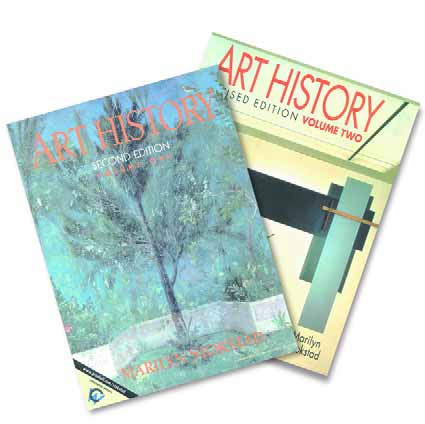
I have a confession to make: I've never really been much interested in art. That may seem surprising coming from someone who has a degree in landscape architecture and has dedicated a career to design. Fact is, I was never exposed to different types of art or to art history in any serious way: My high school didn't offer it, my family wasn't big on it and my landscape-architecture curriculum didn't require it. This never really bothered me, and the fact that nobody seemed to care
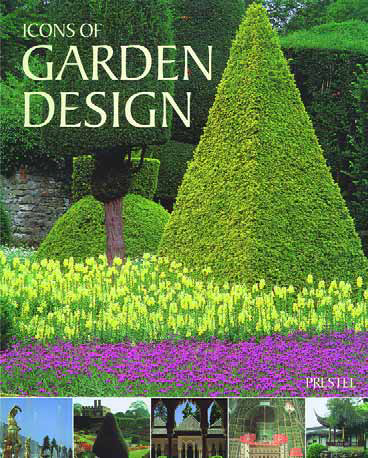
If you're looking for a broad overview of the world's most significant gardens, their styles and the designers who created them, Icons of Garden Design may well be just the book for you. The 174-page text, edited by Caroline Holmes and published by Prespel Publishing in 2001, consists of dozens of well-illustrated articles from a variety of writers who cover an amazingly broad range of famous designs and designers. The book's coverage reaches back to 300 B.C. and comes to a close in the here and now. Along the way, you visit the grounds of Versailles in France, Chatsworth in England, the Peterhof in Russia and an array of gardens less well known to most of us educated in the Western world, including fantastic spaces in

It's one of the most famous buildings in the world, but few people know that Frank Lloyd Wright designed Fallingwater in a matter of hours. In 1935, when Wright first received the commission to design and build a vacation home for Pittsburgh retail tycoon Edgar J. Kaufman and his family in Mill Run, Pa., he didn't get to the project right away. After several months of preliminary discussions and delays, Kaufman decided to force the issue, telephoning the architect and saying that he was going to visit Wright's studio to see what had been done. It was at that point Wright decided he'd better design the house. He had a weekend. The construction process was no more direct, but it took longer. Work began in 1936 and was completed by 1939 in a series of costly fits and starts. The project was originally set to cost in the neighborhood of $40,000, but the final tally rose to nearly ten times that amount - not inconsiderable in post-Depression America. The result of the dramatic (and, at times, traumatic) process of design and construction is nothing less than one of the greatest achievements in American architecture, a work so compelling that it never stops
It's one of the most famous buildings in the world, but few people know that Frank Lloyd Wright designed Fallingwater in a matter of hours. In 1935, when Wright first received the commission to design and build a vacation home for Pittsburgh retail tycoon Edgar J. Kaufman and his family in Mill Run, Pa., he didn't get to the project right away. After several months of preliminary discussions and delays, Kaufman decided to force the issue, telephoning the architect and saying that he was going to visit Wright's studio to see what had been done. It was at that point Wright decided he'd better design the house. He had a weekend. The construction process was no more direct, but it took longer. Work began in 1936 and was completed by 1939 in a series of costly fits and starts. The project was originally set to cost in the neighborhood of $40,000, but the final tally rose to nearly ten times that amount - not inconsiderable in post-Depression America. The result of the dramatic (and, at times, traumatic) process of design and construction is nothing less than one of the greatest achievements in American architecture, a work so compelling that it never stops