








waterfeatures
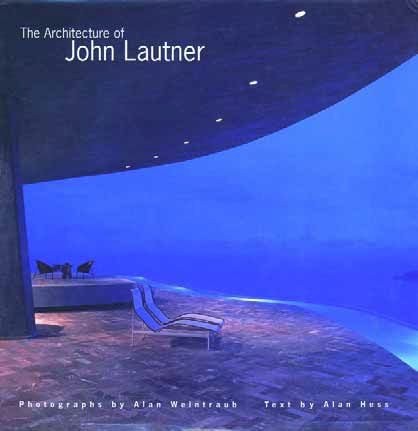
Looking for inspiration can be like mining for gold. You sift and pan through mountains of muck before unearthing a nugget of real value. And when you do come upon a resource that teaches and inspires you to reach for greater heights of creativity in your designs, the payback is a hundred-fold. Knowing where to look helps, and that's what this new column is all about. The first book I'll discuss is an unexpected treasure of incalculable value. Before I read The Architecture of John Lautner (text by Alan Hess, photographs by Alan Weintraub, published by Rizzoli, New York), I couldn't

In 1921, a flood rolled into Pueblo, Colo., submerging the civic center beneath 11 feet of water and leaving more than 100 people dead. To prevent the recurrence of such disasters, engineers came to town, diverted the river along a different path and encased it in underground levees several blocks away. Seventy years later, a grand project known locally as HARP – the Historic Arkansas Riverwalk of Pueblo – undertook to restore the historic course of the Arkansas River and make it the centerpiece of a 26-acre downtown park. HARP re-creates 2,220 linear feet of the historic river in concrete-lined (yet naturalistic) channels. Nearing completion after ten years, the urban park will include 3,300 linear feet of navigable waterway for use by water taxis and pleasure boats as well as dramatic fountains; more than a mile of promenades and other walkways; a two-acre lake; and an outdoor environmental-education center. It has been a massive undertaking, as befits a project aimed at revitalizing an entire city. For the watershaping community, the project stands as an example of the truly transforming effect that

Throughout my entire working life, I've never moved too far away from the water. From my early days as a pool manager (beach bum) at a resort hotel in Miami Beach through many years in pool service and still today, I've always worked and played in and around water. Whatever it is about bodies of water that infects people's spirits and pushes their internal fun buttons, I have it bad: I love to sail, fish and snorkel, I like living near bodies of water and I just love to look at water. On top of all that, I'm a Pisces. If there's one thing I find that I tend to have in common with my customers, it's this passion for things aquatic and the pleasures that come along with them. This is powerful stuff, and I've come to believe that our innate fascination rises to an even higher level of drama and interest when

The gardening impulse of the Japanese is truly ancient. In times before recorded history, sacred outdoor spaces around Shinto shrines and Buddhist temples were arranged according to this design vision. And through more than 1,000 years of recorded history, gardens have been created and refined by priests, warriors and emperors alike in spaces both public and private. The style isn't original in the strictest sense: In many ways, the gardens of Japan find their sources in Chinese gardening styles and landscape painting. But the Japanese developed and refined their borrowings to fit their own national taste for subtle naturalism and elegant rusticity. The result is an amazingly coherent and distinctive landscaping style that now can be experienced at hundreds of public gardens in Japan. The nice thing today is that you don't have to live in Tokyo to appreciate Japanese gardens - or to incorprate their principles into your designs. In fact, garden designers around the world now use the obvious elements of Japanese gardens - the stone lanterns, gravel and clipped azaleas - in naturalistic and asymmetrical settings of all shapes and sizes. In some cases, the total look of the garden is Japanese; in others, its principles are used to



Designing a New Paradigm