







engineering

The combination of concrete and steel is the currency of most modern construction, and there's a simple economic explanation for that fact: The affordability and availability of the basic ingredients of cement, aggregate, water and rebar have made their combination viable for use in countries the world over. Used together, especially when the cementitious product comes in the form of pneumatically applied concrete, reinforced concrete is incredibly flexible and can be used to create almost any shape we might imagine. And in the case of pneumatic application, those shapes can largely be created without the use of traditional concrete forms. Indeed, it's a construction matrix that can be used in such a way that the contours of the soil dictate the shape of the structure, giving the watershaper almost unlimited flexibility. It's even fair to say that

Clear, polished water in well-designed, well-built lakes, ponds and streams: What better way to communicate a powerful message about the value of the properties that surround them? In a commercial setting, for example, clear water in a meandering string of ponds will readily translate into office space filled with happy tenants, while the murky-water alternative could be just the eyesore that holds down the image and limits the facility's financial success. The same principle works for watershapes at apartment complexes, where unseemly streams will almost certainly draw complaints from unhappy residents while cool, translucent water will become a point of pride and source of relaxation for tenants who otherwise might reflexively hold their noses as they pass by. Or consider the private estate where ponds are meant for swimming: Without question, these waters must have a crystalline clarity that attests to the water's safety and potential for recreation. Delivering this level of water quality is more and more a part of

Designing structures to surround indoor pools offers the watershaper the fundamental challenge of creating an interior space that needs all the functional characteristics of an exterior one. That's so mainly because ordinary residential structures aren't made to enclose anything that even remotely approaches the moisture levels encountered when an indoor pool is surrounded and separated from the open air. This leads to consideration of the air-handing, temperature-control and humidity-related issues covered in another article on this subject (click here), but it almost always leads as well to a need to
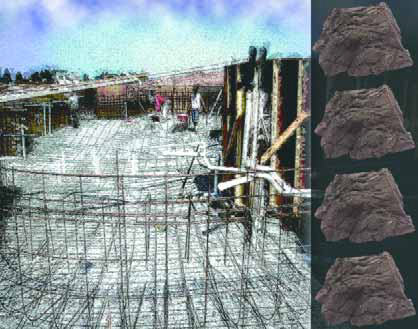
Back in November, I described the background of a project on a sprawling estate in the hills near Hanover, Pa. - a spectacular setting for an enormous swimming pool, an island spa, a cascading waterfeature and big expanses of rockwork and stone decking. As was mentioned, our first task was to remove a brand-new system of retaining walls that had been built adjacent to the planned location for the swimming pool. We did so because the wall's large footings reached into a space needed to support a cascade that will appear to tumble into the pool. To ensure

Long a fixture in San Francisco's Golden Gate Park, the Conservatory of Flowers is one of the most photographed structures in a city famous for picturesque beauty. At 125 years old, the facility is the oldest surviving public conservatory in the western hemisphere. Originally built in 1878 and then rebuilt after a devastating fire in 1883, it's also an architectural and engineering treasure - an extremely rare example of a prefabricated Victorian-era structure that had withstood the test of time. In 1995, however, a severe storm caused extensive damage and led city building officials to deem it unsafe for public use. Despite that decision, a dedicated group of paid staff and volunteers doggedly maintained and managed the site and its plants in a gallant effort to stave off further degradation, all with the hope that someday the Conservatory would be restored. They bit off no small challenge, as many of the facility's "botanical residents" are difficult and expensive to maintain - including a 100-year-old Philodendron with five-foot tall leaves that fills much of the space beneath the Conservatory's towering central glass dome. The ongoing campaign to save

For most watershape projects of above-average complexity, the clients - whether they are developers, architects, landscape architects or property owners - must choose how to execute their vision by deciding who they'll bring in to do the actual work with the water. In my 23 years in the watershaping trades (in service and maintenance, as an installer, with an equipment manufacturer and as a consultant), I've observed dramatically varied levels of expertise on the provider side of that equation. These days, in my work for EDAW, a national landscape architecture firm, I'm now on the specifier side of the equation and, in an interesting reversal, very often find myself explaining to designers in my own company what their options are for getting a watershape designed and built. In my lengthening career, I've seen the sets of strengths, backgrounds, abilities and limitations each category of service provider brings to the table - and seen clearly that an understanding of how all the pieces fit together is useful for everyone involved, from the property owner and specifier to the consultants, suppliers, contractors and subcontractors who get the job done. To build that understanding, let's pull apart the process of setting up a high-end watershape from start to finish and see how various roles intersect and interrelate. We'll focus on large commercial projects for purposes of illustration, but the fact is that the same principles apply just as well (if less formally) to sophisticated

It's striking and even awe-inspiring to observe the ways in which water can shape a desert. Probably the most spectacular example of this phenomenon to be found anywhere on the planet - and unquestionably the most prominent hydrological feature of Arizona's landscape - is the winding course the Colorado River takes through the Grand Canyon it created. The terrain surrounding Pointe South Mountain Resort in Phoenix is another special creation that draws much of its character and interest from the presence of
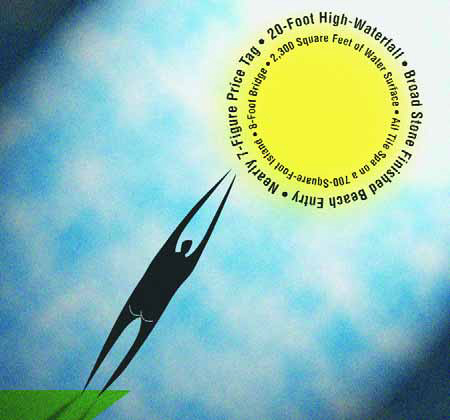
The renovation project I've been discussing for the past couple of issues will be on hold for a few weeks as we await the arrival of a shipment of custom tile from Italy. We'll pick up with that project once work resumes. In the meantime, let's begin coverage of what would have been the next project for "Details" - discussions that will carry us through a good part of the year to come. Everything about this Pennsylvania watershape has been impressive, right from the start. Simply put, it's one of the biggest and most elaborate projects I've ever tackled. As designed, the watershape will
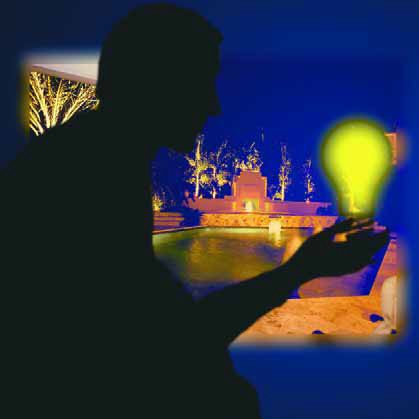
When we think about how the environments we create are used, the first image that probably comes to mind is one of people enjoying themselves in or near the water on a beautiful, warm afternoon. That's natural - and a vision that's a big part of the watershape experience we set up for our clients - but it ignores the other half of the day when our clients are left to themselves with our work. The fact is that watershape owners are mostly working people who spend their days away from home earning their daily bread. So despite the fact that we build these things

'The way a team plays as a whole determines its success. You may have the greatest bunch of individual stars in the world, but if they don't play together, the club won't be worth a dime.' -- Babe Ruth How many watershaping projects are