








edge treatments
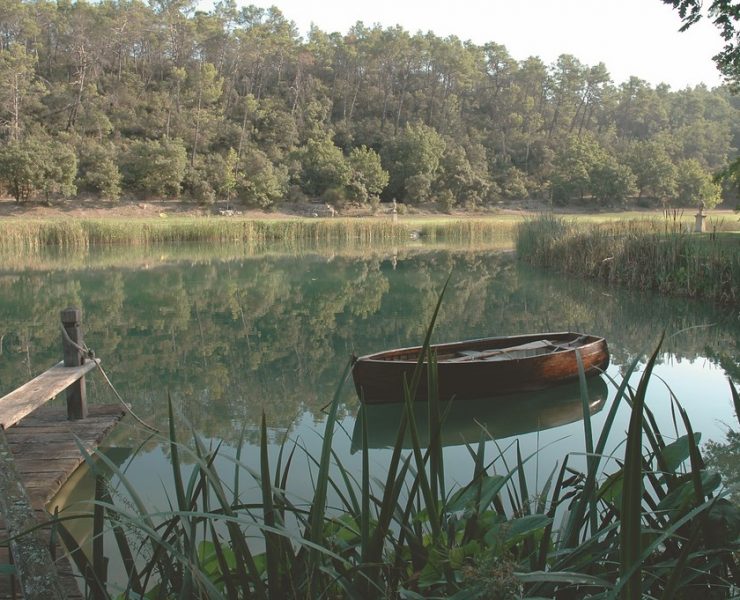
My journey in the company of water began when I was about seven years old, as soon as I was old enough to explore the countryside near my family's farm in Southern England. It was then that I fell in love with water - wading in streams, making dams out of small rocks, sticks and mud and watching the fish darting in clear pools. Much of my summer vacation was spent on a sun-peeled green punt gliding on a lake and staring down to the bottom at the aquatic plants and water creatures. It was a formative experience. My parents loved the water, too, and they always had some type of boat. I'll never forget how almost every one of those modest vessels leaked profusely. This gave all of us first-hand experience of enjoying the water as we developed a visceral appreciation of the importance of

The Chicago Botanic Garden is located, oddly enough, a good 40 miles from that city in the suburb of Glencoe, Ill. And although it is specifically named for the Midwest’s greatest city and might seem a municipal endeavor, it is actually maintained by private donations and serves to display the entire region’s rich flora and scenic beauty. The garden is organized around a large body of water known as the Great Basin, which was created some 60 years ago by dredging the area and diverting the Skokie River to create a series of islands and lagoons. The largest island, known as Evening Island, was the initial focus of our work in redesigning the space. My firm, Oehme, van Sweden and Associates of Washington, D.C., became involved in the project

Our projects generally take two forms. On the one hand, we're called upon to "heal" ailing bodies of water that have been set up with inadequate or improperly functioning circulation and filtration systems. Although other people's mistakes mean good business for us, I won't say that we ever look forward to seeing potentially beautiful ponds or lakes cursed by unappealing or even unhealthy water conditions. On the other hand, we often have the opportunity to join a project at the design phase and handle the installation as well, applying what we know about water quality from the first conceptualization of the watershape. That's always a welcome prospect: Not only is it exciting to

So often, design comes down to an ability to see patterns. I first learned this from my mother, a dressmaker who had an uncanny ability to look at garments for which there were no sewing patterns and then sit down and make them from scratch. I seem to have inherited this talent, taking in a barren landscape and quickly visualizing how it will look with plants, rocks and water. For this, I am happily in her debt. Not everyone comes across such a gift by birth, but I believe that the ability to visualize is something most any watershaper can develop through experience and by taking the time to learn the "language" of any

Tucked into a small cove in the mountains behind La Quinta in California's lower Coachella Valley, The Quarry Golf Club is hidden, ultra-private and basically unknown to all but members of the golfing elite and the wealthy few who play the course. First conceived by entrepreneur Bill Morrow and designed by renowned golf course architect Tom Fazio, the course is a prime example of just how beautiful golf courses can be - and of how critical a role landscaping and watershapes can play in defining their character and aesthetics. Our challenge was to embroider the course's 18 PGA-sanctioned, championship-caliber holes with

To make a pond or stream successfully "natural," the designer and installer must know what it takes to produce a convincing illusion that the end product is actually a naturally occurring body of water. It's no secret in the trade that this illusion is made or broken at the edges, where the physical boundaries between waterway and the hardscape and plantings must be both precisely controlled and completely concealed. Necklaces of stone won't cut it, nor will waterlines sharply defined by lines of terrestrial plants. In fact, the challenge here is to make visually linear boundaries disappear, and that's a tall order for even the best pond/stream designers and builders. In my own projects, I work almost every day in tweaking and refining my approaches to these margins and edge treatments, and I've come up with many ways to enhance the natural appearance of my ponds and streams. In recent years, I've been honing a technique for landscaping in and around the water that's given my work an entirely new dimension: It's a type of planting container I call a "dirt pocket" - a simple structure that lets me plant a broad range of non-aquatic plants directly in contact with
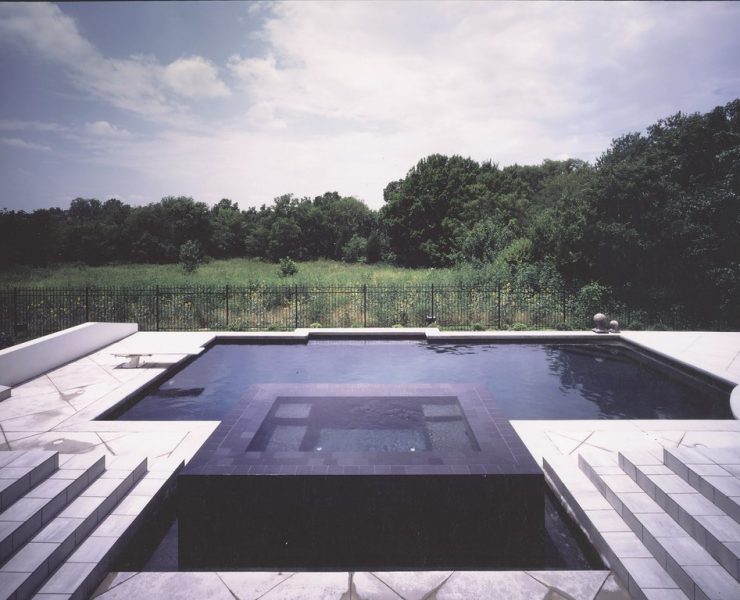
Increasing numbers of our clients are asking for more from their watershapes - so many, in fact, that we're seeing an unprecedented blurring of the lines between swimming pools, spas and the full range of decorative waterfeatures. This demand is particularly strong in one area: In addition to projects that are functional, our clients want them to be visually compelling as well. This need has inspired designers at our firm (and elsewhere) to new levels of creativity. In certain instances, we at Leisure Living Pools in Frisco, Texas, have answered the call with spa designs that
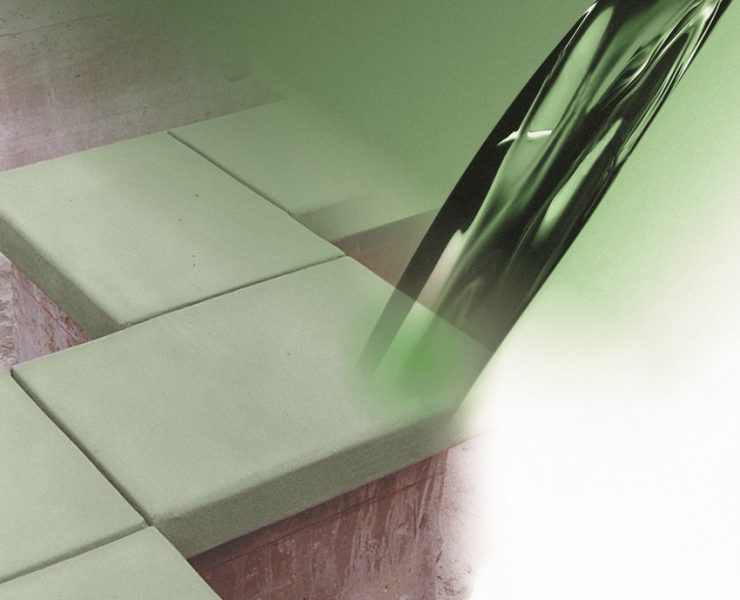
Edge treatments are important to me. They can lead the eye into the water, set up a barrier, break down a barrier. They're simply too critical to the overall impression made by a watershape to be left to chance. For the past ten years, I've found myself using one edge treatment more and more: a poured-in-place coping that uses colored concrete. I've now done it dozens of times, and my clients have always been thrilled by the results. In effect, I use the concrete to create soft and subtly colored rectangular

Now comes the fun part. The final stage of building a stream is where all of the planning and close attention to the stream's earthen substructure, transitions in elevation, liner alignment and hydraulics come into play as you move to build in details that effectively mimic nature. In the first two installments of this series (click here for part 1, here for part 2), I discussed in detail how you excavate and grade the site, place the major transition stones, lay in the liner and install

I've spent a lot of time in the past few years thinking about the things that generate the most interest in what we do as pool builders - and even more time turning those thoughts into designs and effects that meet my customers' desires. Once I started down this path, there was no way to turn back: There's a market out there at the high end that most pool builders never even approach, and breaking through with these clients takes persistence, skill and talent. As important, it also takes a willingness to stop looking at pools, spas and waterfeatures in the context of traditions and conventions that just don't line up with the needs or expectations that these customers at the highest levels have these days. These are customers who won't settle for the ordinary. They won't accept plans that stick