


Travelogues & History

Home to some of the world's greatest outdoor spaces, Kyoto, Japan, is a garden lover's heaven. If you make the trip, however, there is one garden that stands above all others - an aesthetic treasure, a nature-inspired garden masterpiece that is quite possibly the most beautiful place I've ever been. Owned by the Japanese imperial family, Katsura Rikyu (pronounced kah-tsu-rah ree-kyu) is an estate in Western Kyoto near the Katsura River. Rikyu means "detached palace," but that translation is a little misleading to English speakers, because the estate does not
It's a grand watershape built at a time and place when "grand" was in fashion in so many ways. Ever since 1940, when the Raleigh Hotel and its beautiful swimming pool opened to the public for the first time, the establishment has made a statement about the sun-drenched glory of a prime South Florida location as well as the glamour of an era gone by. Designed and built by renowned architect L. Murray Dixon, the hotel and pool are located in South Beach, Miami's famed Art Deco district. The pool's curvaceous shape and modern styling reflected the hotel's architecture and the aspirations of the times. As the '40s wore on, it would become a swimming pool that was perfectly in sync with the world around it. When Miami boomed in the years following World War II, the hotel did, too. Vacationers and snowbirds from the great cities of the Northeast arrived in droves, looking for a new kind of excitement and an entirely different sort of glamour of the kind that featured

The Getty Center is a true multi-media experience: imposing architecture, lots of people, incredible materials of construction, amazing views, diverse spaces, rich and varied sounds - and it's mostly all a bonus, because none of this has much to do with the Los Angeles center's core functions as museum and research institution. Designed by architect Richard Meier, the 750-acre campus is dominated by outsized structures wrapped in travertine, glass and enameled aluminum. It's all a bit cold (maybe time will soften the sharper edges and

It's one of the most famous buildings in the world, but few people know that Frank Lloyd Wright designed Fallingwater in a matter of hours. In 1935, when Wright first received the commission to design and build a vacation home for Pittsburgh retail tycoon Edgar J. Kaufman and his family in Mill Run, Pa., he didn't get to the project right away. After several months of preliminary discussions and delays, Kaufman decided to force the issue, telephoning the architect and saying that he was going to visit Wright's studio to see what had been done. It was at that point Wright decided he'd better design the house. He had a weekend. The construction process was no more direct, but it took longer. Work began in 1936 and was completed by 1939 in a series of costly fits and starts. The project was originally set to cost in the neighborhood of $40,000, but the final tally rose to nearly ten times that amount - not inconsiderable in post-Depression America. The result of the dramatic (and, at times, traumatic) process of design and construction is nothing less than one of the greatest achievements in American architecture, a work so compelling that it never stops
It's one of the most famous buildings in the world, but few people know that Frank Lloyd Wright designed Fallingwater in a matter of hours. In 1935, when Wright first received the commission to design and build a vacation home for Pittsburgh retail tycoon Edgar J. Kaufman and his family in Mill Run, Pa., he didn't get to the project right away. After several months of preliminary discussions and delays, Kaufman decided to force the issue, telephoning the architect and saying that he was going to visit Wright's studio to see what had been done. It was at that point Wright decided he'd better design the house. He had a weekend. The construction process was no more direct, but it took longer. Work began in 1936 and was completed by 1939 in a series of costly fits and starts. The project was originally set to cost in the neighborhood of $40,000, but the final tally rose to nearly ten times that amount - not inconsiderable in post-Depression America. The result of the dramatic (and, at times, traumatic) process of design and construction is nothing less than one of the greatest achievements in American architecture, a work so compelling that it never stops

In 1921, a flood rolled into Pueblo, Colo., submerging the civic center beneath 11 feet of water and leaving more than 100 people dead. To prevent the recurrence of such disasters, engineers came to town, diverted the river along a different path and encased it in underground levees several blocks away. Seventy years later, a grand project known locally as HARP – the Historic Arkansas Riverwalk of Pueblo – undertook to restore the historic course of the Arkansas River and make it the centerpiece of a 26-acre downtown park. HARP re-creates 2,220 linear feet of the historic river in concrete-lined (yet naturalistic) channels. Nearing completion after ten years, the urban park will include 3,300 linear feet of navigable waterway for use by water taxis and pleasure boats as well as dramatic fountains; more than a mile of promenades and other walkways; a two-acre lake; and an outdoor environmental-education center. It has been a massive undertaking, as befits a project aimed at revitalizing an entire city. For the watershaping community, the project stands as an example of the truly transforming effect that

A little more than 100 years ago, in the first big growth spurt in the use of electricity, the harsh realities of the hazards involved with it quickly became apparent. Fires were common occurrences everywhere electricity was distributed, and serious (and often fatal) accidents made daily headlines wherever people came into contact with this wondrous phenomenon. Virtually all of the electric works being built in those early days were set up to provide lighting for a population tired of living in the gloom of candles, gas lamps and coal-oil lanterns. That meant that

There is no doubt about it - during the later years of the 19th Century, Thomas Edison was "Mr. Electric" in this country, and the electricity he promoted was direct current (DC). Last month, we took a look at the shortcomings of his DC system versus the alternating current (AC) distribution system that now serves us all so well. Now let's take a look at the personalities involved. In 1876, using
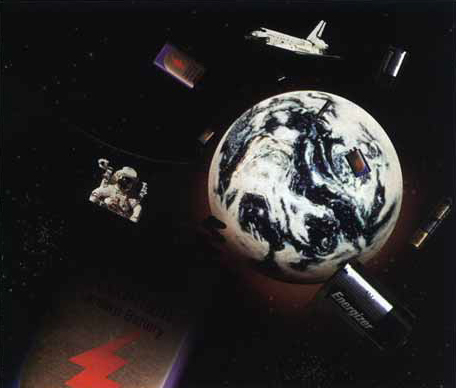
We're all advised to change the batteries in our smoke detectors once each year. This is truly good and affordable advice, and most of us are happy to comply. If you were to decide on a whim to replace all of the batteries in all of your battery-powered appliances or other devices that incorporate battery backup in their design on that mandated day, however, you might find the number of replacements surprising, the day a long one and the

Ever since the hydraulic principles of ancient Persia were 'rediscovered' by Europeans during the Renaissance, the sky has literally been the limit for watershape designers. At the 17th-century Dutch Palace of Het Loo, for example, fountain jets that trace their developmental history at least as far back as 8th-century Persia make an emphatic statement about the power of those who commissioned them. We all marvel, and rightly so, at the waterfeatures of Renaissance Italy, the pools of Versailles in France, the fountains of the