








The Model Aquatic Health Code (Part II): Future Foundations

The MAHC covers a spectrum of critical issues for aquatic facilities, including design, lifeguarding, and facility operation. Here in Part II of our look into the code’s fine points, Dewey Case, technical director for the Council for the MAHC, explores key areas within the code aimed at giving facility owners and managers tools needed for sustained success and safety.
In Part I, Dewey Case explained many of the methods and intricacies involved with creating and updating the MAHC. Here he dives back into the details with a look at safety, promoting adoption and compliance, and the future of the MAHC.
Watershapes: Let’s look at safety. Drowning prevention is a major focus. How effectively do design standards and lifeguard protocols work together within the code?
Dewey Case: When done properly, design standards are integral to lifeguard protocols and drowning prevention. At the very beginning of MAHC Section 4.0, we see 4.1.2.3.11 – Design for Risk Management. This is before the plan approval process when discussing the actual plan preparation. We see Lifeguarding protocols enmeshed throughout the entire MAHC. Even the deck width of 4 feet. Why 4 feet? So, lifeguards have room to extricate a person and provide resuscitative efforts.
Considering visibility, you might ask why a Munsell color value of 6.5? That’s so a body can be seen at the bottom of the pool. We see in 4.6.1.8 that the pool should be designed to minimize or eliminate glare. Why? Because glare impacts the lifeguard’s ability to see all parts of the zone of bather surveillance.
It’s also worth noting that, when the MAHC was first developed, one of the Technical Committees (on which I served) was Lifeguarding and Bather Supervision. Much of what came out of that committee was “knitted” into the entirety of the MAHC. The committee was composed of leaders from the major training agencies, including American Red Cross, Starguard (then affiliated with Starfish Aquatics Institute), the National Aquatic Safety Company (NASCO), YMCA of the USA, and Ellis & Associates.
Honestly, it’s difficult to separate the MAHC from lifeguarding protocols. It’s that woven into the fabric of the MAHC.
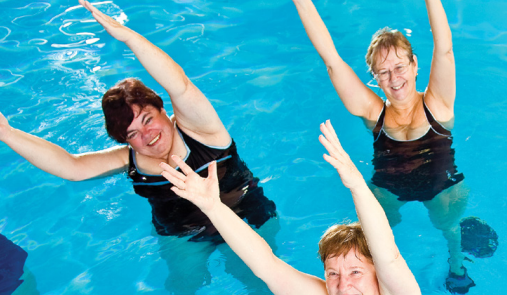
How does the MAHC address human behavior, both staff and patrons, as a variable in safety outcomes?
It’s along the lines of communication with the intent of modifying behaviors. Things like safety rules, bather hygiene, and parental supervision practices. In fairness, the human element is the one variable that’s the hardest to account for. Much of the MAHC, from a certain perspective, is about creating “safeguards” against our own behaviors.
Facility closures due to violations remain common. What are the most frequent compliance failures you see?
It’s the same thing one would expect. Out-of-range (typically too low) sanitizer levels, pH out of range, insufficient water clarity, or issues with VGB compliance.
These closures baffle me. They’re the low-hanging fruit of pool operations. They’re honestly so easy (as in basic, not necessarily financially) to ensure compliance with; it’s hard to imagine that pools are still getting closed for these things.
In terms of cost, compliance is a comparatively modest investment. The typical hotel/apartment /HOA pool build (just for the pool itself, not the entire facility) is around $150-250,000.00. Controllers and feed systems can be installed for as little as $5,000 depending on what one sources. Want exceptional water clarity on a 60,000-gallon pool? Instead of installing two small sand filters, install a third. That takes the pool from a 15-foot/2-gpm filter media rate to 8 feet/2-gpm filter media rate.
The additional cost? One more of the typical larger round filters from any of the main manufacturers like Pentair, Hayward, Jandy, or Waterco. Another stick or two of pipe. A handful of fittings. If you’re installing a manifold instead of a multiport valve, you don’t even really need additional valves unless you want to be able to isolate one of the filters. The cost is negligible compared to the overall cost of the build. Maybe another $3,000.00. And it would have wonderful water clarity. VGB compliance? $200 per drain cover every 5-7 years.
These issues expose deeper issues: lack of knowledge and forethought on the part of owners and operators.
The MAHC is not a federal law but a voluntary guidance document. How does that influence its real-world impact?
It’s been a force of nature really. From its very release, it pulsed through the commercial sector, and so much of what we’re seeing now is because of the MAHC. The strength of the MAHC isn’t that it’s voluntary. It’s the pedigree. Developed and maintained by the CDC, it brings together the best minds in the field. At this point, around 300 professionals from aquatics and public health have worked on it. The acknowledgements read like a who’s who of both the aquatic and public health sectors. Science and data first, best practices second, product neutral. And it was always intended to be free of charge. Anyone can have access to it. Anyone can download it, and anyone can adopt it.
The biggest impact was probably in the expert witness arena. In short order, the MAHC was being referenced by many of the key expert witnesses for the industry—in no small part because many of them worked on the development of the 1st Edition.
It influenced major independent agencies such as the World Waterpark Association and the YMCA of the USA before it was ever adopted by a single jurisdiction.
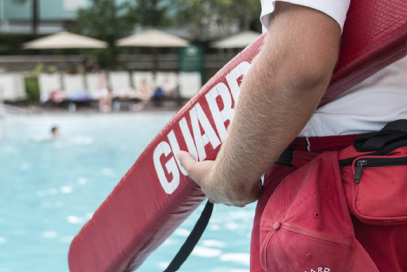
What trends are you seeing in adoption at state and local levels?
In recent years, we’ve seen a significant increase in adoption. Most AHJs (Authority Having Jurisdiction) are doing an inspired or partial adoption. This is when they make modifications to the MAHC and then integrate those into the updated code. We’re seeing significant states like Washington, Oregon, and Tennessee adopting all or part of the MAHC. We’re also seeing states like Colorado opening the door for counties to choose to adopt the MAHC or not.
Another interesting trend is in areas where states are going through deregulation. Some states have dropped their pool code. In response, we’ve seen counties and health districts adopt the MAHC outright.
For jurisdictions that adopt only parts of the MAHC, does that dilute its effectiveness?
Absolutely not. Mainly because the MAHC was always intended to be used in such a way. The CDC made a significant decision. A jurisdiction did not have to use an all-or-nothing approach. Partial adoptions were encouraged. As were inspired updates.
The flexibility of the MAHC is its effectiveness. By being flexible and allowing a variety of uses, the MAHC has actually been a much larger influence in the updates of the local code.
How do you respond to criticism that the MAHC can be too complex or resource-intensive for smaller operators?
I try to be sensitive, but it can be challenging. I’m a pool operator. I’m responsible for pools and have been since before the MAHC was released. I’ve had to put the MAHC into practice.
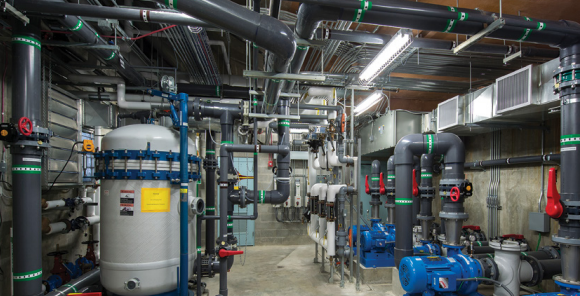
I’ve learned to appreciate that complexity is subjective. For someone from 1914 and driving a Model T, a 1966 Ford Mustang Boss 429 is a complex car. By contrast, for someone from 2026, that same Mustang pales in comparison to a Rivian R1S. If your experiences with equipment, chemistry, and practices have been on the more basic end of the spectrum, then, yes, it will seem too complex. For most commercial pools and their operators, the complexity of the MAHC is the norm. Once they get over the differences in their local code, which may only be 30 pages long, it’s not that complex. It’s just comprehensive. There’s a difference.
As for compliance being resource-intensive, I see their point. But again, it’s a contrast of what was always done to what is done now. Nothing in the MAHC is revolutionary from a commercial point of view. It seems resource-intensive, but it’s just the way commercial pools have largely always operated. It’s not that it’s more resource-intensive, but that the pools making those statements were already “behind the 8-ball” operationally. The MAHC just exposes how far behind they were. It boils down to being an education issue at its core.
About a decade ago, the world-renowned design firm Counsilman-Hunsaker did the math. They found that a pool designed to be MAHC compliant was only 15% more expensive than what was being done at the time. And that was a decade ago. That number, as the MAHC has influenced design and construction, has only dropped as the design differences between the varying codes have been lessened.
Do you foresee a future where elements of the MAHC become mandatory at a national level, or will it remain advisory by design?
Good question. An honest answer is no one knows. Congress would have to take it on as a bill, then ratify it into law. The challenge is where it lives. The CDC is by design a guidance-based Federal agency. Apart from the Vessel Sanitation Program, it has no standing to issue or enforce regulations. So, Congress would need to either change how the CDC fundamentally works, vote the MAHC into law and move it under the purview of an existing agency, or create a brand-new agency.
Before his indiscretions were made public and his subsequent fall from political grace, Rep. Anthony Weiner (NY) authored a bill to make the American Red Cross Lifeguard Training certification the federally mandated Lifeguard Training program for all pools. So, it’s not outside the realm of possibility.
In honesty, I think the best approach is to leave it as a model document. If it were to become Federal law, then it would be subject to congressional approval for any updates. While not insurmountable, this would likely stymie any evolution of the MAHC. That’s why, in many ways, I hope it does not become the “law of the land”.
Looking ahead, are there areas, such as sustainability, water reuse, or energy efficiency—that you expect to play a larger role in future editions?
It’s important to take care of this Earth. The MAHC will certainly adapt and incorporate sustainability as identified and appropriate.
The MAHC is going to be largely a passenger on any work towards increased sustainability. There’s so much movement in the national landscape that legislation and non-law-based initiatives are being developed towards conserving water, energy, and overall sustainability. The MAHC would simply incorporate these and lead the charge.
One area that the MAHC will likely lead is water reuse. There are good practices and bad practices, and a scattering of approaches in the industry. CMAHC has put together a committee to dive into the fundamental question of water reuse. From reclaiming splash-out via deck drains to reclaiming and reusing backwash water as make-up water. The MAHC can leverage its gravitas and volunteer base to develop best practices that can help conserve the massive amounts of water used at pools across the country, and make sure it’s done in a way that prevents outbreaks. That’s the goal of this committee. Not to decide if we should reuse water—that’s a yes. But to craft a way forward so that pools wishing to be better stewards of water resources can do so with assurance.
For aquatic designers, builders, and operators reading this, what is the single most important mindset shift the MAHC encourages?
Good question. I think the most appropriate words would be “holistically protective”. The MAHC encourages these individuals not to think of any one approach or any singular aspect of designing, building, and operating a pool. It challenges professionals to consider the larger picture—the whole. What needs to happen to have the best chance of preventing illness, outbreaks, and drowning? How do the individual pieces of the picture come together for this beautiful portrait of protection?
It challenges designers to not just create a pretty pool, but to design one to be healthy and safe. It challenges builders to not take shortcuts in the building process. It challenges operators to think less about what valves to turn, but more about why those valves are turned and what impacts these valves have on swimmers and staff.
The MAHC is holistic. The MAHC is protective. As one immerses themselves in the MAHC, they begin to have a more holistically protective mindset.
If you could correct one widespread misconception about the MAHC, what would it be?
That it is too complex and too big. With very few exceptions, the individual lines of code are straightforward. They’re easy to understand. It looks like a lot, but at the same time it’s not when you look at it through the right lens. For example, Section 4.0 doesn’t necessarily matter unless you’re building or doing a substantial renovation. If you don’t have lifeguards on staff, large portions of Section 6.0 are moot. Section 5.0 has a lot, but it also depends on what type systems you have. Have a sand filter? You can ignore the section on D.E. Running on sodium hypochlorite? You can ignore the section on chlorine generation.
The MAHC really isn’t inordinately complex, nor is it too big – it’s just comprehensive.
What’s next for the MAHC?
The CMAHC will continue to develop the guidelines with an eye toward the future, and the evolving needs of the public and people who own and operate aquatic places.
One example is the new Cold Water Venue Guidance (link). https://cmahc-production.s3.amazonaws.com/yg92enm9dgwj9updbaux4igiersd Cold plunges have increased dramatically in popularity in recent years, as more facilities are having them installed. This new section provides public health agencies, facility operators, designers, builders, and other industry partners involved in public cold-water venues with a clear, practical framework. It reflects current science and best practices, aligns with the intent of the MAHC, and recognizes that cold-water applications present distinct operational and safety challenges.

It’s a perfect example of how the MAHC is a living document that responds to the market, consumers and stakeholders across the spectrum.
What advice would you give to professionals who want to not just comply with the MAHC, but truly embrace its intent?
To paraphrase a podcaster I like to listen to – climb up on the high dive and cannonball on in.
There’s one striking thing about the MAHC, a surprising thing. As professionals embrace it and align themselves with it they become better. They become more purposeful. Over time, they’ll begin to increase their own level of knowledge and professionalism. To embrace the intent of the MAHC is to embrace being a true aquatic professional. It’s certainly a journey. But embracing the MAHC is worth it. You will be a significantly better aquatics pro for it.
Images courtesy of the Council for the Model Aquatic Health Code. To obtain a copy of the 2024 MAHC go here.