







The Model Aquatic Health Code (Part I): Origins and Purpose
The health and safety of public aquatic facilities rests on a complex foundation of science, engineering, operations, and human behavior. At the center of that effort is the Model Aquatic Health Code (MAHC), a living document that has become the most influential guidance resource for aquatic facilities across the United States.
Developed through a collaborative process involving public health officials, industry professionals, researchers, and facility operators, the MAHC provides a framework for creating safer, healthier, and more enjoyable aquatic environments.
As aquatic facilities continue to evolve, so do the challenges they face. Advances in water treatment technology, changing expectations for staff training, emerging public health concerns, and ongoing discussions about lifeguard deployment all require careful consideration. The MAHC addresses these issues through a rigorous code-development process that relies on scientific evidence, field experience, and broad stakeholder participation.
Few people are better positioned to discuss these topics than Dewey Case, Technical Director for the Council for the Model Aquatic Health Code. With extensive experience in aquatic health and safety, Case works at the intersection of public policy, facility operations, and technical standards. He has witnessed firsthand how the MAHC has matured from an ambitious public-health initiative into a widely respected resource that influences the design, operation, and management of aquatic venues throughout the country.
In the following conversation, Case explains how the MAHC is developed and updated, the role it plays in supporting both patron safety and positive staff experiences, and why continuous improvement remains essential in an industry shaped by changing technologies and evolving expectations. He also discusses current issues facing aquatic facilities, including lifeguarding practices, water treatment strategies, and the collaborative process that helps keep the code relevant in an increasingly dynamic aquatic landscape.
The MAHC emerged from a need for national consistency in aquatic health standards. From your perspective, what problem was it most urgently trying to solve when it was first developed?
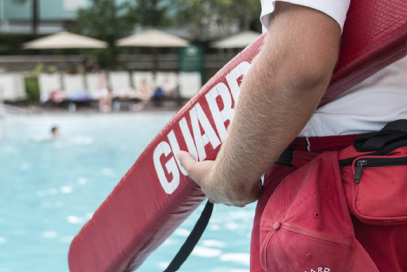
It was an access issue. The typical AHJ (authority having jurisdiction) didn’t have the resources or contacts to work through many of the topics the MAHC was able to address. A great example is the Qualified Lifeguard components found in Section 6.2. A small AHJ in Alabama or Idaho just didn’t have the contacts and resources to assemble a group of national leaders in the Lifeguarding sphere. That can be repeated with sanitation, water chemistry, design, and so on. With the gravitas of the CDC behind it, the MAHC was able to bring the national experts into one room.
Before the MAHC, pool codes varied widely across jurisdictions. How significant were those inconsistencies in terms of public health risk?
It ran the gamut from insignificant to extremely serious. We had well established, thought out, and tough codes in states like Florida, Texas, New York, and even Ohio. We had AHJs that had minimal or no pool codes. We had high caliber pool operators and professionals that looked at the local codes as the barest of essentials and well exceeded them (ultimately, that’s what in the MAHC: a collection of already-in-place industry best practices as observed by “the best of the best” in public health and the aquatics sector). We had pool operators (in the loosest of terms) that looked at existing codes and thought they were suggestions.
The MAHC pushed (and still does) a focus on data-driven actions. Something that was available at the time, but wasn’t really well broadcast across the industry.
The fortunate thing is that, despite the variation between codes and practices, the work of the MAHC showed one important aspect. If you do the basics – sanitize, control, pH, filter and turnover the water – that goes a long way to being protective of public health.
The code is often described as “science-based guidance.” How do you ensure that the science behind the MAHC remains both current and actionable for operators?
It takes a village for sure. The CDC does the heavy lifting in making sure the MAHC Annex is up-to-date on the disinfection side. The rest, quite honestly, almost takes care of itself. Those doing research know the significance of the MAHC. If they have new data they will, and have, submit change requests to the MAHC. Another key component is in the change request submission process. CMAHC has managed to create a process that has incredible checks and balances while not being overly burdensome and dragged down by excessive procedural bureaucracy. Part of this is that, when submitting a change request, the data must be there.
If it’s not, or if the research is obviously not of high caliber (meaning peer reviewed and published in recognized journals) the change request is all but dead-on-arrival.
Looking back at the first edition in 2014, what aspects of the code have proven most impactful in reducing illness and injury?
The first thing that comes to mind are automated controllers. The requirement for automated controllers, already heavily used in commercial aquatic venues, meant that sanitizer and pH control were no longer approached with a “toss it in and hope it holds” mentality. This means much more consistent sanitation. This consistent sanitation means much more protection from pathogens like E. coli, Pseudomonas aeruginosa, and Naegleria fowleri.
The second biggest impact is revolving around splash pads (Interactive Water Aquatic Play Venues in the MAHC). Requiring higher turnover and Cryptosporidium rated secondary disinfection systems were huge steps towards mitigating Cryptosporidium outbreaks that have received so much attention over the years. And, of course, the fecal contamination remediation guidelines that set the standard for how aquatic venues handle water contamination.
From a physical injury and drowning aspect, the requirement of a safety plan. Requiring a safety plan made aquatic venues utilizing Lifeguards sit down and review their practices. It’s like the old Benjamin Franklin quote. “Those who fail to plan, plan to fail.” The MAHC made aquatics managers sit and plan out how they will work to prevent drownings, and how they (as a whole unit – not just lifeguards, but all levels of staffing and management) will respond when there is an event such as a drowning or other emergency requiring resuscitation and emergency care.
What role does the Council for the Model Aquatic Health Code play in shaping updates?
It’s a significant role. CMAHC was formed in 2014 to be the vehicle to facilitate and manage the update process for the MAHC. The council works with CDC to determine update intervals, make a call for change requests, review the change requests, provide voting recommendations via the Technical Review Committee (TRC), gather public comments, manage the stakeholder voting process, and prepare a draft new MAHC edition for CDC review.
CMAHC is the gatekeeper. It works to ensure special interests don’t get a foothold and the MAHC process stays product neutral, science and best practice focused, and committed to public health as a priority. Much to my pleasure, and no small amount of relief, our volunteers and those involved in submitting change requests have been very cognizant and respectful of the process. I think it’s a testament to the character of the individuals CMAHC works with at all levels – from those submitting change requests, to our volunteers leading the revision process. With the exception of the 2nd edition, I’ve been involved with the MAHC since the developmental stage. One thing that strikes me:
Not once, not one time, can I point to something and say “Yeah…that’s only in there to promote a product and increase someone’s sales revenue.” For whatever reason, the MAHC has attracted honest individuals of high character. Does that mean everyone agrees on everything? Absolutely not. The passionate discussions I’ve been privileged to be a part of are some of the highlights of my professional career.
With hundreds of change requests submitted for each revision cycle, how do you balance innovation with practicality?
Ha! With a healthy dose of patience and a healthier dose of praying. In all seriousness, this is something that is certainly a challenge at times. Just a side note before I go on. For the 3rd edition, we had over 530 change requests submitted. This was also during COVID. Our saving grace was a health official from New York State named Amanda Tarrier. Her organizational skills are on a whole other level. I’m convinced that if it was any other person chairing the Technical Review Committee (TRC) at that point, we would have been in trouble.
Amanda, the chair for the 5th Edition – Miklos Valdez, and our entire TRC does a Yeoman’s job of working through these things. When looking at a change request, their first question is always “what does the science say?” The second question is “what does the MAHC and existing industry best practices say?” The third question is “is this change request evolution, or revolution?” The last question is “what is the financial impact of this change request?”
That weeds through a lot of potential challenges regarding innovation and practicality. If a change request makes it through that gauntlet, then the vote occurs. If it makes it through the voting, the CMAHC Board of Directors must ratify it.
The biggest thing about the number of change request submissions isn’t navigating innovation v. practicality. It’s navigating the work to evaluate each change request. Each change request is taken seriously and receives a review by the TRC and a discussion.
How do you handle disagreements between industry stakeholders, public health officials, and researchers during the revision process?
There are a couple of ways this works out, often naturally. First, what does science say? Published peer-reviewed data is difficult to ignore. In areas where science is inconclusive or is an area of what is best practice v. scientific data, the volunteers reviewing the change requests have historically been very good at parsing through the nuance and coming to a reasonable compromise. It’s not surprising given the caliber of professionals that have given their time to work on MAHC updates.
Another thing that moderates any disagreements is the concept of “Evolution not Revolution.” This is an underlying theme as the MAHC grows and addresses varying changes. In its most distilled form, a change may be good and data backed, but it may be too large of a change at once. In this case, a more gradual approach is taken. We saw this most strikingly with the CYA Ratio concept integrated into the MAHC in the 4th Edition. The science pointed towards an acceptable range. Conversations were held about holding to the lower end of the range. Ultimately the higher end of the range was settled on. Why? The difficulties and costs are associated with holding a lower ratio. It could be done. In large institutional commercial venues, it was already being done. It was a nothing burger for many, many pools with onsite professional management. But it would have been a shock to the system for HOAs and apartments, especially in the lower third of the U.S. that sees extreme sun and heat in summer.
The final check is the voting process itself. The rules around how changes occur weigh votes greater for public health. This is a key measure to settle issues and keep the integrity of the MAHC. If public health feels strongly about it, there is a chance their vote can outweigh the aquatics sector. This ensures the MAHC is a public health document first and foremost.
The 2024 (5th edition) MAHC introduced updates in areas like cyanuric acid limits, splash pad definitions, and lifeguard requirements. Which changes do you believe will have the greatest operational impact?
Really, I think the updated lifeguarding requirements. Many aquatic venues operate with a single lifeguard on duty providing bather supervision. The challenge is, and it was discussed and addressed in an ad Hoc group composed of leaders from all the major lifeguard training agencies, is that no training agency teaches single lifeguard rescue and response skills. All lifeguard training is centered around a team response, which obviously is absent when there’s only a single lifeguard on duty. Not only from a rescue standpoint, but single lifeguard pools are also challenging from nearly every aspect of what is known about how the human brain handles activities that require intense focus and repetitive actions.
The biggest question here is – what is the real impact? Many facilities staffing pools with Lifeguards have already had more than one lifeguard on duty. So, from a certain point of view, this really isn’t a huge operational impact. But for the pools staffing only one lifeguard, it’s a major operational impact.
Another operational impact is one we really don’t have great data on. It’s not studied but came out of a simple question and revolves around flow-through splash pads. The question? Are these systems being flushed after a boil water notice? In asking that to health officials, the answer was resounding quiet. It was mostly a case of no one ever really thought of it. So, the 5th Edition added language for closing these type of splash pads (called non-recirculated interactive water aquatic play venues) when there’s a Water Quality Advisory issued by the potable water provider, and a requirement for flushing before being open for use.
How is the MAHC adapting to newer aquatic venue types, such as artificial lagoons or hybrid recreational waters?
It’s a constant process. The new edition includes language on artificial lagoons. Language on surf venues were submitted, but it was rejected for needed improvements and questions that needed answers (primarily on lifeguarding protocols, night lighting, and water-clarity standards). One thing that the collective we (CMAHC, CDC) work hard to do is identify emerging venue types and respond appropriately. CMAHC (at the time of this writing) is preparing to release first-ever guidance on cold water venues, aka, cold plunges. That will be submitted for inclusion in the MAHC on the next update circa 2029.
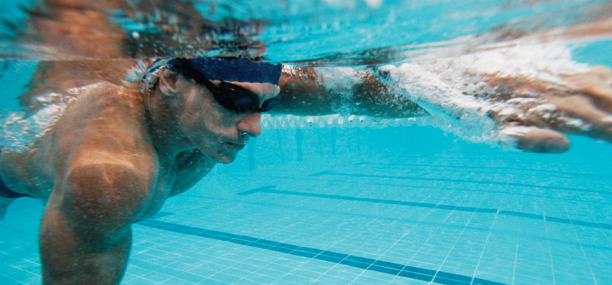
As there are more and more novel venues being built, the MAHC will always seek to determine if additional guidance is needed.
What emerging risks, biological, chemical, or operational, are currently influencing MAHC revisions?
The ones at the top of mind right now are Legionella and Naegleria Fowleri. With what we know about Legionella, there’s a movement that spas should be listed as an Increased Risk Venue and require Secondary Disinfection. Naegleria Fowleri has drawn the attention of the MAHC due to two cases coming from splash pads the last few years, and the severity its impact on a human being.
How do you see automation and real-time monitoring technologies changing compliance with MAHC guidelines?
If anything, it makes compliance easier. The residential aquatics sector is only now really integrating products that the commercial industry has been using for decades. When the MAHC was first created, the inclusion of automated controllers was by no means controversial. It was as routine as putting fuel injection on a car. It’s just what you did to make the system work well. In fact, you can’t have a commercial pool without a controller and be MAHC compliant.
What I see, and we see this in the anticipated 2027 International Swimming Pool and Spa Code (ISPSC) is that the MAHC is driving compliance with itself by encouraging change in other codes and standards.
In regards to real-time monitoring, that’s fairly well handled with automated controllers. What we’re seeing now is a next step in MAHC compliance. The use of real-time monitoring to help ensure a pool is MAHC compliant.
Are current operator training standards sufficient to manage increasingly complex water chemistry requirements?
This is more of a personal opinion than a MAHC-based opinion. I’ll say this. No. I’ve reviewed all of the major qualified operator courses. I hold base credentials in two of them and teach another. From a commercial perspective, they are all lacking to one degree or another. For me as an aquatics professional, if I could snap my fingers and roll them all into one course, we’d be on a close track to one that I feel is sufficient.
Now to be fair, many of the concepts are really quite universal. You don’t need advanced training to grasp the relationship between pH and HOCl formation. You raise alkalinity the same way in a 20,000-gallon residential pool with a liner as you do a 800,000-gallon, 50-Meter competition pool with a plaster surface. The only difference is the amount of sodium bicarbonate you’ll use. Chlorine works the same way if it’s a 5,000-gallon plunge pool as it does a million-plus gallon artificial swimming lagoon. It’s not water chemistry that’s complex. It’s the size and scope of the systems we use to manage water chemistry.
So, the challenge. We expect our operator courses, by and large, to create the knowledgeable pool professional. The classes are too short to do that. And for good reasons. Apart from a national regulatory body similar to the National Registry of Emergency Medical Technicians (NREMT), or a medical credentialling body like the American Diatetic Association (ADA), setting licensing criteria – we’ll never be there.
The need for better training has been recognized by several in the commercial aquatics sphere of influence. Movement is afoot to try and rectify this. For now, I’ll just say this. Keep an eye out for a major announcement or two over the next few years. It’s nothing Earth-shattering like a national registry, so rest assured the world won’t go topsy-turvy.
But movement is occurring to address the need for better training in commercial pools.
Images courtesy of the Council for the Model Aquatic Health Code. To obtain a copy of the 2024 MAHC go here.