








roles

This is a story about possibilities pulled within reach by modern technology. It all started early in 2015, when one of us talked with a friend about the benefits of belonging to a group of like-minded professionals who get together a couple times a year to talk shop, exchange ideas and generally build the kind of camaraderie that's hard to develop if all you do is

One of the themes I’ve covered repeatedly through the years has had to do with the need for all of us to become effective team players. True, there have been times when egos have gotten in the way and I’ve found myself in fairly dysfunctional groups, but for all that, I have to say that collaboration very often yields great results. In fact, the vast majority of team projects in which I get involved these days are wonderful collaborations among clients, architects and general contractors as well as (depending on the project) interior designers, landscape architects, lighting designers and more. Of all those practitioners,

Those of us in the design and construction industry are engaged in a singularly complicated human endeavor. To make things work, it’s common for many technical disciplines to come together, including soils and structural engineers and contractors and subcontractors as well as architects, interior designers, landscape architects, lighting designers and watershapers – all working in concert to bring form to the goals and aspirations of the clients. These professionals unite in designing spaces that people use and occupy – a simple yet profound thread that ties all of us engaged in any given project together. Through our combined efforts, we

For years now, the power of teamwork and the communication it requires have been recurring, primary themes in the pages of WaterShapes. It's no secret that, more than ever before, the design, engineering and construction of custom watershapes of all sorts is a multi-disciplinary undertaking that involves
For years now, the power of teamwork and the communication it requires have been recurring, primary themes in the pages of WaterShapes. It's no secret that, more than ever before, the design, engineering and construction of custom watershapes of all sorts is a multi-disciplinary undertaking that involves

When it comes to the myriad specialties of the world of watershaping, it's tough to think of any as broad as the one occupied by floating fountains: It's a category of systems that encompass flotation, illumination, spray systems, submersible pumps, connecting devices and land-based controls. On the one hand are the huge systems installed near the shores of lakes and rivers. These fountains can be monumental in size and visually dramatic - the sorts of popular landmarks that become tourist attractions and, often, community icons. On the other, there are the countless smaller floating fountains and aerators located in golf-course ponds and water hazards, in municipal-park and stormwater ponds, on private estates and institutional campuses and in the bays of larger bodies of water, either as single features or as groups. For 45 years now, our firm has been fortunate enough to have designed (and at times installed) floating fountain systems across this full spectrum, from the large and spectacular to the small and surprisingly subtle. Some have been purely decorative, while others have been totally
When it comes to the myriad specialties of the world of watershaping, it's tough to think of any as broad as the one occupied by floating fountains: It's a category of systems that encompass flotation, illumination, spray systems, submersible pumps, connecting devices and land-based controls. On the one hand are the huge systems installed near the shores of lakes and rivers. These fountains can be monumental in size and visually dramatic - the sorts of popular landmarks that become tourist attractions and, often, community icons. On the other, there are the countless smaller floating fountains and aerators located in golf-course ponds and water hazards, in municipal-park and stormwater ponds, on private estates and institutional campuses and in the bays of larger bodies of water, either as single features or as groups. For 45 years now, our firm has been fortunate enough to have designed (and at times installed) floating fountain systems across this full spectrum, from the large and spectacular to the small and surprisingly subtle. Some have been purely decorative, while others have been totally

With few exceptions, the most satisfying projects we've undertaken through the years have come when our company has gotten involved with talented architects or landscape architects - and sometimes both - as part of larger project teams. We embrace this sort of work and enjoy taking a role as a resource for other professionals. Through the years, in fact, these collaborations have developed to a point where many of those we work with will automatically call us whenever one of their projects includes any sort of
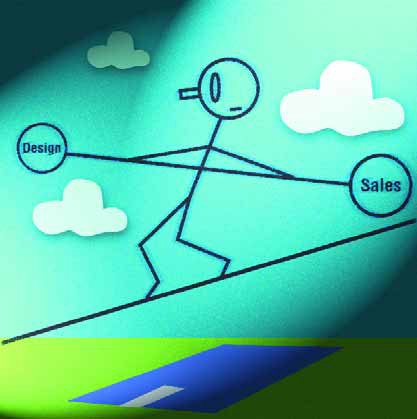
Reader Chris Walton asked a great question in response to comments I've made in a couple of recent columns about the value of detailed plans: "Why do we in the pool industry lump sales, design and project assessment into one job description?" In the message surrounding his question, he explained in some detail that his firm, PoolDizine, Inc., of Jacksonville, Fla., takes basic plans and proposals for swimming pools and other watershapes and turns them into complete and extremely detailed sets of construction documents and plan drawings that can be used in generating accurate bids and that also provide detailed specifications for the construction process. To be sure, he has an interest in altering

For most watershape projects of above-average complexity, the clients - whether they are developers, architects, landscape architects or property owners - must choose how to execute their vision by deciding who they'll bring in to do the actual work with the water. In my 23 years in the watershaping trades (in service and maintenance, as an installer, with an equipment manufacturer and as a consultant), I've observed dramatically varied levels of expertise on the provider side of that equation. These days, in my work for EDAW, a national landscape architecture firm, I'm now on the specifier side of the equation and, in an interesting reversal, very often find myself explaining to designers in my own company what their options are for getting a watershape designed and built. In my lengthening career, I've seen the sets of strengths, backgrounds, abilities and limitations each category of service provider brings to the table - and seen clearly that an understanding of how all the pieces fit together is useful for everyone involved, from the property owner and specifier to the consultants, suppliers, contractors and subcontractors who get the job done. To build that understanding, let's pull apart the process of setting up a high-end watershape from start to finish and see how various roles intersect and interrelate. We'll focus on large commercial projects for purposes of illustration, but the fact is that the same principles apply just as well (if less formally) to sophisticated