








finishing
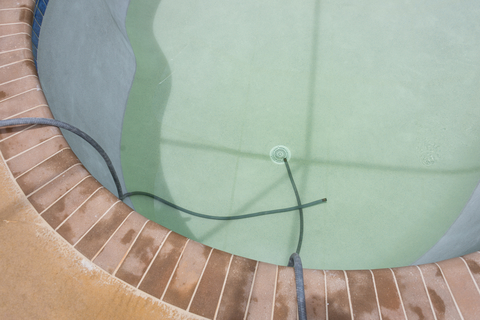
Taking control of the plastering process is within reach of any quality-oriented designer or builder, declares Kim Skinner. To help you on your way, he offers this step-by-step guide to managing what should happen on site before, during and after plaster application takes place.
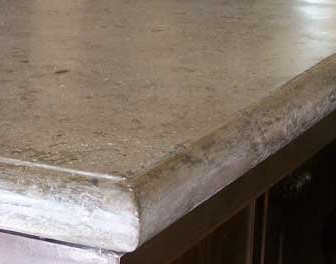
Stegmeier (Arlington, TX) manufactures forms for poured-in-place concrete countertops. Designed to simplify the installation process,…

As a general contractor, I am steadily bombarded by information about new products that claim they will forever change the way I look at whatever category the novel gizmo occupies. This sort of marketing has turned me into a skeptic whenever I see something new come along, basically because experience and communication with other contractors have showed me that few of these novelties ever fully live up to the hype. Some contractors respond to this slippery situation by sticking solely with what they know, which, in my view, is

Through many years of applying small pieces of tile to the complex sorts of surfaces found in pools, spas and other waterfeatures, I find most of the challenges (and opportunities) come in figuring out intersections - that is, places where planes meet, contours change and, in general, a whole lot of attention needs to be paid to getting things just right visually. We at Rock Solid Tile (Calabasas, Calif.) have been fortunate to find ourselves involved in many projects in which

It was a great project: The client called us in to look at a sloping backyard for which his one and only wish was an environment that would be "organic and pre-existing" - that is, a composition that looked as though it had been there forever, long before the adjacent home entered the picture. That sort of look is our stock in trade at Outdoor Republic, a Pleasanton, Calif.-based firm that specializes in the use of artificial rock. As is often the case, we became involved after the homeowner had

In several of the articles I've prepared for WaterShapes, the point has been made that it's not a great idea to apply plaster as the interior finish of a swimming pool (or any other watershape, for that matter) in spells of hot, dry weather - and I thought it was time to dig in a bit deeper and explain the reasoning behind that assertion. Basically, when a layer

{Multithumb} Artificial rockwork is hardly new. In fact, its roots stretch back more than 100 years to Germany, where it was used for the first time to enliven zoological exhibits. Those early examples of artificial rockwork were decidedly crude – nothing more, really, than solid mounds of dumped concrete – but they met a need that couldn’t be accommodated by natural stone and made it possible to display hoofed stock (including antelopes and gazelles) on raised, natural-seeming terrains. Those early efforts were far from beautiful, and it’s no stretch to say that things have come a long way in the century since those first attempts took shape. Indeed, those of us who’ve worked in artificial rock for any length of time are proud to have witnessed the product’s evolution to a point where materials and techniques are now applied that are capable of transforming otherwise mundane settings into scenes of striking, naturalistic beauty. Certainly, deploying natural rockwork is another means of achieving the same end, but success often involves
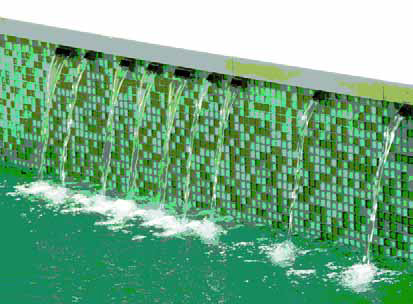
Elegance, romance, subtlety, tranquility: All these words speak to a potential of watershaping that is realized far too infrequently. If ever there were a common detail that typifies these missed opportunities, I'd have to give the prize to the standard waterfall/waterwall effects seen on too many pools and other watershapes these days. I can think of nothing less compelling than the typical sheet of water spilling down the face of a wall or in front of some other structure on its way into a pool or spa. This look is not only overused, but
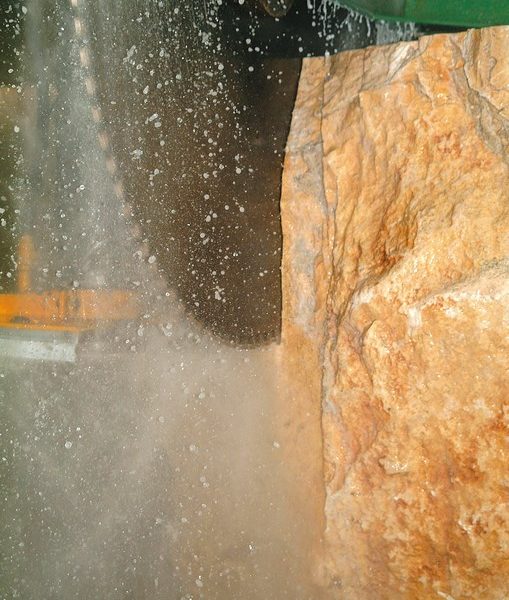
Natural stone is certainly the most time-honored of all building materials. From the pyramids of Egypt to the temples and civic buildings of ancient Greece and Rome; from the palaces and villas of the Renaissance to the most contemporary structures of our modern era, we see a material forged within the earth for millions of years that has been painstakingly quarried and shaped into myriad forms both functional and decorative. Even with the advent of cementitious components and a range of other manufactured substitutes, stone remains the material of choice in a great many applications. In fact, the range of natural stone materials available to designers and builders expands almost daily in response to the specific demands of watershapers and other designers and contractors - and there's no end in sight. Our company, tr stone, is a U.S. distribution facility owned and operated by one of the world's largest stone producers, Tureks, based in Afyon, Turkey. The best thing about the marketplace from the perspective of designers and builders is that high-quality stone is now available from a wide range of domestic and foreign sources in a number of distinctive