








dancing water
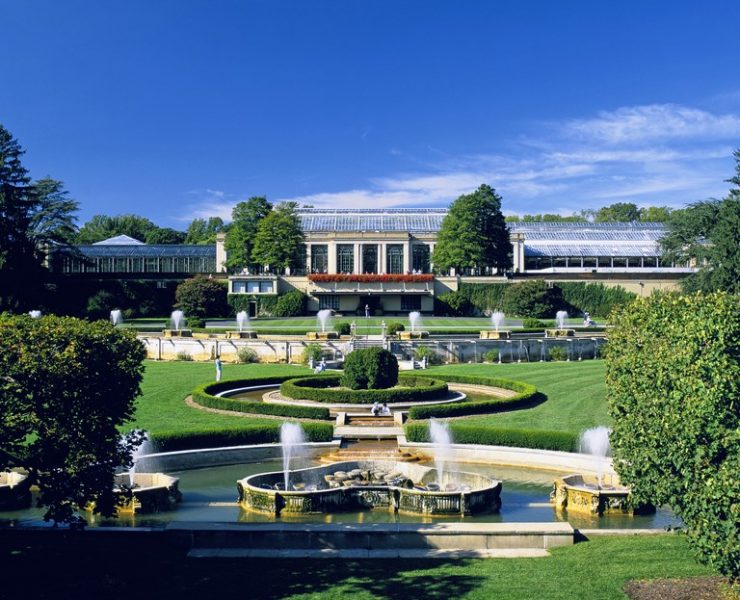
In pre-Colonial days, the neck of the woods now known as Longwood Gardens was a hunting ground for the Lenni Lenape tribe, who prized the area for the richness of its game and timber. Once the British arrived, the land moved under the control of William Penn, founder (and namesake) of Pennsylvania, who sold it to a Quaker family by the name of Pierce in the year 1700. The family farmed the property until 1798, when Joshua and Samuel Pierce began planting an arboretum and the space that would one day become Longwood Gardens was born. Those of us living in the Philadelphia area have long enjoyed the privilege of having this resource in nearby Kennett Square, Pa. It's an amazing place, and I find my way there often because it seems that each time I go, there's something
In pre-Colonial days, the neck of the woods now known as Longwood Gardens was a hunting ground for the Lenni Lenape tribe, who prized the area for the richness of its game and timber. Once the British arrived, the land moved under the control of William Penn, founder (and namesake) of Pennsylvania, who sold it to a Quaker family by the name of Pierce in the year 1700. The family farmed the property until 1798, when Joshua and Samuel Pierce began planting an arboretum and the space that would one day become Longwood Gardens was born. Those of us living in the Philadelphia area have long enjoyed the privilege of having this resource in nearby Kennett Square, Pa. It's an amazing place, and I find my way there often because it seems that each time I go, there's something
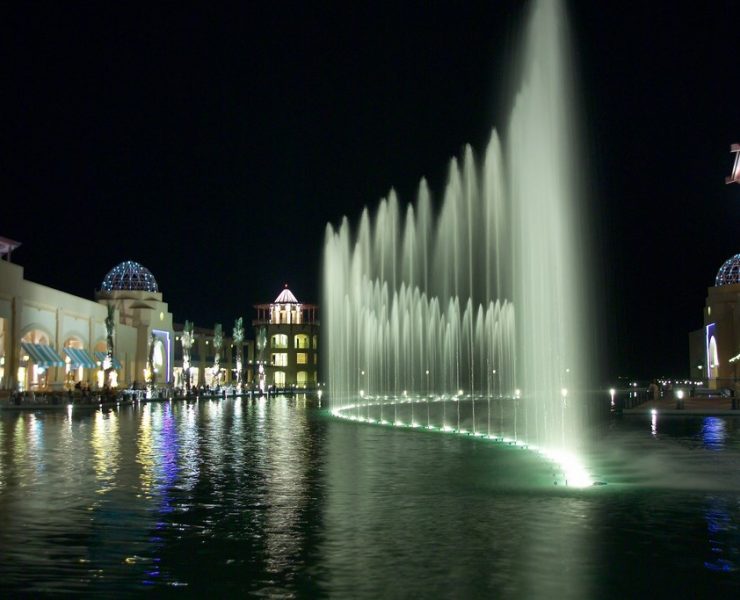
Throughout ancient times, water was central to the thinking of Arab, Persian, Moorish, Moghul and Turkish architects and designers, with largely anonymous representatives of each civilization preparing elaborate spaces with fountains, reflecting pools and other watershapes at their hearts. In the past, these societies' greatest architectural works almost invariably featured elaborate watershapes that bespoke their technical skills as well as a general love affair with the beauty, luxury and necessity of water. With new developments burgeoning across much of the Middle East these days, fountains and watershapes of all varieties are once again playing important roles in design as
Throughout ancient times, water was central to the thinking of Arab, Persian, Moorish, Moghul and Turkish architects and designers, with largely anonymous representatives of each civilization preparing elaborate spaces with fountains, reflecting pools and other watershapes at their hearts. In the past, these societies' greatest architectural works almost invariably featured elaborate watershapes that bespoke their technical skills as well as a general love affair with the beauty, luxury and necessity of water. With new developments burgeoning across much of the Middle East these days, fountains and watershapes of all varieties are once again playing important roles in design as

At a time when scores of American cities are still looking for ways to revive the faded glory of their urban cores, possible approaches are as visionary (and numerous) as can be. The process has resulted in new parks, major redevelopment, architectural restorations and a long list of other solutions - including the unique watershape commissioned by the city of White Plains, N.Y. A town with 54,000 full-time residents whose population swells to more than 200,000 during the day when office workers, shoppers and visitors come calling, White Plains made the decision to invest $4.5 million of public and private grant money in resurrecting a small downtown park. Appropriately named Renaissance Plaza, the park surrounds a state-of-the-art musical fountain unveiled in October 2003 for the specific purpose of luring people back to the downtown area - and it has worked. In fact, the plaza has become such a hub of activity that nearly 1,700 units of new residential housing are now under construction in its downtown neighborhood. URBAN OBJECTIVE First settled by British colonists who bought it from the Mohican tribe in 1683, this historically rich city located 25 miles north of Manhattan has truly been reborn, and it's with no small measure of

In the ballet of sequenced water, you'll find a repertoire of effects for watershapes of all kinds. Like individual dance steps, these water effects can be beautiful on their own - or they can be used in combination with other effects to create elaborately choreographed shows that dazzle, delight and entertain. From simple to complex and from small to utterly huge, sequenced-water effects are truly amazing, and the nice thing is that they can be incorporated into all kinds of watershapes. We'll take a look at some of the possibilities here as a means of defining why you and your clients should think about incorporating the devices needed to make them work in your projects. There are practical issues, of course, so we'll also cover the process of designing for sequencing and the considerations involved in the creative effort, as well as discussing the ins and outs of programming and commissioning for sequenced watershapes. In an extensive sidebar, we'll also take a look at available technologies and their strengths and weaknesses. Before we get into