








Three Inches that Matter
There are moments in construction when the smallest decisions carry the largest consequences. In swimming pool construction, one of those pivots happens quietly, almost invisibly, at the bottom of the deep end when the drain sump is set in place.
By Paolo Benedetti
It is a simple step, and also one of the most commonly botched details I see in the field.
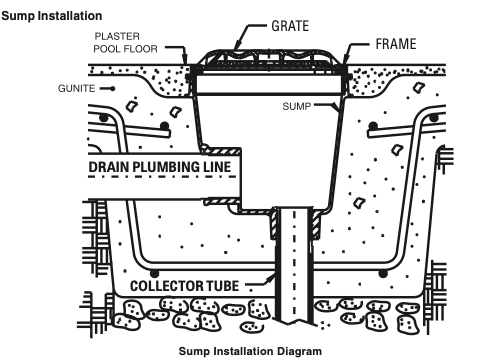
The issue centers on the elevation of plastic prefabricated drain sumps and channel drains. Every manufacturer provides clear installation details and it’s not hard to follow, or at least it shouldn’t be. The reinforcing steel is shown dipping down. The sump is placed within that depression. The rim of the sump is set approximately three inches above the steel, sometimes four if specified by the engineer.
This alignment ensures the shotcrete encases the fixture properly while maintaining the structural balance between steel and concrete. And yet, time and again, that is not what happens.
Lazy Does It
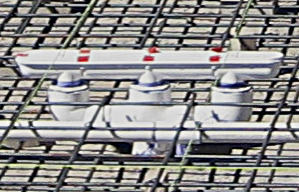
Instead of taking the extra few minutes to excavate a small pocket in the soil and bend the reinforcing bars downward, installers set the sump directly on top of the steel grid. The fixture sits too high. When the shotcrete is applied, the crew compensates by building up the floor to meet the elevated sump.
At first glance, it seems harmless. The surface ends up where it needs to be, or so it seems. The drain works. The project moves forward. But structurally, the damage is already done.
Concrete is not a standalone material. It relies on a prescribed relationship with reinforcing steel, a balance defined in American Concrete Institute standards such as in ACI 318: 24.4. When that ratio is respected, the steel controls cracking as the concrete cures. When it is not, the concrete is left to fend for itself.
By setting the sump too high, contractors inadvertently create a thick mass of concrete beneath it, often six to eight inches or more beyond the intended section. In extreme cases, the entire deep-end floor becomes excessively thick, rising up to meet the misplaced fixture like a low, submerged mound. The steel, meanwhile, remains where it was originally placed.
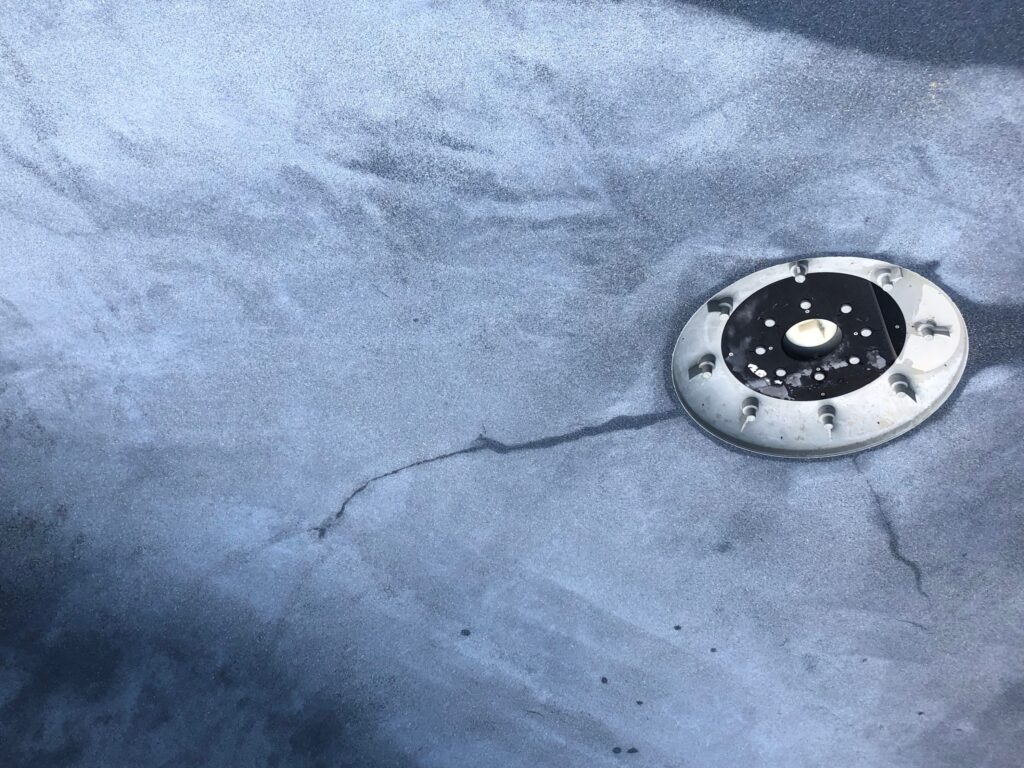
What you end up with is a volume of concrete that exceeds the reinforcing steel’s ability to control shrinkage. The result is predictable. Cracks begin to form, not just around the sump, but across the entire floor.
They appear quickly. Sometimes within days or weeks after the shotcrete is placed. Owners walk into their empty pool shell, admiring the new structure, only to watch it begin to fracture before it has ever held water.
Bad Impressions
At that point, the problem shifts from technical to psychological.
Nothing undermines a client’s confidence faster than visible cracks in a brand-new pool. It does not matter whether the cracks are superficial or structural. To the owner, the distinction is meaningless. What they see is failure.
Builders often ask whether the cracks can simply be routed and filled. The answer is never simple. Surface appearance tells you very little about depth or severity. Some cracks may be shallow shrinkage fissures. Others may extend through the shell. Without destructive testing and careful evaluation, there is no way to know.
Repair options exist, including epoxy injection and other remedial techniques, but by then the project has already suffered a loss that cannot be easily repaired. Trust has been compromised. The builder’s reputation is at risk. In some cases, disputes escalate into litigation.
All of this from a step that would have cost almost nothing to execute correctly. The irony is hard to ignore. The effort required to avoid the problem is minimal. A small excavation. A few bent bars, what I often call hat bars because of their shape. A properly seated sump at the correct elevation. It is the same discipline we apply to light niches in pool walls, which must also be set proud of the steel by a controlled distance. The principle is identical. The execution should be routine.
And yet, when that discipline slips, the consequences can ripple outward through the entire structure.
Practical Avoidance
This is not a materials failure. It is not a mystery of chemistry or an unpredictable act of nature. It is a straightforward case of inadequate installation overriding design intent and ultimately, client satisfaction.
In a trade where details define outcomes, this is one that deserves close attention. Three inches, properly measured and properly executed, can mean the difference between a sound shell that performs to standard, and a cracked one.
It is a clear example of how the willingness to do simple things the right way avoids unnecessary problems and unhappy clients.
Paolo Benedetti founded Aquatic Technology in 1993. He is an instructor for Watershape University and has authored a myriad of articles on the finer points of pool construction and design. He is a pioneer in the field of aquatic design, constantly pushing the envelope, creating a number of firsts that spawned new trends in the industry.
The diagram above is from Pentair, showing the correct installation of a drain sump.