








statuary

The most famous artists and designers often become known for one particular style or motif. When we see the cubism of Pablo Picasso or the drip paintings of Jackson Pollack, for example, we firmly link those distinctive artistic "moves" with the artists themselves. In some cases, those associations are extremely positive and add to the artist's or designer's mystique and prestige - certainly the case with Picasso and Pollack. For other artists who are less famous, however, an identifiable mode of expression can lead to confinement, predictability and, in some cases, a needless limitation of vision and creative possibilities. Since I began my career in the early 1980s, I've focused on capturing aquatic life forms in mixed-media sculptures to such an extent that my name is associated with the genre - although I'm certainly no Picasso. Indeed, in the years I've been active, there have been so many sculptures, statues and paintings depicting whales, dolphins and fish that the genre I love has become something of a cliché. So many consumers love such images that a vast number of enterprising artists have stepped in to meet the demand. The problem is that so many of these efforts are uninspired and

A well-conceived garden that has endured through many decades can teach us all a multitude of lessons. In the case of the Virginia Robinson Gardens, however, even getting to the point where those lessons might be recognized and appreciated has taken years of research, study and painstaking restoration. In the nine years I've been associated with the gardens, I've done all I can to determine the original design intent of those who owned and established it, stripping away generations of alterations, additions and miscalculations while interpreting the site and uncovering clues that point to the sense of mission and the creative spirit that influenced its creation and further development early in the 20th Century. I've done so with a recognition that the Virginia Robinson Gardens are important as an emblem of southern California history and an era gone by. I've also come to perceive the complexity, artistry and beauty of the space, seeing it as a blueprint that, examined closely, can serve to inspire and inform the work we all do today. The current gardens occupy most of the grounds of the former estate of Harry and Virginia Robinson, heirs to a department store fortune. My charge has been to restore and manage these six-and-a-half acres in the heart of Beverly Hills, Calif. - a graceful setting in the midst of

The goal of a landscape design is to complement a beautifully appointed home with hardscape, plants and other outdoor amenities. Once construction begins, however, reality sets in for many clients and they begin making trade-offs to trim costs and manage the project's bottom line. Most often, cuts like these take their toll on project elements that swing into place toward the end of a project, where the most significant costs tend to be related to larger plants and landscape lighting. Smaller plants can

For the typical visitor, the newly-reopened Getty Villa is perhaps the most exquisite of all possible venues for viewing ancient works of art and craft - reason enough to plan a visit. For students of architecture and design, however, there's much more, particularly the opportunity to immerse yourself in the living, breathing environment of a classic Roman villa and its abundant amenities. The Getty Villa site encompasses 64 acres of a rugged canyon rising above the Pacific Ocean in Malibu, Calif., and was once home to oil tycoon J. Paul Getty. A fanatical collector of Greco-Roman antiquities, he dedicated part of his original ranch-style home as a public museum in 1954. By 1974, less than a year before his death, he had completed and opened the original Villa on another part of the estate, realizing his ambition of creating a public monument dedicated to the arts. The Villa's layout was inspired by the Villa dei Papiri, a first-century country house in Pompeii buried by the eruption of Mt. Vesuvius in 79 A.D. It was Getty's vision to display his collection in a setting evocative of its contents' historic origins and he realized it, but there were compromises: The spaces were crowded, and the works on display also included samples of paintings and craftworks of much more recent vintage - Renaissance masters, baroque furnishings and other distinctly non-classical artworks. The Villa closed in 1997 at about the same time the
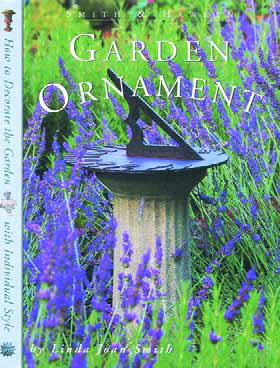
So often it's the finest or most delicate touches that make or break backyard projects - and exploring the constituents of those touches is what Garden Ornament by Linda Joan Smith (Workman Publishing, 1998) is really all about. This beautifully illustrated, 136-page book tackles head on the often overlooked subject of garden ornamentation and, in doing so, pulls back the veil on a remarkably rich set of design touches and specific objects you can use to lend interest to your projects, generate enthusiasm among your clients and, ultimately, give your projects real visual energy. That set of ideas includes items that can be used to add beauty and even