








historic pools
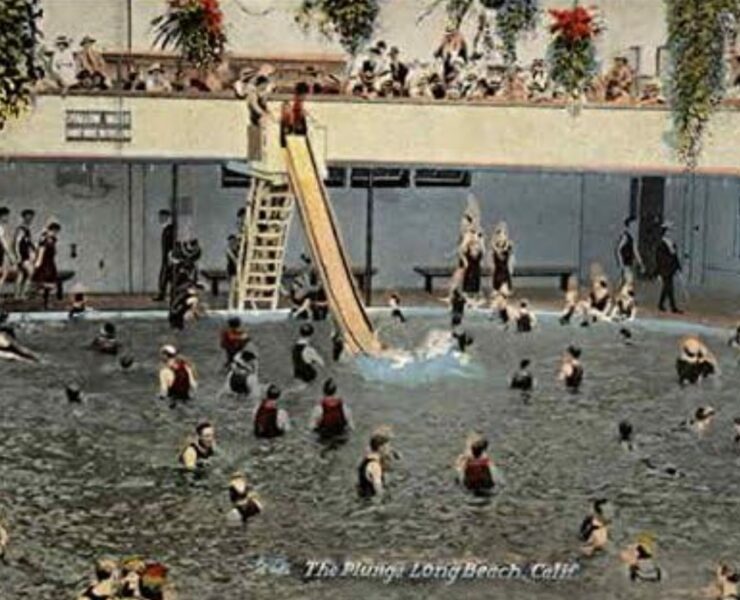
In the late 19th and early 20th centuries, as California reinvented itself as a land of health, leisure, and spectacle, a new aquatic building type emerged along its coastlines and growing inland cities: the plunge. In a time before the emergence of the backyard pool industry, the plunges were grand civic destinations, often enclosed, frequently ornate, and almost always tied to broader visions of social life and economic development.
...

The renovation and restoration of historic watershapes and their surroundings is a rather peculiar specialty. After all, such projects don’t come along very often and never amount to enough to be considered a primary business focus. Even so, whenever and wherever they present themselves, those who get involved must always be ready to meet sets of very specific and often unusual challenges. The fact that these sites are historic, for instance, means that they also tend to be old, so they almost invariably come with surprises with respect to how they were originally built, what sort of remodeling and repair work has been done through the years, how they’ve been maintained and, often, the degree to which they’ve suffered from neglect or even abuse. Original plans can be hard to come by, so from the start there’s a need for a good bit of educated guesswork and a fair measure of improvisation. On top of that, you also have to be prepared to deal with members of any number of community organizations and historical societies ( not to mention concerned citizens, donors and benefactors) – all of whom have

Just a couple weeks ago, I had the pleasure of spending the day with a long-time WaterShapes contributor – and my good friend – Dr. William N. Rowley. Just a year ago this month, Bill was one of the first recipients of the McCloskey Prize, and as we noted at the time, he has from the start of the magazine been a tireless supporter of our efforts to build pride and professionalism