








green roofs

To excel as professionals, watershapers need to develop a good working knowledge of a range of technical disciplines – hydraulics, materials science and geology, for example – and know the ins and outs of structural, electrical and mechanical engineering. No single person needs to have certified expertise in all of those fields, but it’s becoming increasingly clear that anyone who enters the watershaping realm needs to be conversant in the mix of disciplines he or she must coordinate if the goal of
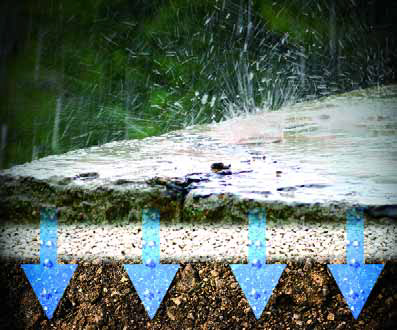
I’ve taken up a fair amount of my column space in WaterShapes with discussions of the wise use of water, and for good reason: What could be more important to watershapers than knowing how to make the best possible use of the material that defines our profession? And what could be better than the fact that it’s possible to approach the subject in positive ways that bode well for the future? The common thread in all of this coverage – whether it’s about conservation, constructed wetlands or rainwater harvesting – is that, ultimately, our aim must be to

Like it or not, we’re all on the front lines of the environmental sustainability movement. In fact, as shapers of water and land, few are in better positions than we are to make a difference, with many of us frequently working alongside architects, municipal officials and developers and being asked to design and implement green approaches that minimize a given project’s effects on its surrounding environs. As I see it, this offers us not only a golden opportunity to shape the future of land development and architecture, but also to rise from

The fact that the vast majority of our landscapes exist on the ground floor has posed a challenge as city dwelling has become more popular: Relatively few urbanites are lucky enough to have ground-floor garden spaces to work with, but that in no way diminishes their desire to include garden spaces as components of their upper-floor environments. Even without land for plants, people still want to come home to attractive gardens at day's end. Although the first roof gardens date back to the Hanging Gardens of Babylon, city dwellers with only rooftop and balcony spaces at their disposal have been forced to get innovative, developing creative and sometimes highly unusual solutions. Hence the emergence of "roof gardens," which often combine spectacular distant views and dramatic cityscapes with creative hardscape and planting treatments - works of art that expand livable space as well as the



Green Horizons