








gravel

Puzzled by its bad reputation among some of his clients, Mike Gannon began doing research on gravel. He'd always believed in its value, he says, but found a rich history that now aids in him on occasions when he needs to talk his clients through their moments of doubt.
There was a time when lots of ponds were set up without gravel, notes Ed Beaulieu. But as he discusses here, there are so many advantages to lining their interiors with rocks of various sizes that it's time to push that old practice out of the pond-making picture, once and for all.
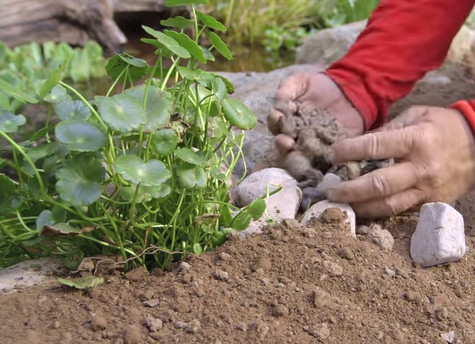
We've come to the part of the installation process that's my personal favorite: finishing up the plant placement and setting the edges. This is, of course, part of every pond-installation project on one level or another, but with a frog pond, my approach is a little different. As you'll see in the video linked below (and may have noticed in previous installments), the profile of this frog pond is
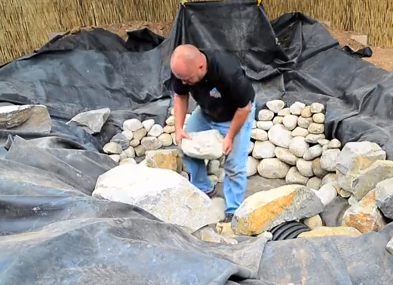
I've often seen rock placement described as an "improvisational art" by others who've written for WaterShapes, and I couldn't agree more. Once the liner's in place and it's time to dress it up with everything from large boulders to tiny gravel, I get the sense that this is less a construction task than it is an exercise in creative manipulation. You'll see some of that creativity on display in the two videos linked below, but what you'll also see is that experience really does count: In setting rocks in place, you end up handling and rotating and flipping and fine-tuning the positioning of dozens or hundreds or even
I've often seen rock placement described as an "improvisational art" by others who've written for WaterShapes, and I couldn't agree more. Once the liner's in place and it's time to dress it up with everything from large boulders to tiny gravel, I get the sense that this is less a construction task than it is an exercise in creative manipulation. You'll see some of that creativity on display in the two videos linked below, but what you'll also see is that experience really does count: In setting rocks in place, you end up handling and rotating and flipping and fine-tuning the positioning of dozens or hundreds or even