








design skill

'Science tells us that the human eye can see about seven million colors and that our minds instinctively perceive depth and dimension. This visual capacity,' noted Stephanie Rose at the outset of her Natural Companions column in April 2006, 'enables most of us to move around without bumping into things, some of us to swing at and somehow hit a golf ball and, in the case of a beautiful garden (we can hope), all of us sense
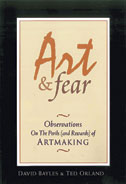
I was recently rummaging through my local bookstore, searching for the next pearl to unveil in this space, when I came across a book that stopped me in my tracks just because of its title: Art & Fear: Observations on the Perils (and Rewards) of Artmaking. This slim, 122-page volume, written by David Bayles and Ted Orland (Capra Print Editions, 1993), is so provocative and insightful that

Most people move easily through the world, enjoying the scenery without really thinking about what makes those surroundings visually appealing (or not). Science tells us that the human eye can see about seven million colors and that our minds instinctively perceive depth and dimension. This visual capacity enables most of us to move around without bumping into things, some of us to swing at and somehow hit a golf ball and, in the case of a beautiful garden (we can hope), all of us sense pleasure and maybe a bit of



The Anxieties of Influence