








Space Changers: The Buoyant Value of Movable Pool Floors
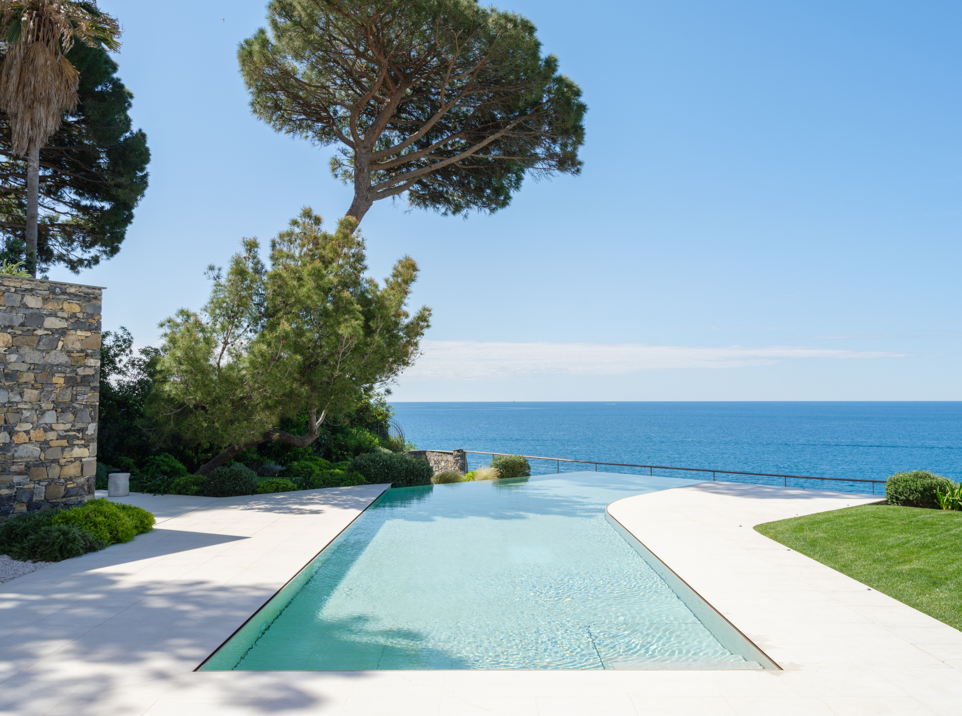
As movable pool floors become more sophisticated and accessible, they are changing how designers and homeowners think about the role of the swimming pool. For Twinscape, their Hydrofloor technology is increasingly shaped by practical concerns: improving safety, reducing maintenance, conserving water, saving energy, and most of all, increasing the utility and value of precious square footage.
By James Farrell
When many people first encounter the idea of a movable pool floor, the technology is the first they want to understand. How does it work? How does something that looks like a solid floor move through thousands of gallons of water and then support people, furniture, and other loads when it is raised?
Those are important questions, and we have ready answers. But after years of working with homeowners, architects, designers, pool professionals, and developers, I have come to believe the equally interesting story is what people want that technology to accomplish.
The questions we hear today are remarkably consistent. How can I make better use of limited space? How can I make my pool safer? How can I reduce maintenance? How can I conserve water and energy? How can I make the system dependable for decades? And, increasingly, how can I have these benefits without making the pool such a large investment that the technology is available only to the very wealthiest homeowners?
Those questions are shaping where Hydrofloor technology is going.
Every Square Foot
The fundamental proposition of a movable floor is simple. A swimming pool does not have to occupy the space all the time. That sounds obvious, but it represents a significant change in how we think about outdoor living. A pool can be a pool when you want to swim and a terrace, patio, gathering space, or even a sports court when you do not.
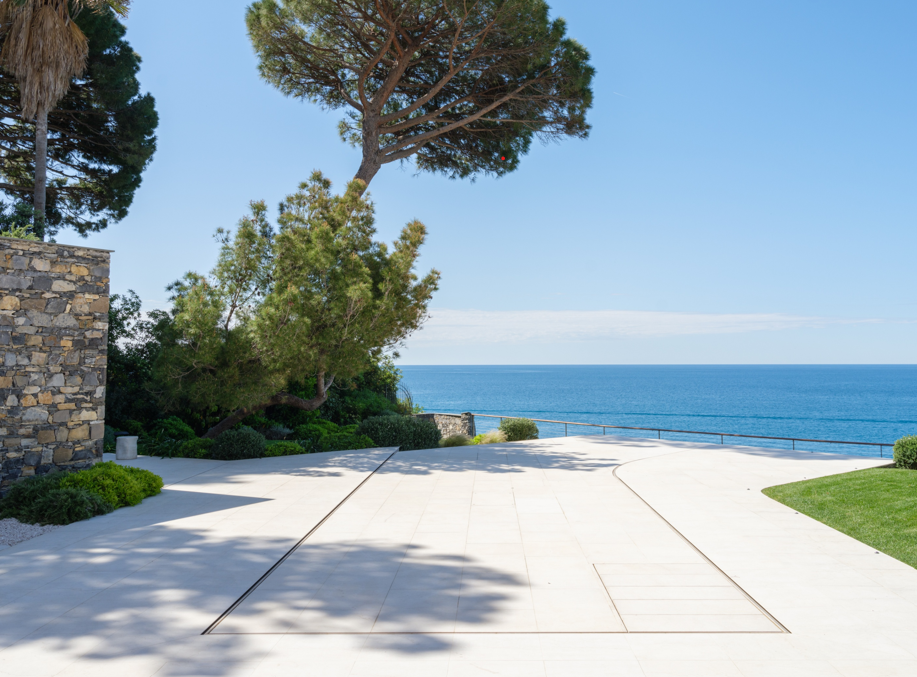 We have commissioned a spa/pool project in Southern California on a small, and extremely expensive property that dually functions as the walkway leading to the side entrance of the house. In places where land comes at a premium, that kind of versatility can completely change the equation. An area that might otherwise be dedicated exclusively to a pool can perform several functions throughout the day.
I have seen our floors used for morning yoga, basketball, pickleball, lounging, cocktails and dancing. In each case, the homeowner is asking the same basic question: Why give up this much space for a swimming pool when I am not swimming?
Hospitality operators have an even more obvious financial incentive. Hotels and resorts work very hard to generate revenue from every square foot. A pool deck can produce revenue from weddings, private parties, cocktail receptions and other events. A movable floor allows the operator to convert the pool into usable event space.
We have a Hydrofloor at a boutique hotel in Dallas where the site was so constrained that accommodating both a swimming pool and meaningful outdoor space would have been extremely difficult. The movable floor changed that equation. The hotel could have its swimming pool, which is particularly important in the Texas heat, while retaining valuable outdoor space for other uses.
That is a very different way of looking at a pool.
Safety Comes First
Of all the reasons people come to us, safety is the most powerful. Our value proposition has always been “safety, versatility, and elegance,” in that order. For many clients, the presence of children or grandchildren is the primary reason they purchase the technology. In fact, roughly 90 percent of our clients tell us that children or grandchildren are central to the decision.
That makes perfect sense to me. The safest swimming pool is one that cannot be accessed when nobody is supposed to be swimming. Fences can be climbed. Gates can be left open. Conventional covers can be removed. A Hydrofloor, when raised into its closed position, creates a hardscape surface over the water. The fact is that you cannot drown in water you cannot access.
 When the floor is lowered and the pool is open, of course, it becomes a swimming pool and must be treated like any other body of water. Supervision and responsible pool practices remain essential. But when swimming is not part of the day’s activities, the water can be completely inaccessible.
We have also built safety into the movement and operation of the system. Hydrofloors use pressure-limiting safeguards designed to stop movement if an obstruction is encountered. The hydraulic fluid is a water-based, biodegradable blend of demineralized water and food-grade propylene glycol.
Tolerances are equally important. The gap between the Hydrofloor and the interior pool wall is precisely eight millimeters, that’s 5/16th of an inch. No small fingers, or even a lady’s high-heel can get caught in that small of a gap. That level of precision is one reason we work with highly accomplished pool contractors. A movable floor is not an appropriate place for casual construction tolerances.
Cleaner Water, Less Maintenance
Clients also increasingly ask what happens to the water when the pool is covered by a solid floor. The answer begins with the fact that the floor is impermeable. Unlike some soft cover materials, there is no fabric or woven surface through which debris can penetrate into the pool.
There is one practical consideration. Debris sitting on the floor in its raised position will enter the water when the floor is lowered. For that reason, we recommend giving the surface a quick cleaning with a blower or similar tool if it has been sitting idle.
The larger benefit comes from sunlight. Sunlight is one of the principal contributors to biological activity in a swimming pool. When the Hydrofloor is raised, it blocks that sunlight almost completely. That can reduce the chemical demand associated with maintaining water quality.
The floor also dramatically reduces evaporation. Our experience and testing indicate that evaporation can be reduced by more than 98 percent. That matters because evaporation represents a major source of both water loss and heat loss from a swimming pool.
For homeowners facing water restrictions, particularly in Western markets, that can be a meaningful benefit.
Energy and Water Conservation
Water conservation is no longer a fleeting niche concern. It is increasingly part of the basic conversation surrounding a new pool. We see this especially in places such as Jackson, Wyoming, Park City, Utah, the Aspen area of Colorado, and almost all of the Southwest, where water conservation can be a significant design and regulatory consideration.
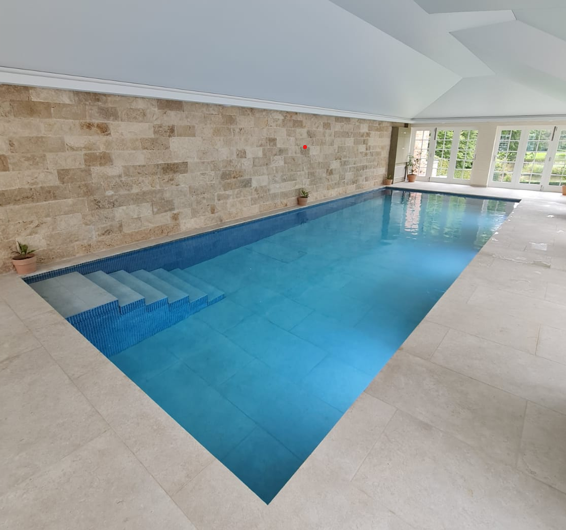 The Hydrofloor addresses the issue in two ways. First, reducing evaporation means less water has to be replaced. Second, reducing evaporation also means less heat escapes from the pool. The closed-cell XPS foam used in the floor provides another important advantage. Millions of enclosed air cells within the foam create powerful buoyancy, allowing the pool to be at rest in the patio position. The foam, with its substantial R-value, also provides superb insulation.
When the floor is raised, the pool effectively becomes a large, insulated vessel. In colder climates, that creates opportunities that would be difficult with a conventional pool. A homeowner can reduce the water temperature during the colder months rather than fully winterize the pool or can continue using the pool through the winter with a more efficient approach to heating and water treatment.
We have clients in ski country who do exactly that. One client in Whitefish, Montana, keeps the pool at 82 degrees and the spa at 104 degrees and uses them throughout ski season. That is a different definition of a seasonal pool.
Reliable Simplicity
Whenever we discuss a system that moves, the inevitable question is reliability. We answer that we try to keep the system as simple as possible. In fact, our mantra is “brilliantly simple.” That approach starts with the fact that buoyancy does much of the work for us. Rather than relying on hydraulic force to support a massive structure, the Hydrofloor naturally wants to rise and float. We use water-based hydraulics to pull it down.
That fundamental approach reduces the amount of force required and allows the system to spend much of its life in its resting, buoyant position rather than under continuous mechanical stress.
We also preassemble and test Hydrofloors® systems before they leave our facility. Stainless steel components are pickled and passivated after fabrication to restore corrosion resistance that can be affected during cutting and welding.
The structural warranty is 10 years, provided the system receives the required annual inspection and maintenance. Our expectation, however, is that a properly maintained Hydrofloors® should last for the life of the pool.
Maintenance is performed by trained and certified Hydrofloors® technicians. Each floor includes an access hatch that is restricted to service personnel, who are all qualified scuba divers, allowing them to perform inspections without draining the pool.
During a typical annual service, a two-person team inspects the system, checks fluid levels, makes minor adjustments, and verifies that water chemistry remains within the specifications required to protect the stainless-steel components. Some installations receive semi-annual or even quarterly inspections, depending on the application.
We approach it much like maintaining a high-end automobile. If someone owns a Ferrari, they do not wait for something to fail before taking it to a qualified technician. They maintain it because they expect the machine to perform. The same principle applies here.
The Way People Live
The technology has evolved considerably since Twinscape began developing movable pool floors in Europe in the 1990s. The company began establishing a presence in North America in the early 2000s, and we have had a dedicated U.S. presence since 2016.
Today, more than 150 systems have been commissioned globally, including roughly 60 in the United States, with another 30 projects in the pipeline currently. The applications are also becoming broader.
High-end residential work remains an important part of our business, but we are seeing growing interest in hospitality, wellness and specialized applications. Residential wellness is particularly interesting. People are thinking more seriously about how their homes can support them as they age, including homeowners who want aquatic environments that are easier to access and control.
Variable-depth technology also has applications well beyond conventional residential swimming. We are involved in a U.S. Navy diving training facility where different water depths are required for specific training.
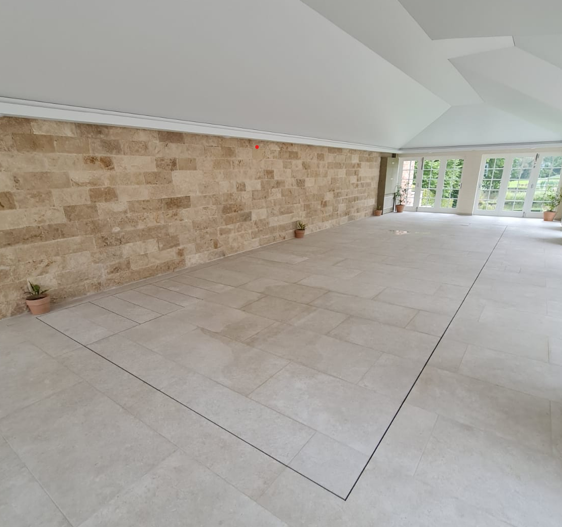 That is one of the things I find most exciting about the technology. Once you stop thinking of a pool as a fixed hole in the ground, the possibilities expand considerably.
Both Sides of the Floor
One of the most important changes we encourage is getting involved early. The Hydrofloor should be considered during the earliest stages of design, when the architect, landscape architect, watershaper and homeowner are still thinking about how the entire property will function.
The reason is simple. You are designing the pool as well as the space that exists when the pool is closed. That means the appearance and function of the floor in its raised position deserves as much attention as the pool itself. Most clients want the floor to disappear visually into the surrounding terrace. Others choose to make the floor a design element.
The pool contractor and tile contractor typically handle the final finish. We provide the stainless-steel deck ready to receive the finish selected by the design team. This is another reason early coordination matters. The floor has to work aesthetically and structurally in both conditions.
Expanding Reach
The biggest challenge facing this technology has always been cost. There is no getting around the fact that a Hydrofloor pool currently represents a substantial investment. Generally, a project incorporating the technology can cost roughly twice what a conventional pool project might cost. That has naturally limited the market.
Our goal now is to change that. We are developing ways to bring Hydrofloors® technology to a broader range of projects and consumers. The reason is straightforward. The benefits we hear about most often from our clients are not exclusive to people living in multimillion-dollar homes.
Parents want safer pools. Homeowners want to conserve water. People want lower energy consumption. Families want more usable outdoor space. Everyone wants equipment that works reliably and does not create unnecessary maintenance. Those are universal concerns.
If we can reduce the cost of the technology while preserving the safety, performance and reliability that define Hydrofloors, we can bring those benefits to a much larger portion of the market. This is the inspiration for Hydrofloors-StreamLine®, a pre-engineered, standard-sized program priced to fit within a $300,000 overall pool budget. That is where I believe the future lies.
The movable pool floor started as an extraordinary solution for extraordinary projects. Today, the technology is mature, dependable and increasingly versatile. The next step is making it accessible to more people. Ultimately, that is what our clients are telling us they want.
They want their pool, and the space it occupies, to do more. For pool contractors, we seek to grow your business by opening up opportunities for a pool in places heretofore considered off limits. This is not a slice of an existing pie – we’re baking you a bigger pie! For us, the technology is the means to that end. The real objective is to give people great value for the investment they have already made.
Jim Farrell is business development director, North America, for Twinscape. A former U.S. Marine, Jim channels his discipline and sense of adventure to advance Twinscape’s growth in the North American swimming pool market.