


Sculpture on the Side
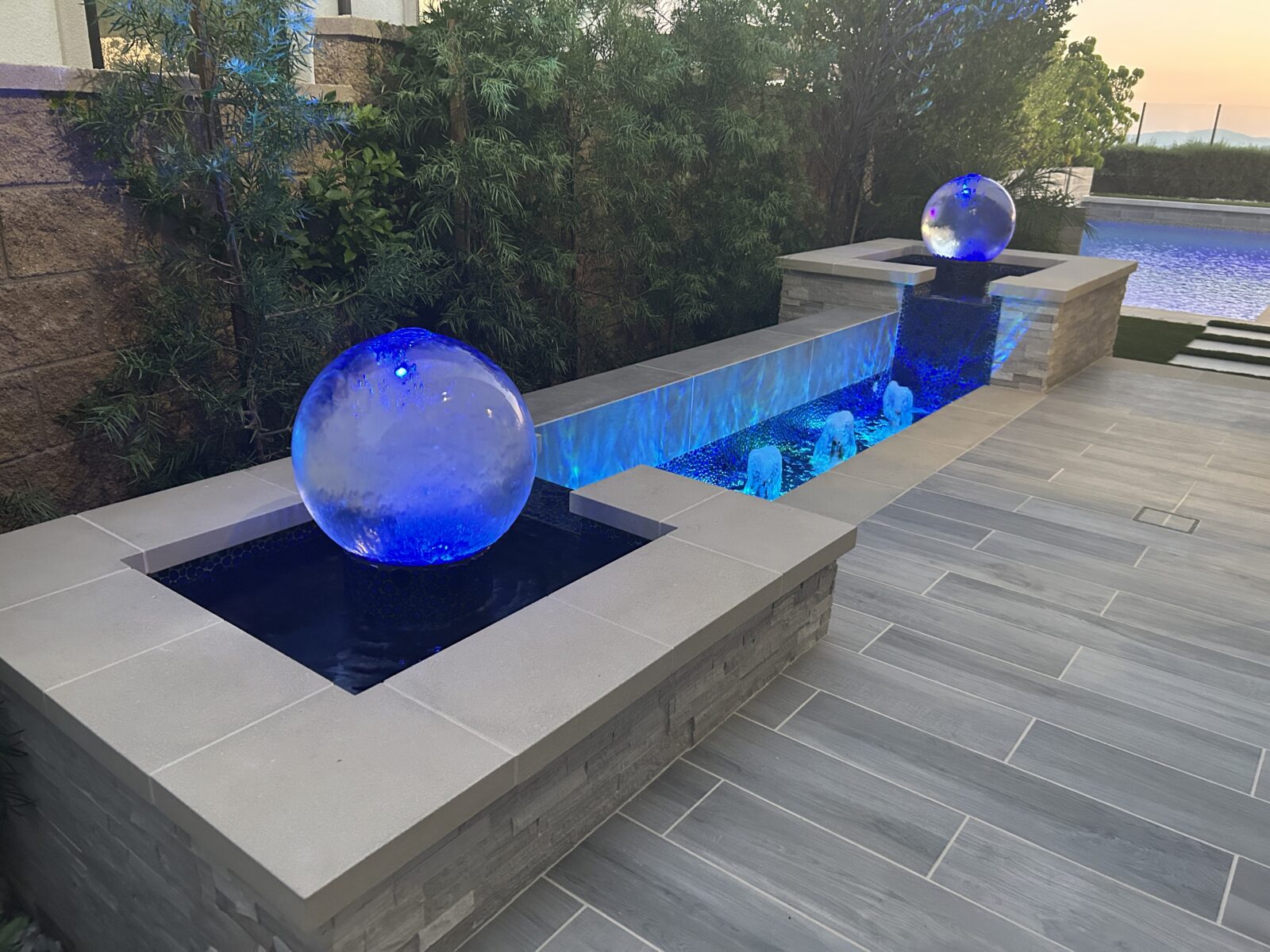
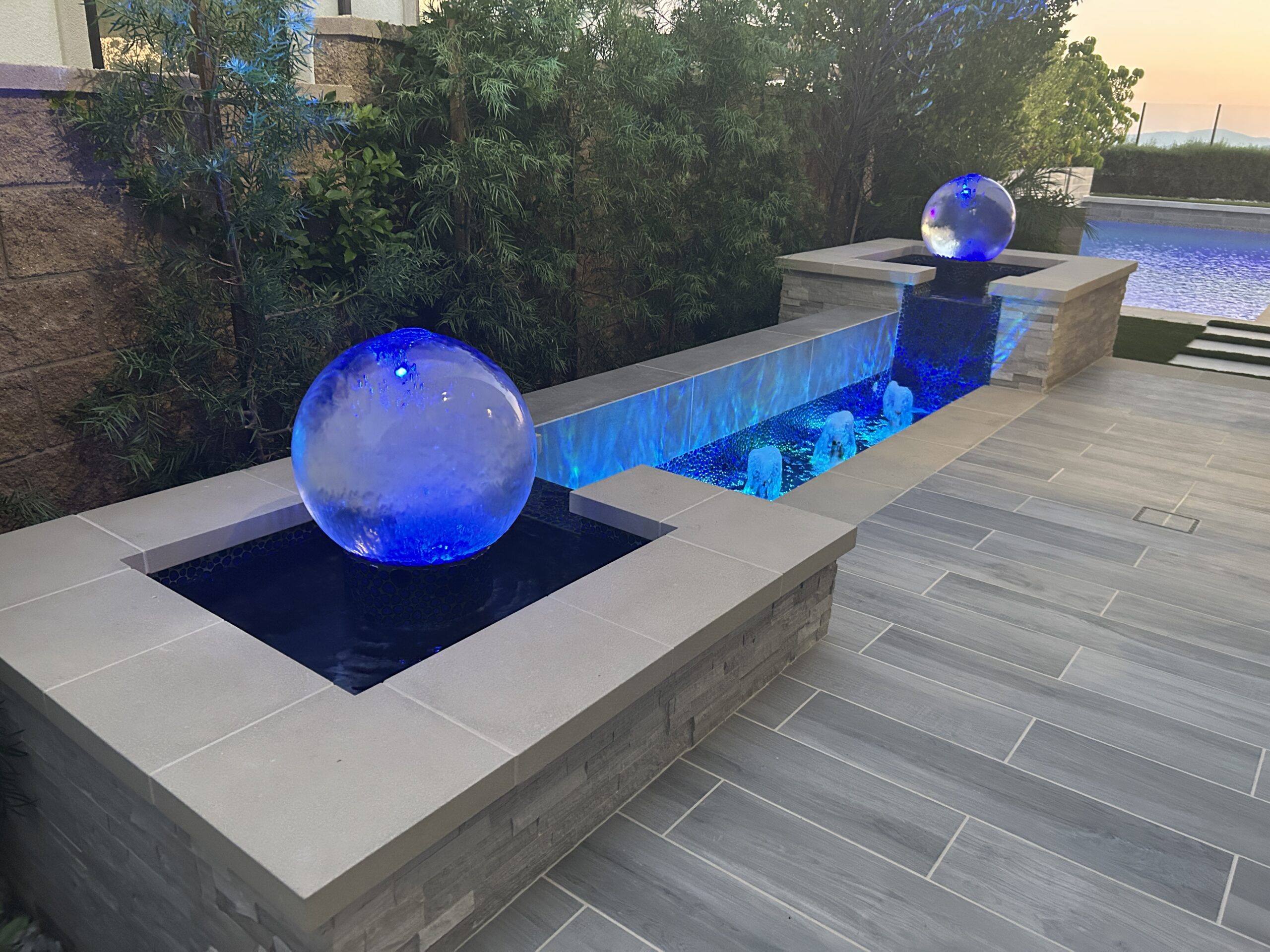
A narrow side yard can easily become an overlooked space, but thoughtful watershape design can transform it into something extraordinary. In this work prosaically titled, “Side Hustle,” The Green Scene turned a challenging passageway into an intimate retreat, combining sculptural water, illuminated crystal spheres, shimmering tile, and soothing sound to create an award-winning outdoor experience.
By Scott Cohen
In residential landscape design, some of the most challenging projects begin with the least promising spaces. This project is a perfect example of just that kind of situation.
A narrow side yard is often treated as leftover property, a passageway between the house and fence, often linking the front yard and back, or simply functioning as a place for utilities and trash cans. But with the right vision, even these neglected strips can become highly functional and emotionally engaging outdoor rooms.
That was the opportunity behind “Side Hustle,” an award-winning project by our company, The Green Scene Landscaping & Swimming Pools. The project transformed an overlooked side yard into a private outdoor retreat. The project demonstrates an important principle in watershape design: limited space does not have to mean limited experience.
This side yard presented a relatively narrow footprint, but rather than attempting to force a conventional swimming pool or spa into a tight spot, the design team approached it as an opportunity to create something different.
The result is a sculptural watershape and promenade that extends along the length of the property. The design incorporates a series of illuminated crystalline acrylic spheres, shimmering tile, carefully layered water movement, and a soothing soundtrack of white noise. Together, these elements transform what could have been an ordinary circulation space into a destination.
It’s one of my favorite strategies when working with challenging sites: stop asking what scene is supposed to be and start asking what experience it can provide. A side yard doesn’t necessarily need to become a traditional pool. It can become a place to sit, decompress, listen to water, and enjoy a moment of privacy.
Layering Experience
One of the most effective aspects of the design is the way it uses the available linear space. Instead of consuming the entire yard with a large body of water, the project creates a long, narrow composition. Water becomes a visual and auditory element that guides the eye through the area.
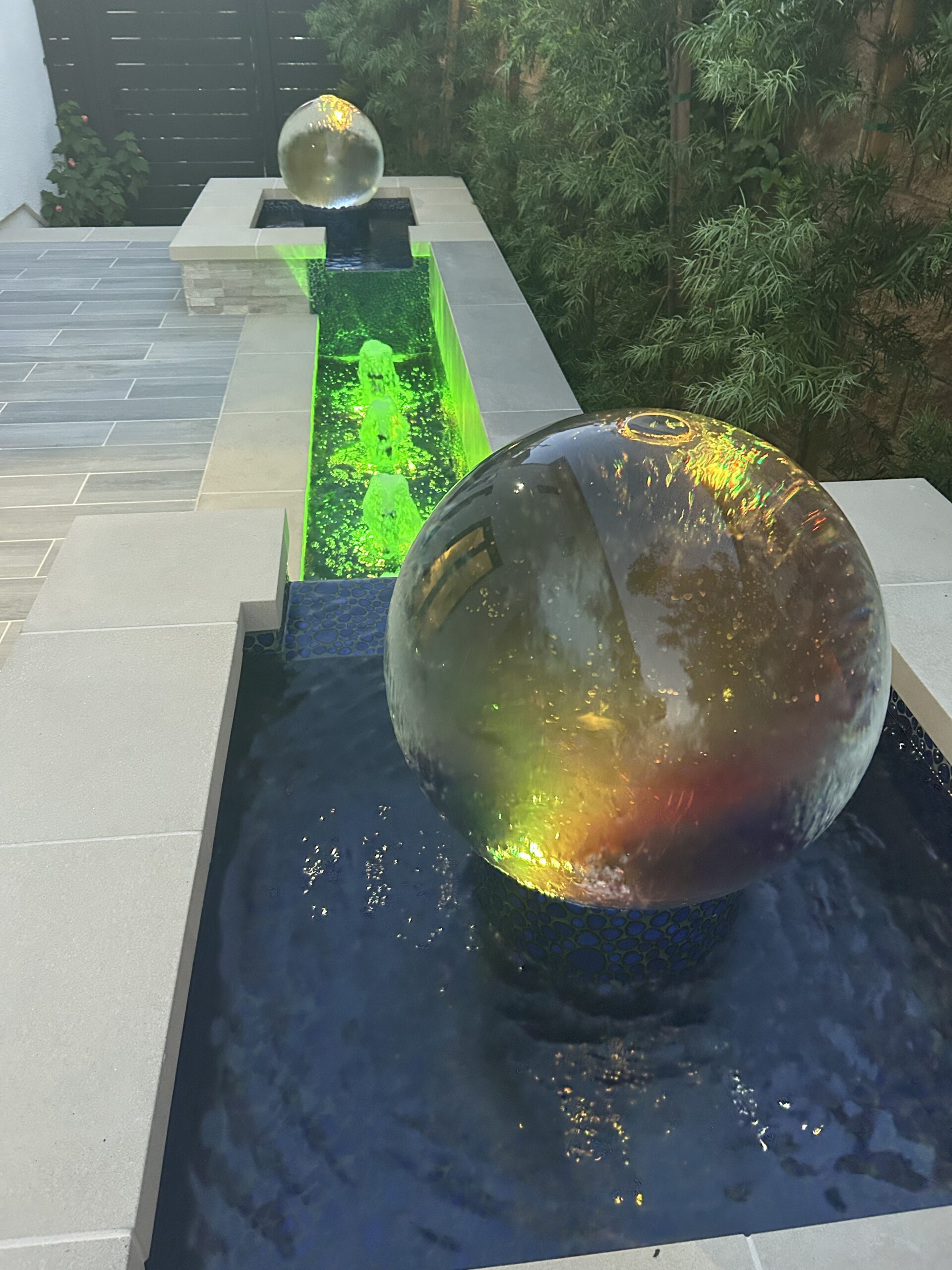 The raised walls also help establish a sense of enclosure. Stone-colored coping and surrounding hardscape frame the water, while landscaping provides a green backdrop. This kind of arrangement is particularly effective in narrow confines because of the way it creates layers rather than simply filling the footprint.
There is hardscape, then there is water, motion, tile, and light. Then there is planting, and beyond that, the surrounding landscape. Each layer contributes to the experience without requiring additional square footage.
Water movement is another important component of the design. Rather than relying on a single dramatic waterfall, the project uses multiple points of water movement along the linear watershape. The illuminated features create a rhythm that encourages the eye to travel down the length of the installation.
At night, the effect becomes particularly dramatic. Blue illumination within the water emphasizes the movement and gives the space an almost otherworldly quality. The crystal spheres become sculptural focal points, while the moving water provides animation.
This illustrates an important lesson for designers: water does not have to be large to be compelling. In fact, a small amount of carefully choreographed water can sometimes create more visual interest than a much larger, undifferentiated body of water.
Designing for the Senses
“Side Hustle” is also an example of designing beyond the visual.
We describe the project as a retreat featuring illuminated crystal spheres, shimmering tile, layered water movement and a calming soundtrack of white noise just outside the client’s office. That last detail is significant.
A successful outdoor environment should engage more than the eyes. Water provides sound, movement and reflection. Lighting changes the character of the space as daylight fades. Texture underfoot and surrounding vegetation contribute additional sensory experiences.
In this case, the watershape becomes a form of environmental therapy, creating separation from the work environment immediately adjacent to it. The goal isn’t simply to look at the water but to experience it as an integral component of the setting that can be experienced through the ears as well as the eyes.
Using Constraints
Every project has constraints. In a narrow side yard, those constraints might include limited width, access, property lines, existing structures and the need to preserve circulation. The temptation can be to see those limitations as obstacles. A better approach is to make them part of the design.
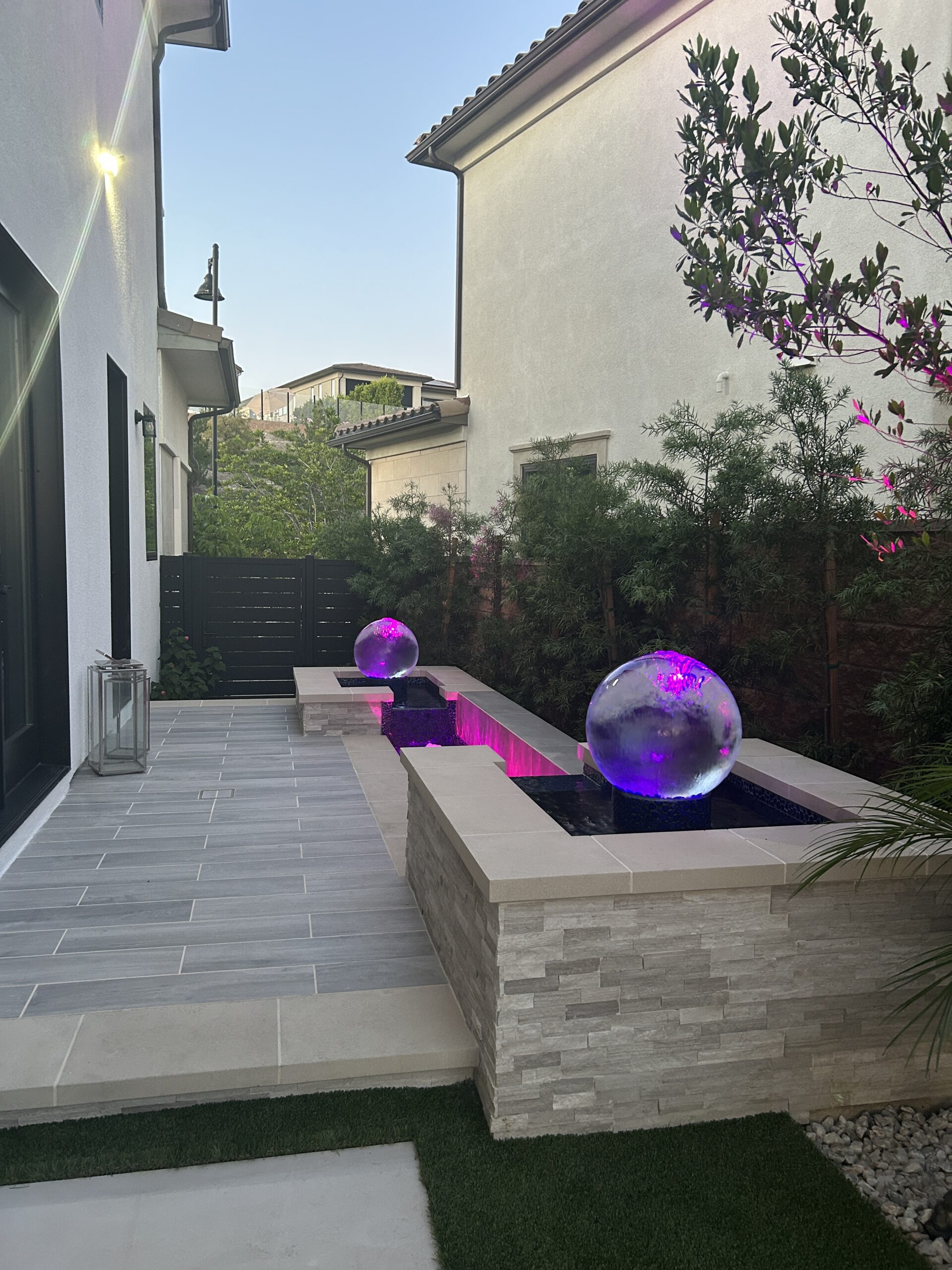 The linear geometry of “Side Hustle” is a direct response to the available dimensions. Instead of hiding the narrowness, the design embraces it. The long watershape becomes the organizing element of the entire composition. The surrounding hardscape provides usable walking and viewing areas, while the walls establish architectural definition.
What began as leftover space becomes one of the property’s most distinctive outdoor environments. Over the years, I’ve learned that award-winning projects are rarely about one spectacular element. More often, they succeed because numerous details work together.
Here, the crystal spheres provide sculptural punctuation. The tile contributes color and reflected light. The water movement creates animation. Landscape planting softens the architectural elements. Lighting extends the experience into the evening.
The relatively restrained palette of the surrounding hardscape allows the illuminated water to become the visual centerpiece. That contrast is important. When everything competes for attention, nothing becomes the focal point.
The design instead establishes a hierarchy: architecture frames the space, water activates it, light reveals it, and landscaping completes it.
An Unexpected Destination
For designers and builders, perhaps the most valuable lesson from “Side Hustle” is that the side yard deserves more consideration. These spaces are frequently overlooked during the initial design process because they aren’t traditionally viewed as primary outdoor living areas. But homeowners increasingly want more from their properties than a backyard swimming pool.
They want places to relax between meetings. They want intimate spaces for conversation. They want sound and movement. They want outdoor environments that can be enjoyed at night as well as during the day.
A narrow side yard can deliver all of those things if it is approached as a destination rather than a leftover. “Side Hustle” does exactly that. By working within the limitations of the site rather than fighting them, The Green Scene created a compact watershape with a strong identity and a surprisingly rich sensory experience.
It’s one example of how thoughtful watershape design doesn’t always mean making something bigger. Sometimes it’s about making something small matter more.
Scott Cohenis an award-winning garden artisan, licensed swimming pool, general and landscape contractor, and renowned expert in construction defect analysis. With three decades of experience designing and building luxury landscapes and pools, he combines artistry with technical precision to create safe, stunning outdoor spaces. A nationally recognized speaker and author of eight books, Cohen also serves as an expert witness in construction-related disputes, providing guidance to homeowners, contractors, and legal professionals. He is president of The Green Scene, known as “The Wow Factor Contractor,” specializing in innovative, family-friendly, and resort-style backyard designs.