


Restoring Washington DC Fountains
Some projects challenge technical abilities, while others test logistical skills, and then there are those that remind you why you entered the profession in the first place. Roman Fountains work restoring six historic fountains in Washington, D.C., ahead of America’s 250th anniversary celebration, falls firmly into that last category.
By John Hartter
For everyone involved, this effort represented far more than pumps, plumbing, controls, and construction schedules. Far beyond those considerations, the work on these fountains in our nation’s capital was an opportunity to help preserve pieces of our shared public heritage and return them to the people who experience them every day.
Standing beside these landmarks as water once again flowed through systems that had been silent for years in some cases was a powerful reminder that fountains are part of the civic identity of a place.
Our company, Roman Fountains, was honored to participate as the engineering and fountain systems partner working alongside Cascade Fountains, a company with deep experience serving the Washington market, general contractor Terra Constructs, and the National Park Service. Together, the team pursued a series of individual restoration projects that ultimately became part of a larger effort to prepare the nation’s capital for the semi-quincentennial celebration this summer.
Pride and Purpose
Although each fountain was bid as a separate project, the work shared a common objective. Many of these historic features had been dormant for years. Some had fallen victim to aging infrastructure and deferred maintenance. Others required extensive upgrades to meet modern operational standards while preserving their original appearance and intent.
The schedule itself was daunting. The team initially proposed two completion timelines, one culminating at the end of June and an accelerated schedule requiring completion by mid-May. The expedited timeline was selected, creating a race against the calendar that demanded extraordinary coordination among contractors, suppliers, engineers, landscape professionals, government agencies, and construction teams.
Having worked in the fountain industry for decades, the team knew that restoration projects often present more unknowns than new construction. Existing conditions rarely match available documentation. Original plans may be incomplete or entirely absent. Underground infrastructure can reveal surprises the moment excavation begins. In a city layered with history like Washington, D.C., those unknowns are often amplified.
Fortunately, experience teaches you how to prepare for uncertainty. You learn to anticipate challenges, build contingencies into your planning, and rely on the expertise of trusted partners.
Columbus Circle
Among the most visible and celebrated restorations was the fountain complex at Columbus Circle in front of Union Station. Few locations in Washington receive more daily visitors. The monumental fountain surrounds the Christopher Columbus Memorial and occupies one of the most prominent gateways to the city.
What makes the restoration especially meaningful is that the fountain had reportedly been inactive since 2007. For nearly two decades, visitors arriving at Union Station encountered a landmark without its defining element: flowing water.
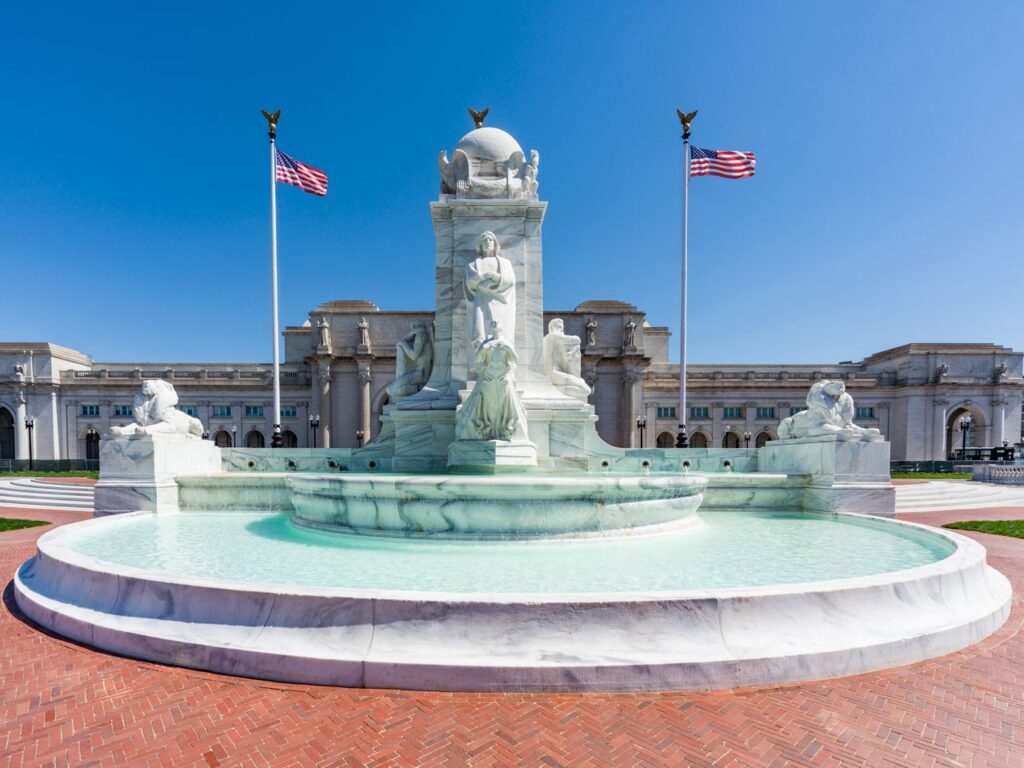
Bringing the fountain back online required a comprehensive modernization effort. The centerpiece of our contribution was the design and fabrication of a large underground equipment vault housing pumps, filtration systems, controls, electrical panels, and associated mechanical infrastructure. The vault was fully assembled, wired, tested, and prepared before arriving on site, helping accelerate installation while maintaining quality control.
The logistics were formidable. Manufacturing schedules, engineering reviews, permitting, approvals, and construction sequencing all had to align perfectly to meet the accelerated deadline.
When the fountain finally returned to operation, it was an inspiriting revival of a civic landmark. A formal ribbon-cutting ceremony marked the occasion, celebrating the return of one of Washington’s most recognizable public fountains after nearly 20 years of silence.
Meridian Hill Park
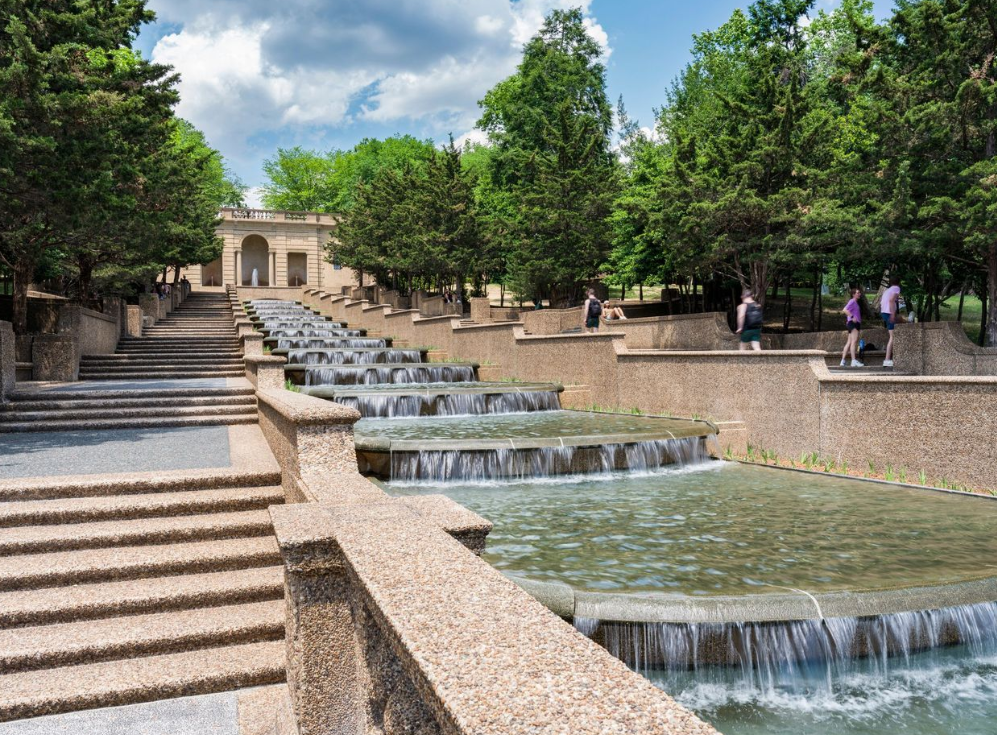
If Columbus Circle was the most visible project, Meridian Hill Park may have been the most beautiful.
The historic cascading fountain is one of the most extraordinary examples of gravity-driven watershaping in America. Water rises to the top of a terraced hillside before descending through a series of stepped basins framed by mature trees and pedestrian promenades.
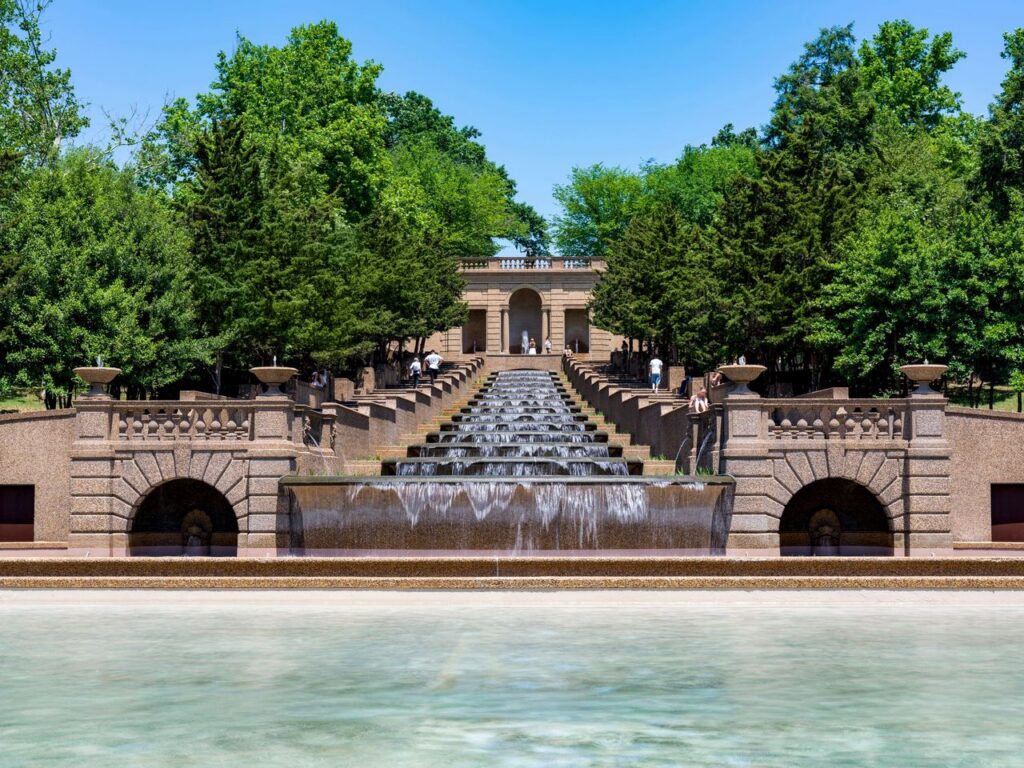
The design demonstrates how simple hydraulic principles can create unforgettable experiences. A 50-hp pump lifts water uphill, allowing gravity to produce a mesmerizing sequence of cascades, reflections, movement, and sound.
The fountain had reportedly been out of service for more than a decade. Rather than replacing the existing concrete equipment vault, we were able to modernize the systems within it, installing new pumps, filtration equipment, controls, and electrical infrastructure while preserving the original structure.
The goal was to restore its original purpose and beauty. Watching water once again cascade down those historic terraces was one of the most rewarding moments of the entire program.
Freedom Plaza
Freedom Plaza presented a distinctly different challenge.
Located along Pennsylvania Avenue, the fountain serves as a contemporary civic gathering space, featuring multiple nozzle arrays, programmable pump zones, lighting systems, and dynamic water displays.
Unlike the gravity-driven elegance of Meridian Hill, Freedom Plaza is about motion, energy, and visual variety. Multiple pump zones and variable-frequency drives allow the fountain to create changing patterns and effects throughout the day.
Even with its more modern character, the restoration philosophy remained the same. The objective was to preserve the original design intent while upgrading the technology behind the scenes. New controls, touch-screen interfaces, remote monitoring capabilities, and energy-efficient equipment ensure reliable operation while maintaining the fountain’s established identity.
The Sheridan Memorial Fountain
The General Philip Sheridan Memorial Fountain offered a different type of significance.
Here, the water feature serves as a companion to one of Washington’s important equestrian monuments. The fountain’s water effects are intentionally restrained, drawing attention instead to the sculpture of Sheridan on horseback.
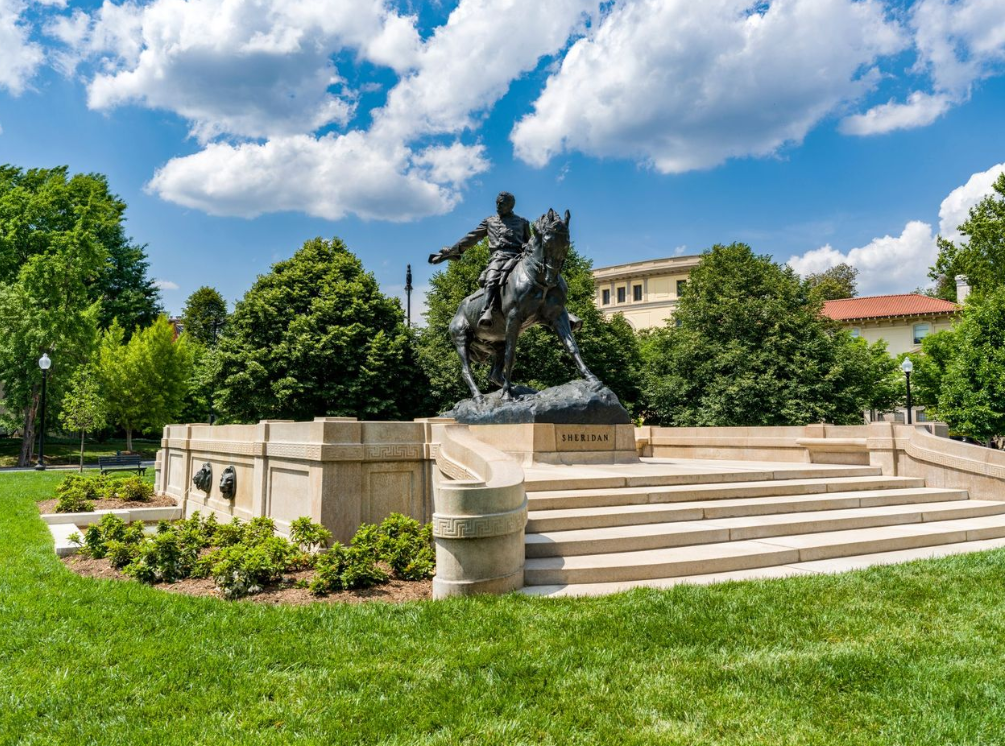
The monument was created by Gutzon Borglum, the sculptor who would later become famous for Mount Rushmore. Working around a monument of such historical importance carries a special sense of responsibility.
Our work focused on restoring the fountain infrastructure, including a new underground equipment vault and modernized mechanical systems. While visitors may notice only the gentle flow of water, the restoration ensures that the setting once again complements the monument as originally intended.
Rawlins Park and John Marshall Park
The remaining projects, including Rawlins Park and John Marshall Park, may be less dramatic than some of Washington’s grand fountain landmarks, but they are no less important.
These park fountains function as gathering places and visual anchors within their respective landscapes. Their water effects are subtle, creating movement, reflection, and ambient sound that enhance the experience of the surrounding public spaces.
Like the larger projects, these restorations involved updating filtration systems, recirculation equipment, controls, and supporting infrastructure while preserving the historic character of the sites.
Modern Technology Supporting Historic Preservation
One of the common themes across all six projects was the integration of modern technology into historic settings.
Today’s fountain systems provide remote monitoring, advanced diagnostics, touchscreen controls, improved water treatment, and dramatically enhanced energy efficiency. Variable-frequency drives allow pumps to operate only at the speeds required, reducing energy consumption while extending equipment life.
At the same time, properly designed fountain systems remain remarkably efficient from a water-use perspective. Nearly all water is continuously recirculated, with only minor losses due to evaporation and splash.
A National Effort
Perhaps the most meaningful lesson from this experience is the power of collaboration. While Roman Fountains and Cascade Fountains played important roles, these restorations were ultimately the work of countless professionals, including contractors, engineers, architects, landscape designers, government officials, manufacturers, tradespeople, and maintenance personnel.
As America’s 250th anniversary approaches, millions of visitors will experience these renewed public spaces. They will hear the water at Meridian Hill, see Columbus Circle flowing once again, and enjoy civic landmarks restored to their intended beauty.
Perhaps the greatest reward is knowing that our team helped preserve a small but meaningful piece of America’s public heritage. These fountains were built to inspire civic pride. Helping bring them back to life was an honor for the entire project team.
Photos by David Madison Photography.
John Hartter is executive vice president for Roman Fountains, a legendary fountain company serving clients across the U.S. and abroad. Projects include architectural fountains, interactive and splashpad style water features, natural features, and show fountains. Hartter’s expertise includes innovative business development and partnership with excellence in customer experience.