








Over the Water
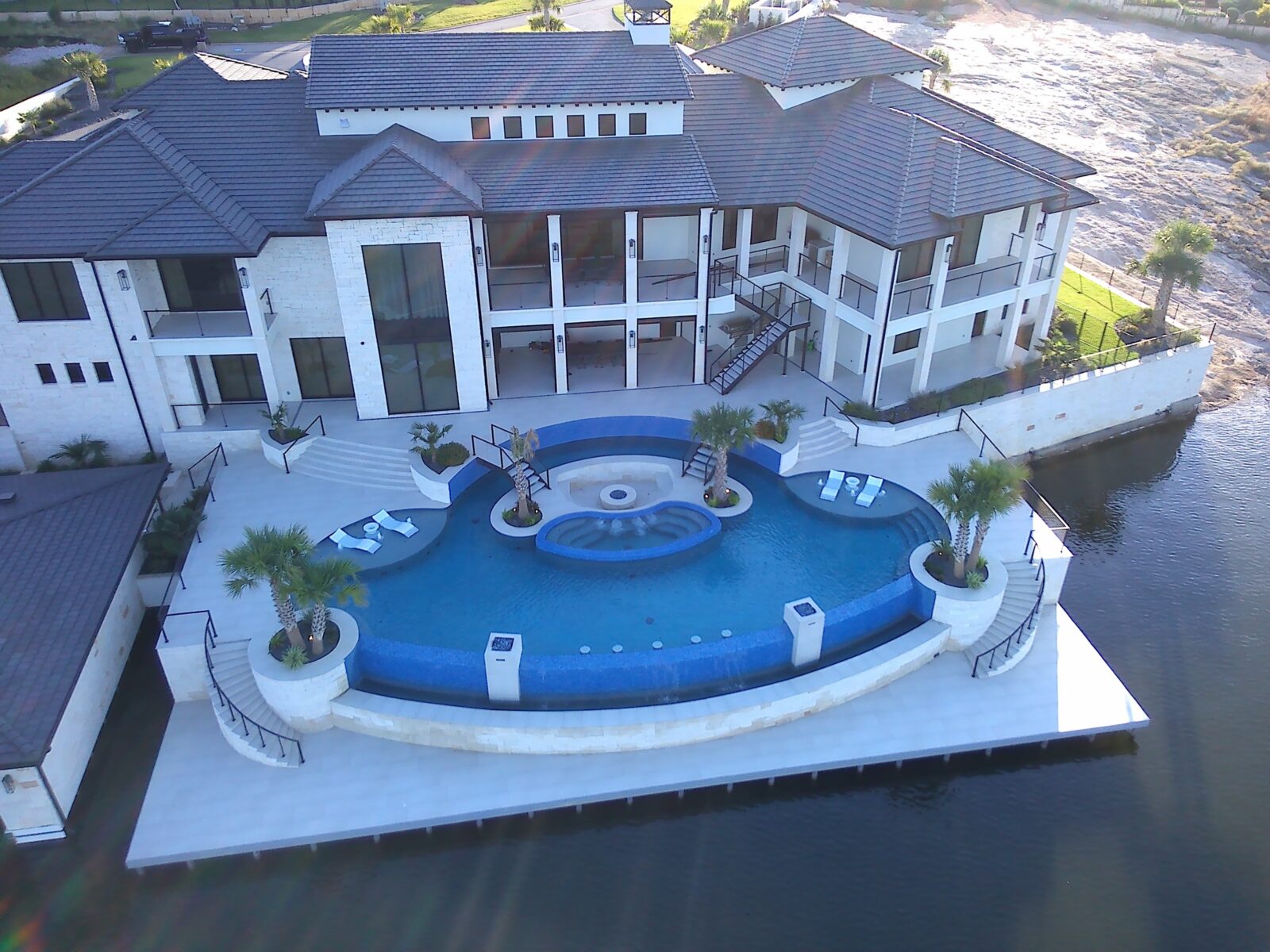
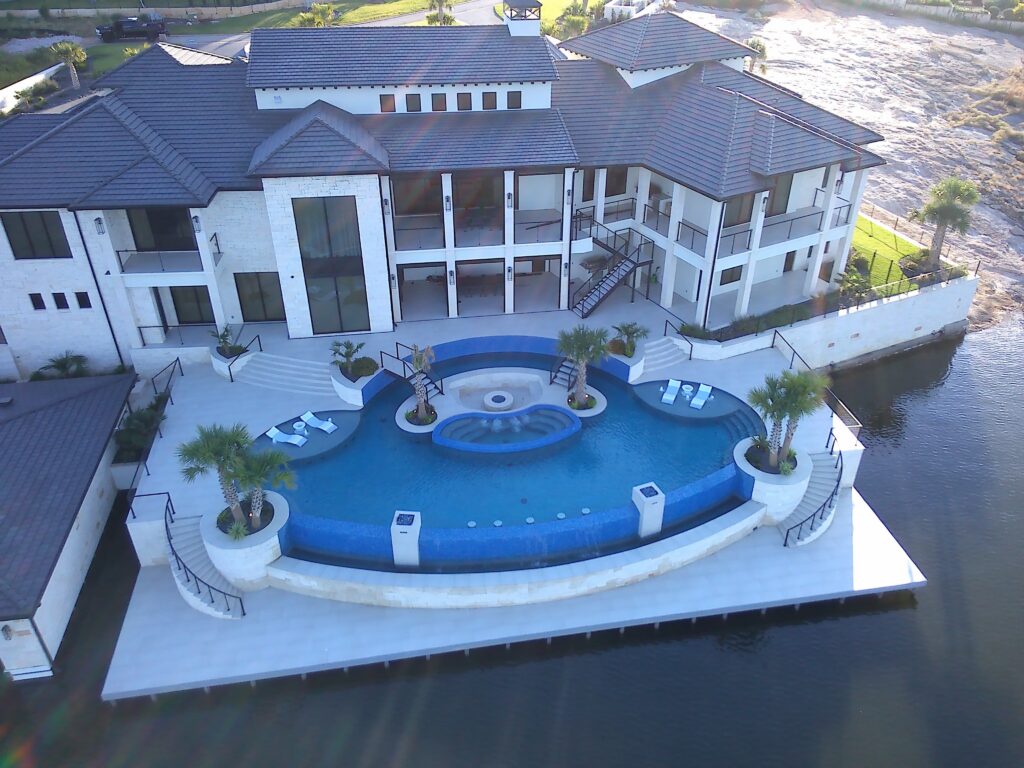
In Horseshoe Bay, Texas, Southern Living Pools and the shotcrete specialists at Texan Gunite faced an unusual challenge: constructing a large, curvilinear watershape with most of its structure suspended directly above Lake LBJ. The ASA award-winning Yates Project demanded months of coordination, careful logistics, and precise dry-mix shotcrete placement to transform an ambitious lakeside vision into concrete reality.
By Juanjose Armenta-Aguirre
The phone rang with a familiar request: “Junior, come bring us a truck.”
Driving a truck when needed is part of the job, and that day seemed no different. The project site was in the Marble Falls and Horseshoe Bay area of Central Texas, and I expected to be the last truck arriving so the crew would not have to wait for materials.
After I pulled in and climbed out of the truck, Trent Dalton, field supervisor for Southern Living Pools, walked up behind me and put a hand on my shoulder.
“Junior, you got a minute? I want to show you something.”
We drove through the Escondido Lago gated community overlooking Lake LBJ. After stopping near the shoreline, Dalton asked, “What do you see?”
“Beautiful homes and the lake,” I answered.
“What’s missing?”
“A pool?” I replied, half joking.
“Exactly.”
That conversation marked the beginning of a project unlike anything either of us had tackled before, both in scale and in setting.
A Pool Suspended Above the Lake
The Yates Project sits on Apache Tears Road in Escondido Lago, a private community along Lake LBJ, the controlled Colorado River reservoir that winds through the Texas Hill Country.
The defining feature of the design is its relationship to the water. Roughly two-thirds of the pool structure extends beyond the shoreline, suspended directly above the lake. The engineering challenge was immediately apparent.
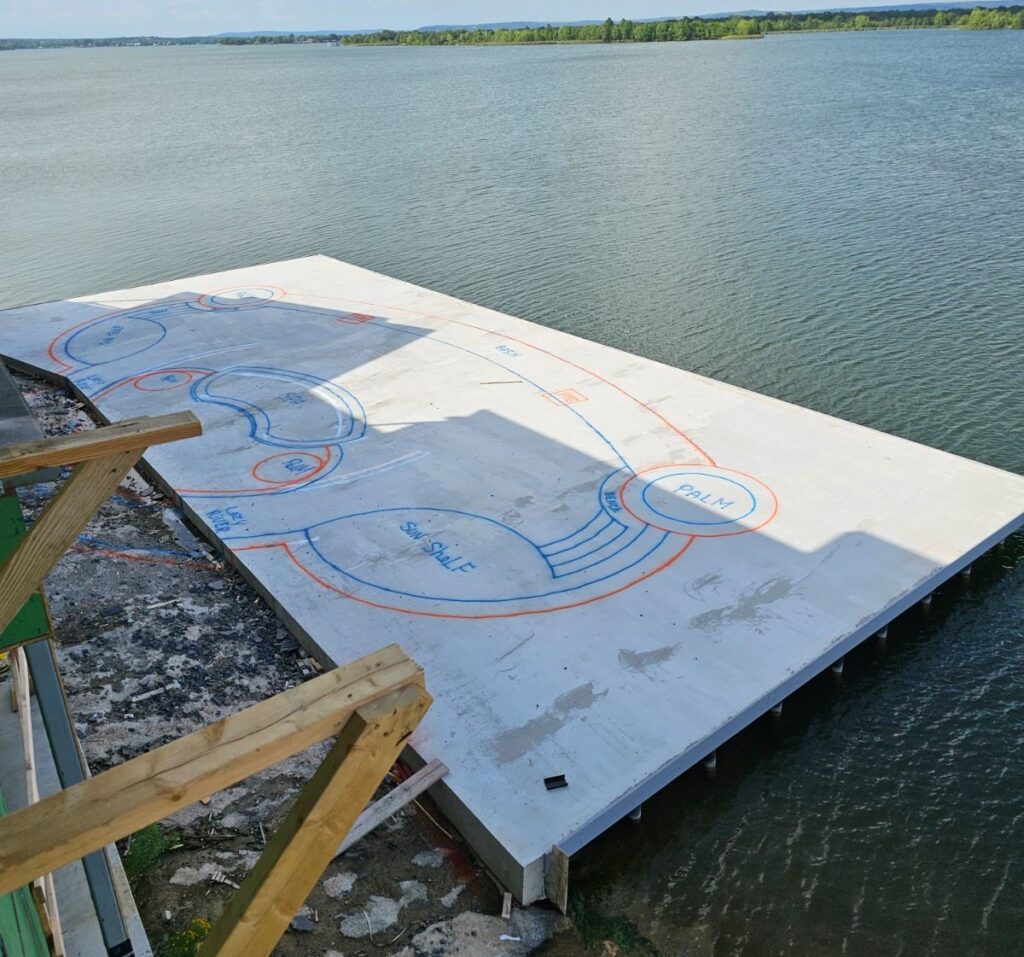
From the initial site visit to the start of shotcrete placement, the process stretched across approximately 18 months. The house itself was still under construction, and the foundation required drilled piers anchored into granite before the structural slab supporting the pool could be formed and poured.
That timeline proved valuable. It gave the entire team, including the engineering firm, home builder, Southern Living Pools, and owner Brent Dalton, ample opportunity to plan every phase of construction and evaluate exactly how the shotcrete work would be executed.
Preparing for the Shoot
Because we use dry-mix shotcrete, traditionally known as gunite, material preparation became a critical part of the strategy.
Sand from the Collier Materials plant in Llano was stockpiled and allowed to dry, while cement silos were filled with material from Texas Lehigh in Buda. Rather than relocating our delivery equipment to a temporary site closer to the project, we chose to load from our Liberty Hill facility, roughly 60 miles away.
Delivering dry materials and mixing them on site gave us maximum shooting time and helped us remain within the homeowners association’s daily work-hour and noise limitations.
Two Phases, Eleven Days
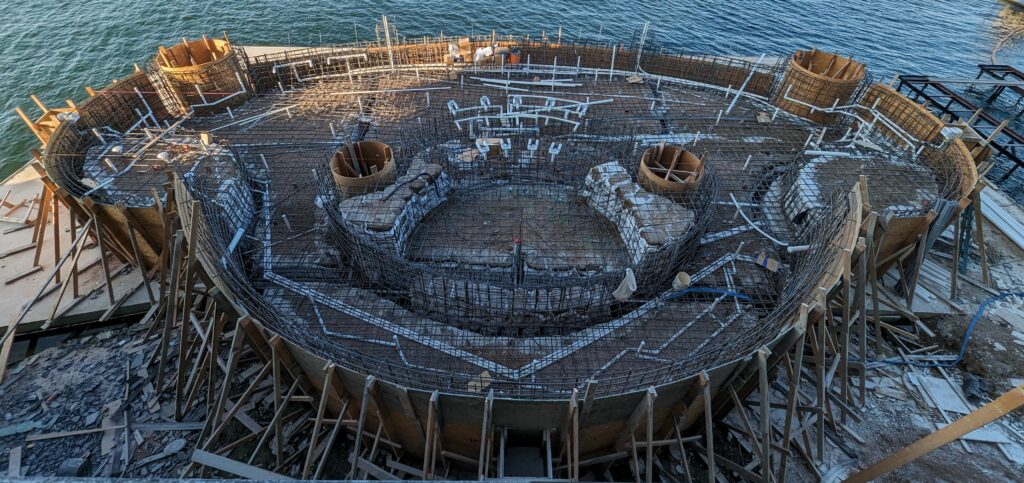
Shotcrete placement occurred in two major phases during August 2023, under intense Texas heat and lake-driven humidity.
Phase One involved footers and structural work, with 156 cubic yards of concrete. It required six shooting days, including two weather delays, and placed 156 cubic yards of material, primarily for footers and structural elements.
Phase Two covered the pool and ancillary features with 230 cubic yards, spanning five additional days,0 and involved the pool shell and its surrounding features, adding another 230 cubic yards of concrete.
Both phases saw 386 cubic yards installed over 11 shooting days.
The completed watershape includes:
- A lazy river-style circulation channel
- A raised spa
- A fire-pit seating area
- A tanning ledge and beach entry zone
- Integrated planters
- Bar stools positioned to face the infinity edge and lake
- An overflow catch basin
- Structural columns and architectural elements
One of the project’s advantages was the limited use of conventional formwork. By minimizing forms, the team reduced lumber consumption, labor, and material costs while preserving the flowing geometry envisioned in the renderings.
The approach allowed the shell to be sculpted directly into the sweeping curves that define the finished pool and its dramatic relationship to the lake.
Equipment and Execution
The shell was placed using a 4:1 sand-to-cement mix design that achieved compressive strengths exceeding 4,000 psi (28 MPa). ASTM C33 and TXDOT-certified sand was paired with Type I cement.
The shooting crew consisted of eight workers inside the pool and one operator outside running a Putzmeister AG-15 dry-mix gun. Compressed air came from an Ingersoll Rand HP915, while dry materials were supplied through a truck-mounted volumetric mixer from Strong Industries.
Site access presented another complication. The equipment could not be positioned adjacent to the pool, so the gun was set at the front of the house, which was still under construction. Dry-mix delivery hose was routed through the structure with extensive safety precautions in place.
Using volumetric mixing on site also reduced transportation demands compared with hauling large quantities of ready-mixed concrete from a batch plant.
Concrete Reality
The pool interior was ultimately finished with an exposed pebble aggregate by Centex Plaster, and the project reached completion in October 2025.
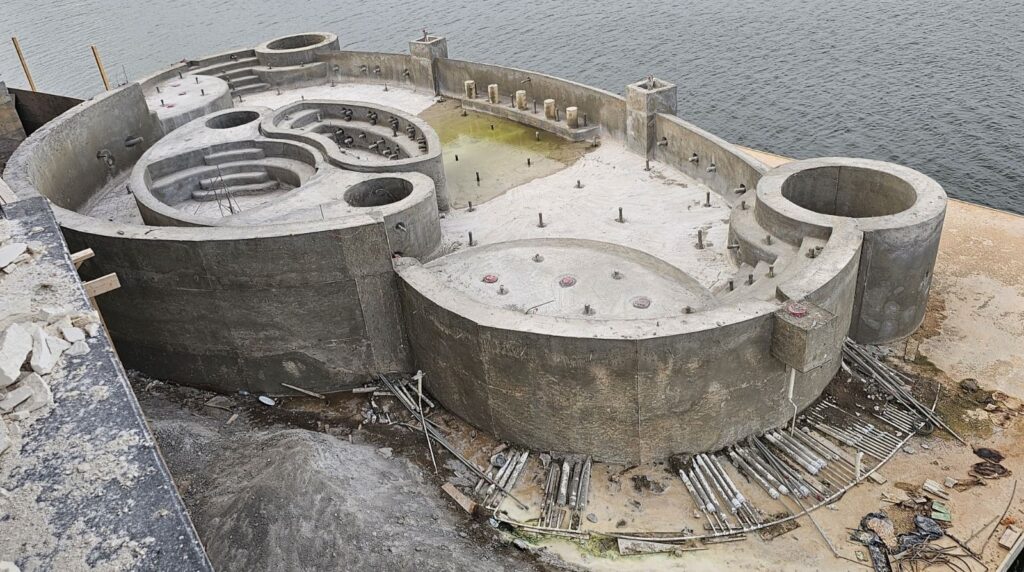
For our team, the Yates Project became a vivid reminder of what shotcrete can accomplish when engineering, craftsmanship, and imagination align. Building a pool that extends out over a Texas lake demanded patience, planning, and precision, but the result demonstrates how a bold concept can be transformed into a lasting concrete structure that appears to float above the water itself.
Juanjose Armenta-Aguirre is a second-generation dry-process shotcrete specialist and co-founder and COO of Texan Gunite. An ACI-certified shotcreter, he serves on multiple American Concrete Institute committees and the American Shotcrete Association Board of Directors. He is also president of the PHTA Central Texas Chapter, serves on the PHTA Builders Council Board of Directors, and holds both PHTA Certified Pool Inspector and Certified Pool Operator credentials.
This article has been reprinted with permission from Shotcrete magazine and the American Shotcrete Association (www.shotcrete.org).
Submit Your Pool Project Today
Applications for the American Shotcrete Association awards program are open now. At least one member of the project team (architect, engineer, material supplier, equipment manufacturer, or general contractor) must be a current ASA Sustaining or Corporate Member; this requirement does not apply to international projects. Eligible projects must have been completed between January 1, 2024, and September 1, 2026. Submissions must be submitted by October 1, 2026.
Go to www.shotcrete.org/awards for more information.