








Inside the Screen
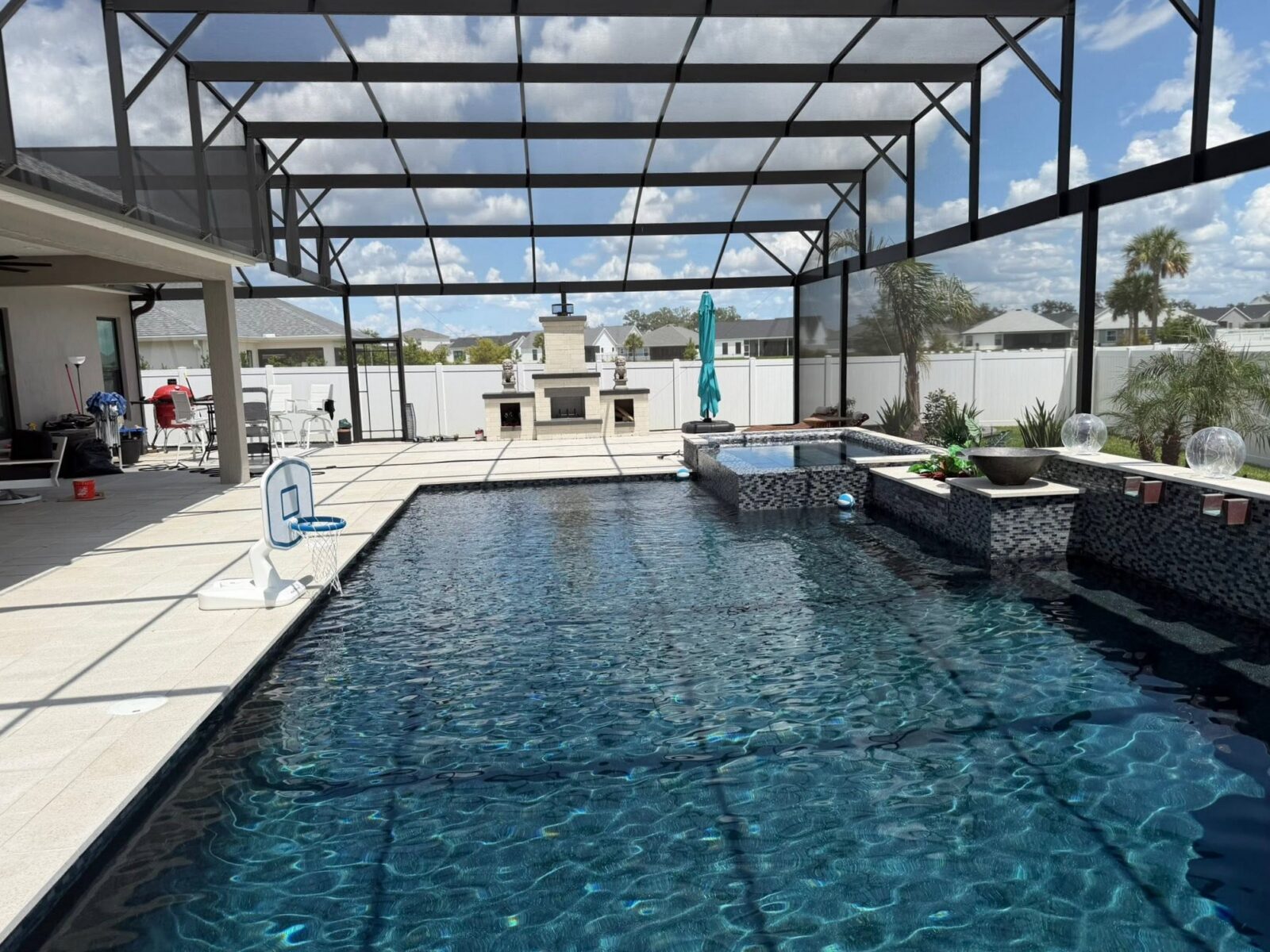
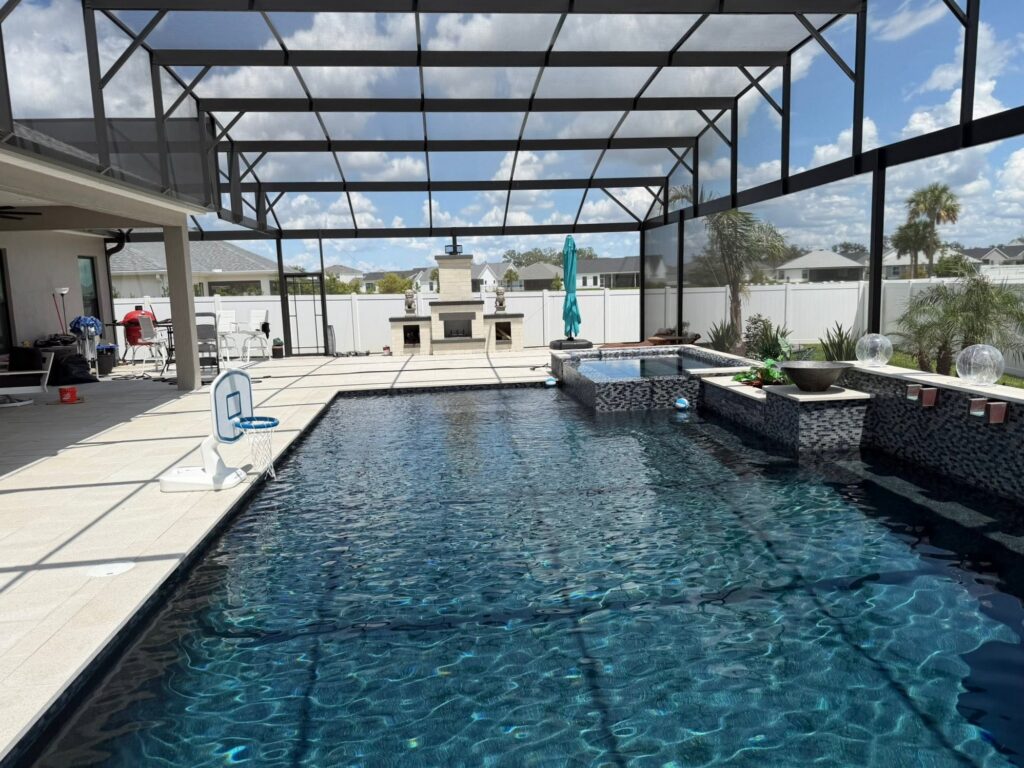
In Florida, screen enclosures have become fundamental design elements that transform pools into comfortable, year-round outdoor living spaces. Designer Amber Martin explains how thoughtful screen treatments enhance aesthetics, privacy, maintenance and the overall backyard experience, creating environments homeowners truly love to inhabit.
By Amber Martin
When homeowners invest in a swimming pool, they’re usually chasing something far greater than a place to swim. They’re looking for comfort, space to unwind after a long day, entertain family and friends, exercise, or simply enjoy the outdoors without sacrificing the conveniences of home.
The most successful backyard environments create an experience that invites people outside and makes them want to stay there.
As designers, that’s ultimately what we’re trying to accomplish. Every decision, from the layout of the deck to the placement of furniture, shade structures, outdoor kitchens and watershapes, is made with the goal of creating an environment that’s beautiful, comfortable and functional. A great pool is never an isolated feature. It’s part of a complete outdoor living space that functions as naturally as any room inside the home.
Here in Florida, that pursuit of comfort comes with a unique set of challenges. Heat, humidity, afternoon storms and, perhaps most of all, mosquitoes and other insects can quickly diminish the enjoyment of even the most beautiful backyard. That’s why screen enclosures have become such an integral part of residential pool design in the Sunshine State. They are one of the essential design elements that transform a backyard into a true outdoor living room.
In fact, roughly 95% of the pools I design include a screen enclosure. For my clients, the decision is rarely only about keeping bugs out, although this is certainly a big reason for choosing a screen. They also want to create a space that’s cleaner, more comfortable, easier to maintain and inviting enough to enjoy every day of the year.
It makes spending time outdoors a far better experience.
Visualizing the Experience
Returning briefly to the subject of insects. It is true, we have an abundance of airborne bugs that can, at times, make life miserable. Screens, first and foremost, exist to enable people to enjoy time outside without having to always cover themselves in bug repellent. That fact is basically a given and really doesn’t require much discussion.
Beyond that concern, the first step is understanding how the clients intend to use the space. Some envision large family gatherings. Others want a peaceful retreat. I’ve had homeowners tell me they’ll probably never swim at all. They simply want beautiful water to complement an exceptional view and increase the enjoyment of their property.
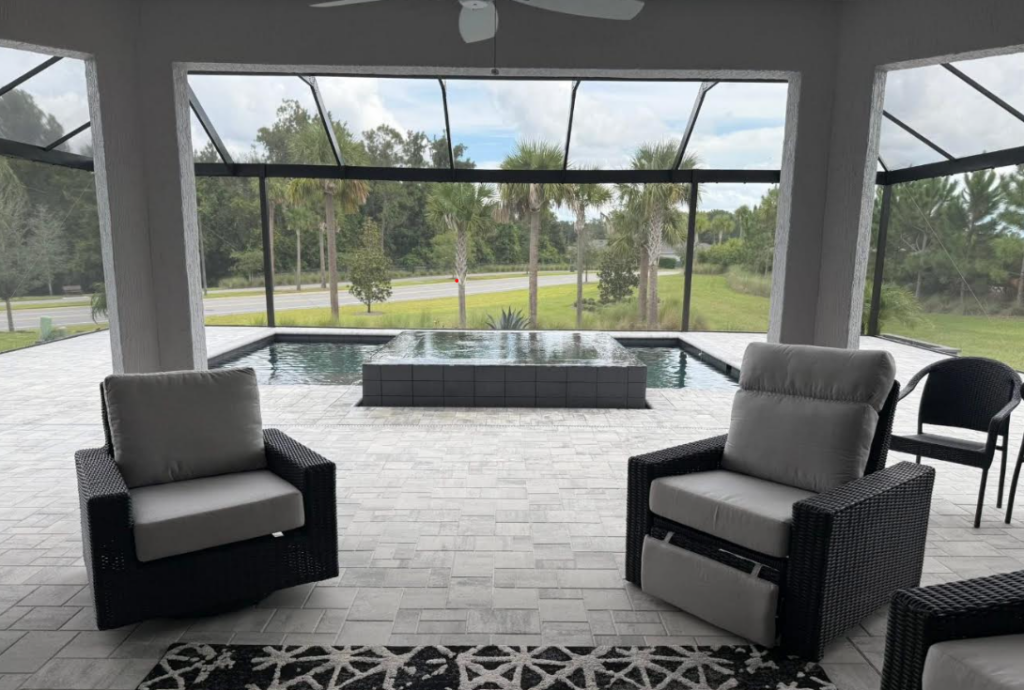
That’s why the initial conversations I have with homeowners are not entirely about the pool itself. Instead, I ask how they plan to live in their space. Will they entertain friends every weekend? Do they want an outdoor kitchen? Will they spend evenings around a fire feature? Do they want a shaded dining area, a place to exercise, or simply a beautiful view from inside the house? The answers shape every design decision that follows.
Here in Florida, people often leave the sliding glass doors open and move effortlessly between indoors and outdoors. When a screen enclosure is designed properly, that transition feels seamless. The enclosure defines the outdoor room without making it feel enclosed. It creates a comfortable environment where people naturally gather throughout the day.
Yes, the screens keep out mosquitoes, which are certainly a fact of life here. But what homeowners end up appreciating most is how the enclosure makes their pool area feel like another room.
Enclosure Architecture
One misconception people often have is that every screen enclosure is simply a rectangle placed over the deck. That couldn’t be further from reality.
The enclosures I work with are highly customized to both the home’s architecture and the geometry of the property. Lot setbacks, angled property lines, existing rooflines and deck configurations all influence the final design. In many cases, those irregular shapes become opportunities to create more interesting spaces. The enclosure itself also becomes a framing device.
As designers, we constantly ask ourselves a simple question: What deserves attention? If there’s a spectacular lake view, for example, we want the structure to disappear as much as possible. If there’s an unattractive neighboring patio, we may use architectural elements or privacy screening to redirect the eye somewhere more pleasing.
The enclosure isn’t competing with the design, but instead it helps guide the experience.
Seeing Without Seeing
Advances in enclosure engineering have dramatically expanded what’s possible. Traditional screen structures rely on vertical supports spaced roughly every eight feet.

Today’s panoramic and MegaView systems can span 30 feet or even more than 60 feet without intermediate posts, creating uninterrupted sightlines that would have seemed impossible just a few years ago.
Those larger openings become especially valuable on waterfront properties or homes overlooking golf courses and preserves. Removing visual obstructions allows the landscape to become part of the overall composition.
Equally important is the screen fabric itself.
Homeowners often worry that they’ll constantly notice the mesh. Yet, after a short time, most people stop seeing it altogether. Their eyes naturally focus beyond the screen and onto the surrounding landscape.
That’s exactly what good design should accomplish.
Privacy Without Isolation
One interesting aspect of working in The Villages is that many neighborhoods prohibit traditional perimeter fencing. As a result, screen enclosures often perform double duty. Besides satisfying safety requirements, they also provide a degree of separation between neighboring properties.
When additional privacy is desired, there are many options. Motorized shades can be incorporated into the enclosure itself. Decorative privacy panels can define seating areas. Strategic landscaping softens views while preserving openness.
One thing I generally avoid, however, is allowing climbing vines to cover the enclosure. Although it might seem attractive initially, vegetation against the aluminum structure creates maintenance issues over time.
One of the most overlooked advantages of screen enclosures is how dramatically they simplify maintenance. Leaves, roof debris, insects and windblown organic material stay outside the enclosure rather than ending up in the pool. The surrounding deck remains cleaner as well.

Even wildlife becomes less of an issue. The occasional snake, lizard or other unwanted visitor is far less likely to wander into an enclosed environment. Birds can usually be discouraged with simple rotating deterrents installed at the upper corners of the structure.
Overall, homeowners spend more time enjoying the pool and less time cleaning it.
Designing Around the Illusion
Some of my favorite projects involve pools with vanishing-edge or what I like to think of as blended-edge effects. These projects require careful coordination between the water design and the enclosure.
People tend to look through screen mesh without noticing it, but structural beams are another story. Whenever possible, I position structural elements so they disappear from important sightlines, preserving the visual illusion that the water extends naturally into the landscape beyond.
Small adjustments in elevation can make an enormous difference. Sometimes moving a beam only a few inches dramatically improves the overall visual experience
Modern screen enclosures also offer opportunities that extend beyond simply enclosing the area. Composite roof sections can provide permanent weather protection over outdoor kitchens or dining areas. Integrated lighting transforms evening entertaining by illuminating seating areas that pool lights alone cannot adequately serve.
The structures themselves are engineered to withstand significant wind loads, bonded into the overall electrical safety system and built with aluminum framing and stainless-steel hardware for long-term durability. Those technical details matter, even if they are rarely what homeowners remember.
A Better Way
Enclosures create comfort, define outdoor rooms, simplify maintenance, improve safety and encourage people to spend more time outside.
In my own home, I even screened my front porch. Now I can open both the front and back doors, let the breeze flow through the house and enjoy fresh air without worrying about insects. The entire home feels connected to the outdoors.
Once you’ve lived that way, it’s hard to imagine going back. For me, that’s the real value of a screen enclosure. It isn’t about separating people from nature. It’s about creating an environment where they can enjoy it more often, more comfortably and for many years to come.
Amber Martin is a design and sales consultant, residential custom pools for Blue Haven Pools on the Gulf.
Photos by David Johns, project manager Blue Haven Pools the Villages.
Amber Mar