








How to Frame a Beautiful View
While homeowners with views almost always want to make the most of their settings, many don’t fully understand how best to go about it, explains Scott Cohen. Capturing a beautiful vista does not always mean leaving it undressed and undisrupted. Here he describes how framing and even partially concealing a scene can lend context, function and beauty.
By Scott Cohen
One of the most common things we hear from clients with view lots is, “We do not want to block the view.” That makes perfect sense. If you invested in a property with sweeping mountain views, sparkling city lights, canyon vistas, or ocean horizons, the last thing you want is to clutter it up.
Many homeowners become so protective of the view that they become afraid to place anything in front of it at all. While that instinct is understandable, my philosophy is quite different. A truly successful landscape should preserve the view, but it should also enhance the way you experience it.
Yes, the view should absolutely be enjoyed from inside the house. Open sight lines and large expanses of glass matter. But great landscape design does more than protect what you can see from the kitchen window or family room. It creates inviting places throughout the garden where the view can be enjoyed in different ways.
A view lot should not become an empty backyard with a fence at the edge and nothing else going on. It should include a series of outdoor destinations that each offer their own unique relationship to the scenery beyond.
Choosing to See
How clients plan on experiencing their view will dictate the design elements you choose to place in and around it.
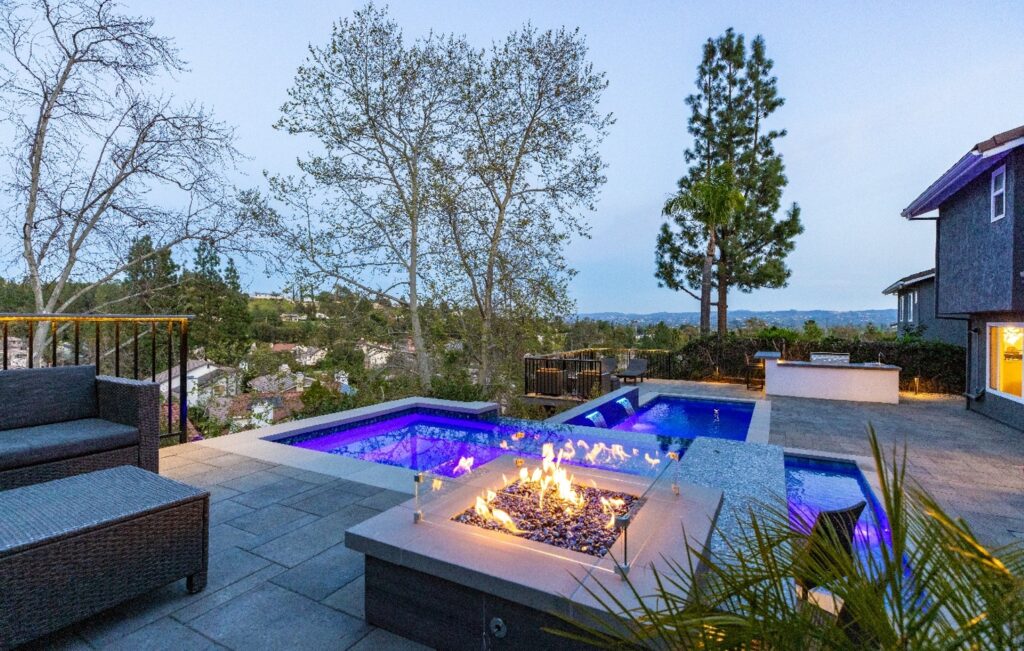
That might mean enjoying morning coffee on a patio, watching the sunset from a fire pit lounge, relaxing beneath the shade of a tree, or soaking in a spa that seems to blend into the horizon. When designed properly, each outdoor room offers a slightly different experience of the same view. One moment may feel dramatic and wide open, while another feels intimate and framed. One may be perfect for entertaining, while another feels private and reflective. That is what makes a landscape memorable and gives a view lot its full value.
I often explain this idea to clients using a simple comparison. When you come home from vacation and look through your photographs, the shots that are only the view usually are not the ones that make the album. They may be beautiful, but they often feel flat and impersonal.
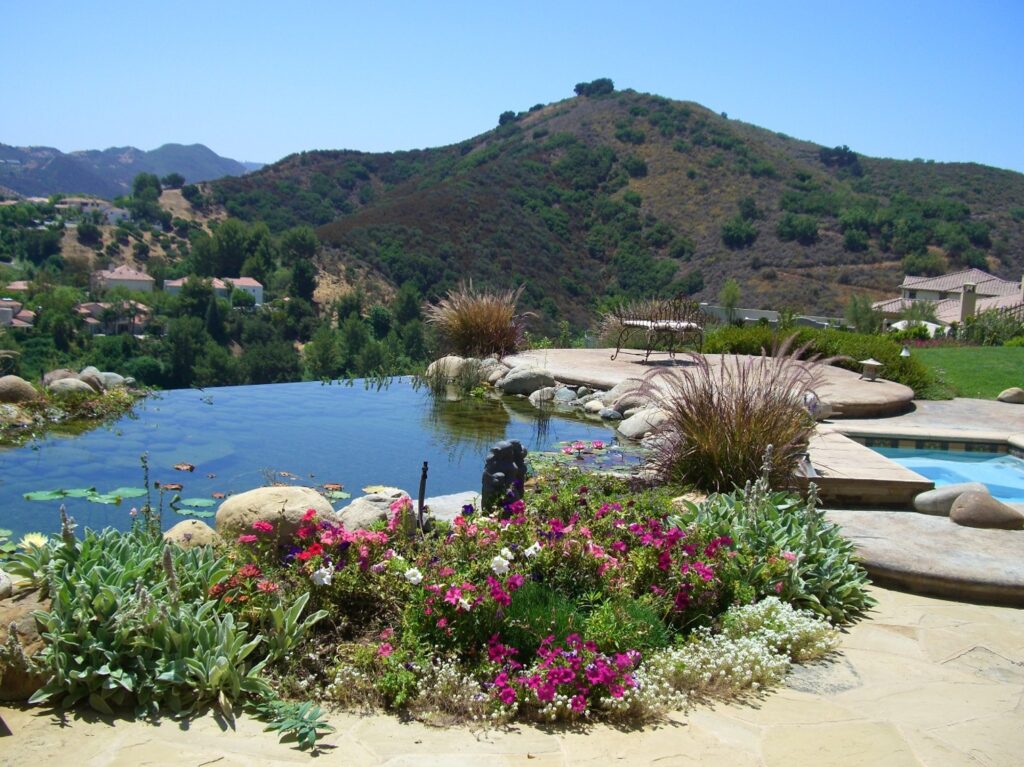
The images people save and cherish are usually the ones that have something framing the view. Maybe it is a tree branch in the foreground, a pergola overhead, a pool edge stretching toward the distance, a glass of wine by a fire feature, or your partner standing in the scene. Those images have context. They tell a story. They make the view feel personal and complete.
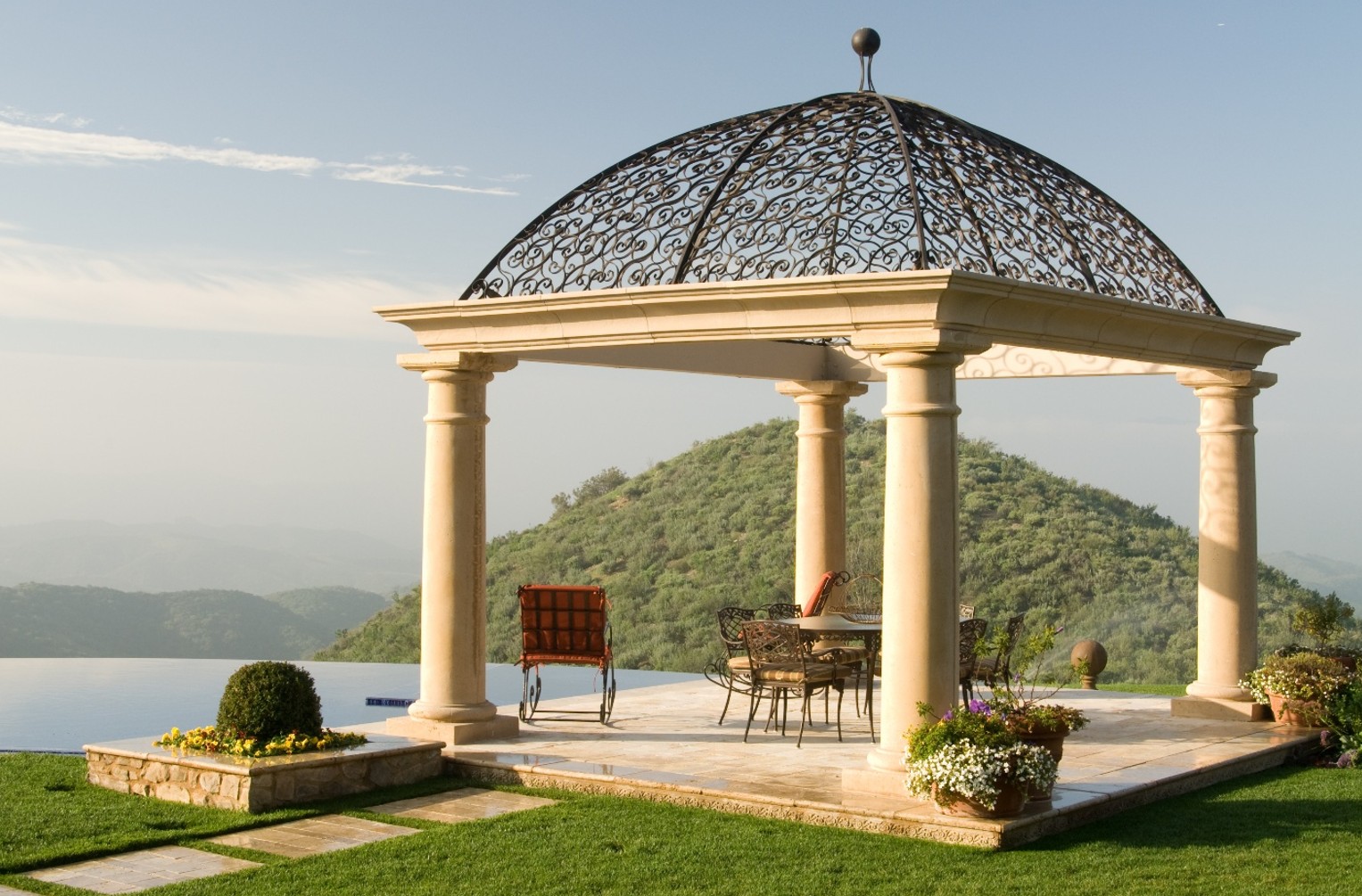
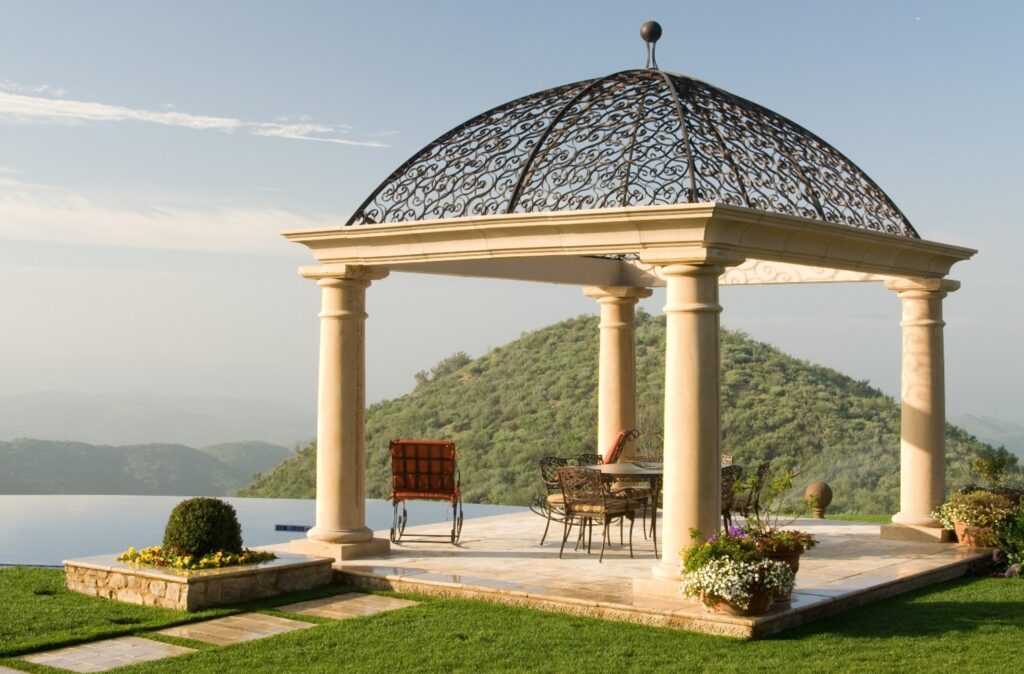
The same principle applies in landscape design. A beautiful foreground can make a beautiful background even more powerful. Framing the view does not mean blocking it, but instead using carefully placed design elements to give the eye depth, scale, and composition. A well-positioned specimen tree off to one side, an open-air shade structure, elegant outdoor furniture, a low wall, sculptural planting, or a fire feature can all help anchor the scene.
These elements make the property feel intentional rather than empty. Without thoughtful framing, a yard can feel unfinished. With the right framing, the same view lot can feel like a luxury resort.
Watershapes can be especially powerful on view properties. A vanishing-edge pool can visually merge with the horizon and draw the eye outward. A rim-flow spa can create a sleek reflective surface that adds elegance and calm. Even a reverse vanishing edge detail can create dramatic visual tension and strengthen the connection between the built environment and the natural scenery beyond.
Such features add beauty while making the view interactive. Instead of simply looking out into the distance, you experience reflection, movement, sound, and atmosphere in the foreground. That combination can transform an ordinary backyard into something unforgettable.
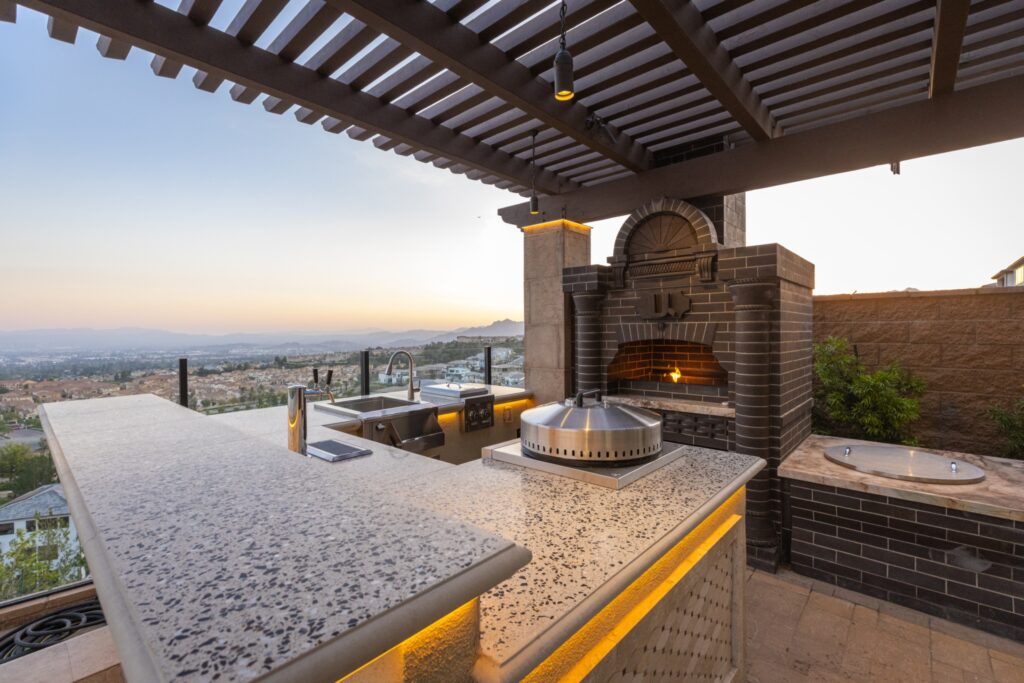
Too many view lots are designed with fear. Homeowners worry that a tree will ruin the sight line, that a structure will interrupt the horizon, or that any landscape element in the foreground will somehow lessen the impact of the scenery. In reality, the right design choices do the opposite.
Making the Most
Great landscape design is not about freezing the yard and leaving it mostly bare. It requires making thoughtful decisions that improve how the view is experienced from all parts of the property. You should be able to enjoy the scenery from inside the home, from the patio, from the spa, from the fire pit, and from a tucked-away garden seat.
The view should unfold as you move through the landscape rather than being limited to one static vantage point.
Lighting also deserves special attention on view lots. One of the biggest mistakes we see is placing landscape lighting too close to glass or acrylic fencing. While it may seem logical to light the perimeter, this often creates reflections and glare at night that interfere with the very view the homeowner is trying to preserve. Instead of seeing the stars, the skyline, or the city lights beyond, you end up seeing reflected light in the glass. In many cases, it is better to keep these outer edges darker so the eye can travel beyond the fence line and take in the night sky and distant lights.
On a view property, darkness can be just as important as illumination. The goal should be to light the spaces where people gather while protecting the visual drama beyond.
A great landscape does not compete with the view. It choreographs it. It gives homeowners reasons to step outside and enjoy the property in different ways and at different times of day. It creates moments that feel welcoming, beautiful, and complete. The best view lot landscapes are not empty. They are purposeful. They turn a backyard into a sequence of destinations, each one offering its own version of the same remarkable outlook.
Memorable Scenes
All of this is why it’s a mistake to think that the best design is no design at all. With the right balance of openness, framing, water, shade, and thoughtful lighting, an outdoor space can both preserve and elevate the view. It can make the exterior areas more livable, more memorable, and more emotionally powerful.
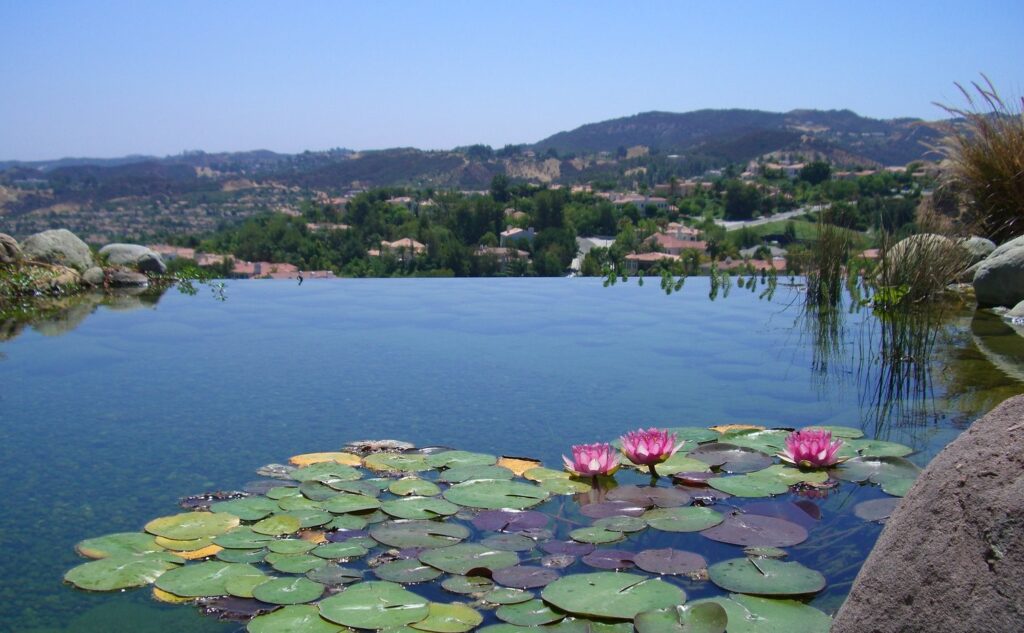
In our work at the Green Scene, we believe in creating outdoor environments that bring luxury, artistry, and function together in a way that feels natural to the property and the people who live there. Working with views is one way that we create spaces that are unique and designed to bring fun, beauty and fascination into our clients lives on a daily basis.
Scott Cohenis an award-winning garden artisan, licensed swimming pool, general and landscape contractor, and renowned expert in construction defect analysis. With three decades of experience designing and building luxury landscapes and pools, he combines artistry with technical precision to create safe, stunning outdoor spaces. A nationally recognized speaker and author of eight books, Cohen also serves as an expert witness in construction-related disputes, providing guidance to homeowners, contractors, and legal professionals. He is president of The Green Scene, known as “The Wow Factor Contractor,” specializing in innovative, family-friendly, and resort-style backyard designs.