








Ponds, Streams & Waterfalls

In the course of my career as a landscape architect, I've had the good fortune to work on the full range of possible projects, from residences to commercial and institutional properties and in spaces ranging from the compact to the vast. Through all of this experience, I have to say that working on botanical gardens, in whole or in part, has been about as satisfying as it gets. The first two articles in this three-part series have demonstrated some of the potential these facilities have to

Puzzled by its bad reputation among some of his clients, Mike Gannon began doing research on gravel. He'd always believed in its value, he says, but found a rich history that now aids in him on occasions when he needs to talk his clients through their moments of doubt.

Among the most rewarding of all the projects I tackle are those in which a pond, stream or waterfall is meant to be a teaching tool. The lessons don't have to be difficult to grasp or challenging to deliver: They simply add a layer of meaning, depth and value to the work that sharpens my interest and lifts my spirits. The stream system at Reed Street Yards in Milwaukee, Wisc., was a source of just this form of personal satisfaction: The city has been positioning itself as a global leader in all things related to freshwater systems, and my participation here had to do with an incubator/think tank complex aimed at expanding on the efforts of the
Jets and sprays are welcome additions to ponds because they look great. But if the designer or installer follows a few key guidelines outlined here by Roy Watkins, the list of benefits will expand to include an overall improvement in water quality and a healthier environment for fish.

Generally speaking, the folks who visit botanical gardens fall into two categories. The first includes local residents who can best be described as garden enthusiasts - the sort who visit monthly, weekly or even daily to follow the lifecycles of favorite trees, shrubs and plants and can spend countless hours observing the diurnal operations of flowers or of the birds who come and go as a year progresses. The second group, generally larger and often much larger, includes local residents who stop by the gardens only when
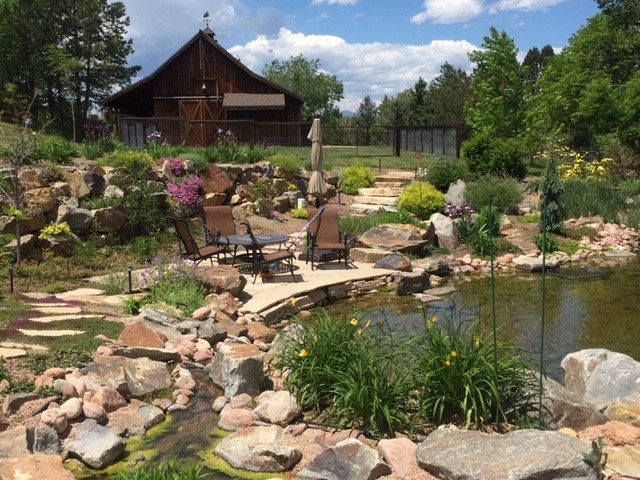
This project came my way as a lot of them have through the years: A landscape contractor had been tasked with organizing things on a large estate property and called me in to work with the homeowners on the pond they wanted. During our first meeting on site, I took an immediate liking to the couple, and she in particular had bountiful ideas about what she wanted. As we walked the estate together that day, she pointed toward the boggy depression at the edge of the property where we'd be placing the pond - quite close to a community bridle path - and said she wanted
There comes a time with most ponds when the owners will want to add fish to supplement the original population or replace pets lost to age or predators. It's a perilous step, notes Mike Gannon, which is why he prepares his clients for the occasion early on with words of caution.

When my client purchased a home at the top of a steep ravine, all she really knew was that she owned a lengthy stretch of a streambed and the land rising above it on both sides. At some point after she moved in, she decided to beautify the space, had a load of 200 boulders dumped in the driveway and hired her landscaper to move them down to dress up the waterway, which was dry through most of the year and was overgrown with all sorts of unwelcome plants. What she didn't know was that she was fooling around with Kenter Creek, a federally protected Blue Line waterway that started high in the hills a couple miles away. She had figured, reasonably so, that the stream was
It doesn't happen every time. But as Mike Gannon reports here, new ponds will head in this disturbing direction often enough that he prepares all of his clients to deal with a distressing transformation that can occur within weeks after a pond has been filled with water for the very first time.

'As modern building materials have been developed,' wrote Japanese garden specialist Douglas M. Roth in October 2003, 'we humans have been remarkably proficient at applying them in ways that go well beyond the vision of their inventors. Such is the case with roofing membranes, which now are widely used as liners for backyard streams and ponds. 'It's understandable that landscape designers and contractors have taken to these rubber liners. After all, they make pond and stream construction inexpensive and easy. But from the perspective of the Japanese gardener or quality watershaper, convenience and affordability alone do not